
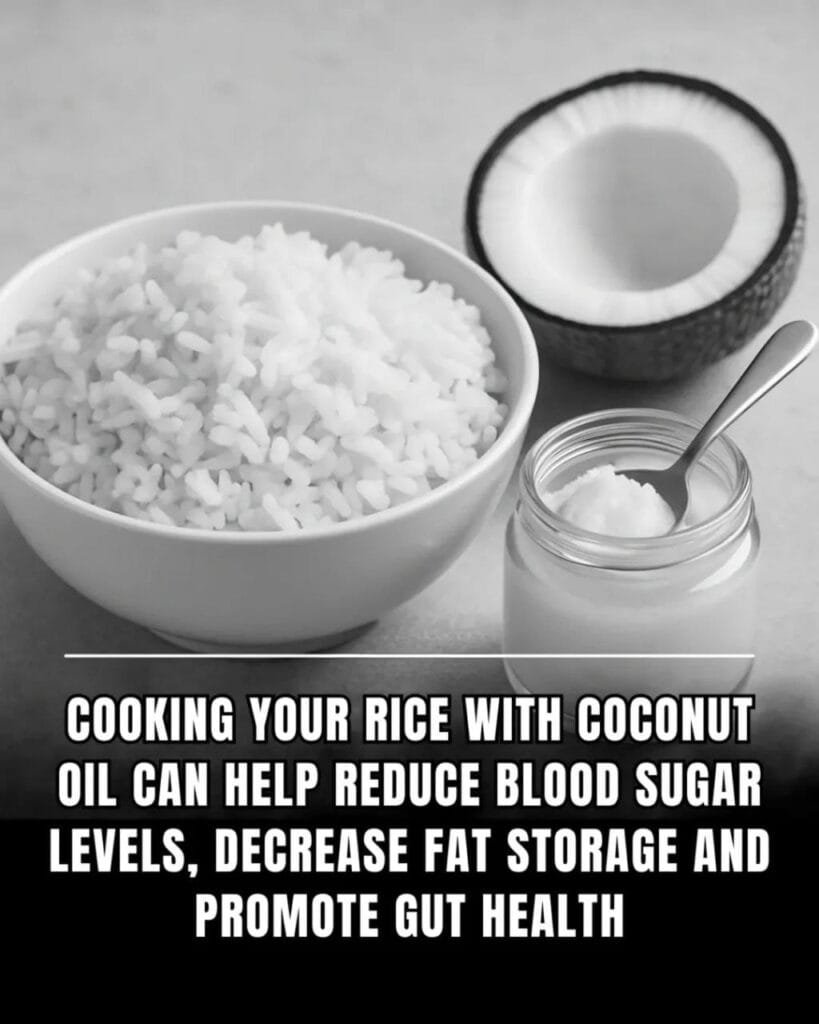
Rice is a staple food for billions of people, but it’s also known for causing rapid spikes in blood sugar due to its high glycemic index. In recent years, a claim has circulated online suggesting that cooking rice with coconut oil can lower blood sugar response, reduce fat storage, and improve gut health. So what’s true, what’s exaggerated, and what actually works?
Let’s break it down.
The Science Behind the Claim
1. Resistant Starch: The Key Concept
Rice is mostly made of starch, which is normally broken down quickly into glucose during digestion. However, not all starch behaves the same way.
Resistant starch is a type of starch that:
Resists digestion in the small intestine
Acts more like fiber
Feeds beneficial gut bacteria
Produces a slower, smaller rise in blood sugar
Certain cooking and cooling methods can increase resistant starch in rice.
2. What Coconut Oil Does During Cooking
Coconut oil is high in saturated fat, especially medium-chain triglycerides (MCTs). When coconut oil is added during cooking:
Some of the fat binds with the starch molecules
This forms amylose–lipid complexes
These complexes are harder for digestive enzymes to break down
The result: slightly slower digestion of rice carbohydrates
3. The Cooling Effect Matters More Than the Oil
Research shows that the biggest increase in resistant starch happens when rice is cooked and then cooled (for several hours or overnight).
Cooling causes a process called retrogradation, where starch molecules re-crystallize into a form that resists digestion.
👉 Coconut oil helps, but cooling the rice is essential for meaningful impact.
Potential Benefits (With Important Caveats)
Blood Sugar Control
May modestly reduce post-meal blood glucose spikes
Helpful for insulin sensitivity when paired with portion control
Not a replacement for medical treatment or dietary planning
Reality check: The reduction is real but not dramatic. White rice is still a high-carb food.
Fat Storage & Weight Management
Resistant starch provides fewer digestible calories
Slower digestion may improve satiety
Coconut oil itself is calorie-dense, so moderation matters
Myth alert: Coconut oil does not magically prevent fat gain.
Gut Health
Resistant starch:
Feeds beneficial gut bacteria
Produces short-chain fatty acids (like butyrate)
Supports colon health and gut lining integrity
This is one of the most solid benefits of resistant starch.
How to Do It Properly
If you want the maximum benefit, here’s the most evidence-based method:
Step-by-Step
Rinse rice as usual
Add 1 teaspoon coconut oil per cup of uncooked rice
Cook rice normally
Let it cool completely (refrigerate for 8–24 hours)
Reheat before eating (resistant starch remains stable)
Best Rice Types
Long-grain white rice
Basmati rice
Parboiled rice (already higher in resistant starch)
Who May Benefit Most
People trying to reduce blood sugar spikes
Those improving gut health
Individuals who eat rice frequently and want a smarter approach
Who Should Be Cautious
People with diabetes should still monitor blood sugar closely
Those watching saturated fat intake
Anyone expecting dramatic weight-loss effects
Bottom Line
✔ Yes, cooking rice with coconut oil and cooling it can:
Increase resistant starch
Slightly lower blood sugar response
Support gut health
❌ No, it does not:
Turn rice into a low-carb food
Cancel calories
Guarantee fat loss
It’s a small, useful optimization, not a miracle.