
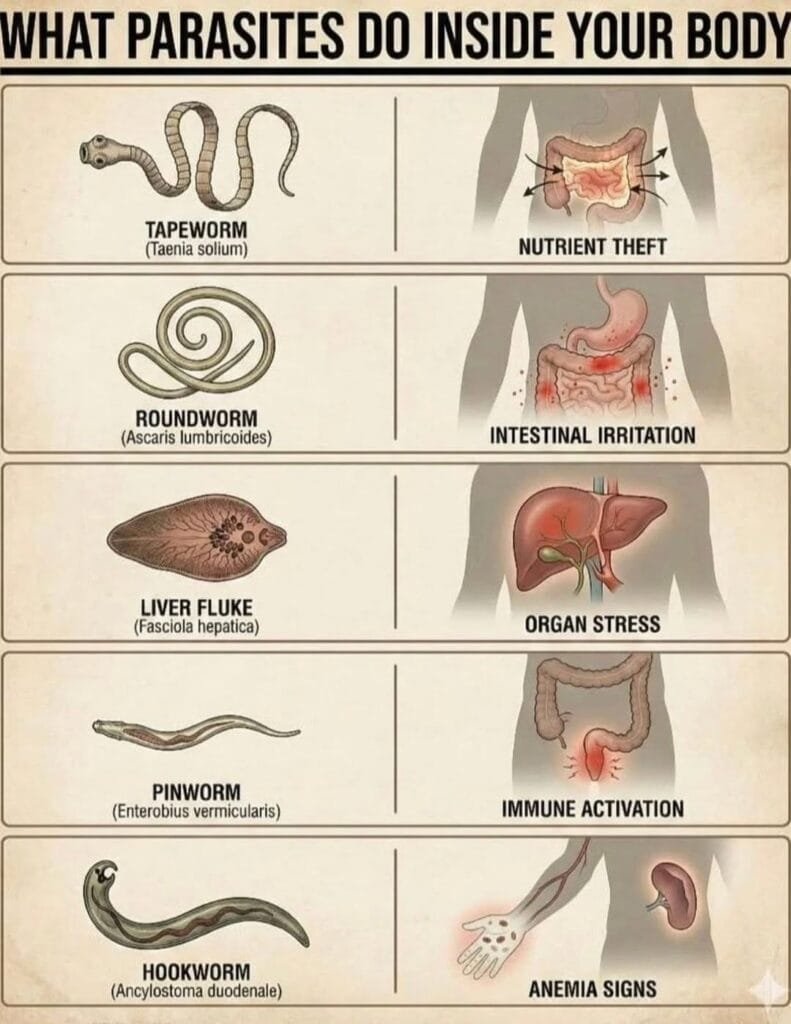
Parasites are organisms that live in or on a host (like humans) and benefit at the host’s expense. While parasitic infections are more common in areas with poor sanitation, they can affect anyone. Understanding the types of human parasites, their symptoms, and prevention methods is essential for protecting your health.
Below is a complete, SEO-optimized guide explaining common intestinal parasites and how they affect the body.
1. Tapeworm (Taenia solium)
What Is a Tapeworm?
Tapeworms are long, flat, segmented worms that live in the intestines. The most well-known species affecting humans is Taenia solium, also known as the pork tapeworm.
How You Get It
Eating undercooked pork
Contaminated food or water
Poor hand hygiene
Symptoms
Nutrient deficiency (nutrient theft)
Weight loss
Abdominal pain
Fatigue
In severe cases: cysts in organs (cysticercosis)
Health Impact
Tapeworms absorb nutrients from your food, which can lead to malnutrition and weakness if untreated.
2. Roundworm (Ascaris lumbricoides)
What Is Roundworm?
Roundworms are large intestinal worms that can grow up to 14 inches long.
How Infection Occurs
Ingesting eggs from contaminated soil
Unwashed vegetables
Poor sanitation
Symptoms
Intestinal irritation
Abdominal pain
Nausea and vomiting
Cough (if larvae migrate to lungs)
Intestinal blockage in severe cases
Health Risks
Heavy infections can cause digestive problems and growth delays in children.
3. Liver Fluke (Fasciola hepatica)
What Is a Liver Fluke?
Liver flukes are flat parasites that infect the liver and bile ducts.
Transmission
Eating raw water plants (like watercress)
Drinking contaminated water
Symptoms
Organ stress (especially liver damage)
Fever
Abdominal pain (upper right side)
Jaundice
Enlarged liver
Complications
If untreated, liver fluke infections can cause chronic liver disease.
4. Pinworm (Enterobius vermicularis)
What Is a Pinworm?
Pinworms are small, thin white worms commonly found in children.
How It Spreads
Direct contact (school settings)
Contaminated bedding or clothing
Scratching and transferring eggs to the mouth
Symptoms
Intense anal itching (especially at night)
Irritability
Sleep disturbances
Immune activation
Why It’s Common
Pinworms spread easily in households and daycare environments.
5. Hookworm (Ancylostoma duodenale)
What Is Hookworm?
Hookworms are parasites that attach to the intestinal wall and feed on blood.
How Infection Happens
Walking barefoot on contaminated soil
Skin penetration by larvae
Symptoms
Anemia signs (due to blood loss)
Fatigue
Pale skin
Weakness
Itchy rash at entry site
Serious Effects
Chronic hookworm infection can cause severe iron-deficiency anemia.
Common Symptoms of Parasites in Humans
While symptoms vary, common signs include:
Persistent abdominal pain
Diarrhea or constipation
Unexplained weight loss
Fatigue
Anemia
Skin rashes
Itching around the anus
Nutrient deficiencies
If you experience persistent symptoms, consult a healthcare provider for proper testing.
How Are Parasites Diagnosed?
Doctors may use:
Stool tests
Blood tests
Imaging (ultrasound, CT scan)
Tape test (for pinworms)
Early diagnosis improves treatment success.
Treatment Options for Parasitic Infections
Most parasitic infections are treatable with prescription medications such as:
Albendazole
Mebendazole
Praziquantel
Ivermectin
⚠️ Always consult a medical professional before taking anti-parasitic medication.
How to Prevent Parasite Infections
1. Practice Good Hygiene
Wash hands frequently
Keep nails trimmed
Clean bedding regularly
2. Cook Food Thoroughly
Fully cook pork and meat
Wash fruits and vegetables
3. Drink Safe Water
Use filtered or boiled water when needed
4. Wear Footwear Outdoors
Especially in areas with poor sanitation
Who Is at Higher Risk?
Children
Travelers to tropical regions
People with weakened immune systems
Individuals living in areas with poor sanitation
When to See a Doctor
Seek medical attention if you experience:
Persistent abdominal pain
Severe fatigue
Blood in stool
Unexplained weight loss
Signs of anemia
Final Thoughts
Parasites inside the human body can cause a range of health problems—from mild irritation to serious organ damage. The good news is that most parasitic infections are preventable and treatable with proper hygiene, food safety, and medical care.
If you suspect a parasitic infection, consult a healthcare provider for diagnosis and appropriate treatment.