
A Complete Guide to Symptoms, Causes, and How to Restore Balance Naturally
Minerals are essential nutrients your body needs in small but powerful amounts. They support everything from bone strength and heart rhythm to oxygen transport, nerve function, and immune defense.
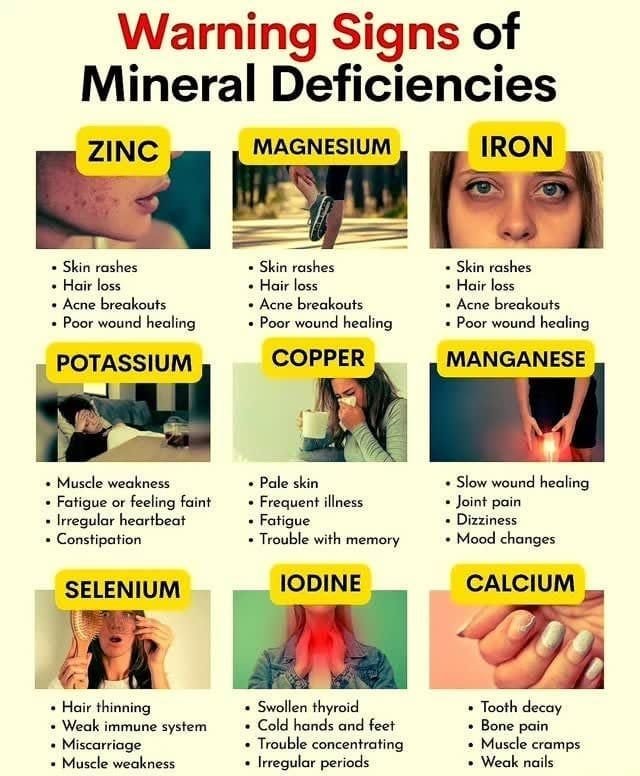
The problem? Mineral deficiencies often develop slowly and show up as subtle symptoms — fatigue, mood changes, muscle cramps, or brittle nails — that are easy to ignore.
This comprehensive guide explains the warning signs of vital mineral deficiencies, who is at risk, and how to restore healthy levels safely.
Why Minerals Matter for Your Health
Your body relies on minerals to:
Build strong bones and teeth
Produce hormones
Support muscle contraction
Maintain hydration balance
Regulate heartbeat
Carry oxygen in the blood
Strengthen immunity
Even mild deficiencies can disrupt these systems.
1. Iron Deficiency
Iron is crucial for producing hemoglobin, which carries oxygen in your blood.
Warning Signs:
Persistent fatigue
Pale skin
Shortness of breath
Dizziness
Cold hands and feet
Brittle nails
Hair thinning
Severe deficiency may lead to anemia.
Who Is at Risk?
Women with heavy periods
Pregnant women
Vegetarians/vegans
People with digestive disorders
Best Food Sources:
Red meat
Spinach
Lentils
Pumpkin seeds
2. Magnesium Deficiency
Magnesium supports over 300 enzymatic reactions in the body.
Warning Signs:
Muscle cramps or spasms
Eye twitching
Anxiety or irritability
Sleep problems
Headaches
Irregular heartbeat
Chronic low magnesium may increase stress sensitivity.
Best Food Sources:
Almonds
Dark chocolate
Avocados
Leafy greens
Whole grains
3. Calcium Deficiency
Calcium is essential for bones, teeth, and muscle contraction.
Warning Signs:
Weak or brittle nails
Muscle cramps
Tingling in fingers
Bone pain
Frequent fractures
Long-term deficiency may lead to osteoporosis.
Best Food Sources:
Dairy products
Sardines
Tofu
Kale
Fortified plant milk
4. Zinc Deficiency
Zinc plays a key role in immune health, wound healing, and hormone production.
Warning Signs:
Frequent infections
Slow wound healing
Hair thinning
White spots on nails
Reduced taste or smell
Acne flare-ups
Best Food Sources:
Oysters
Beef
Pumpkin seeds
Chickpeas
Cashews
5. Potassium Deficiency
Potassium helps regulate heart rhythm, muscle contraction, and fluid balance.
Warning Signs:
Muscle weakness
Fatigue
Constipation
Heart palpitations
Tingling sensations
Severe deficiency can affect heart rhythm.
Best Food Sources:
Bananas
Sweet potatoes
Spinach
Beans
Coconut water
6. Iodine Deficiency
Iodine is necessary for thyroid hormone production.
Warning Signs:
Fatigue
Weight gain
Cold intolerance
Hair thinning
Swollen neck (goiter)
Best Food Sources:
Iodized salt
Seaweed
Dairy products
Eggs
7. Sodium Imbalance (Too Low)
While excess sodium is common, low sodium (hyponatremia) can occur due to excessive sweating, overhydration, or certain medical conditions.
Warning Signs:
Headaches
Confusion
Nausea
Muscle cramps
Weakness
Severe cases require immediate medical attention.
8. Selenium Deficiency
Selenium supports thyroid health and antioxidant defense.
Warning Signs:
Weak immune system
Hair loss
Brain fog
Fatigue
Best Food Sources:
Brazil nuts
Tuna
Eggs
Sunflower seeds
Common Causes of Mineral Deficiencies
Poor diet quality
Highly processed foods
Digestive disorders (Crohn’s, celiac disease)
Chronic stress
Excess alcohol consumption
Certain medications
Heavy sweating
Pregnancy
Early Red Flags You Shouldn’t Ignore
Many mineral deficiencies share overlapping symptoms:
Unexplained fatigue
Mood changes
Weak immunity
Hair loss
Muscle cramps
Brittle nails
Brain fog
If multiple symptoms appear together, consider discussing testing with a healthcare provider.
How to Test for Mineral Deficiencies
Testing options may include:
Blood tests
Urine analysis
Thyroid panel (for iodine-related issues)
Iron studies panel
Do not self-diagnose based on symptoms alone.
Should You Take Supplements?
Supplements can help when:
A deficiency is confirmed
Dietary intake is insufficient
A medical condition impairs absorption
However, excessive supplementation can be harmful. For example:
Too much iron can damage organs
Excess zinc can cause copper deficiency
High potassium can affect heart rhythm
Always consult a healthcare professional before starting supplements.
How to Prevent Mineral Deficiencies Naturally
Eat a balanced diet with whole foods
Include a variety of fruits and vegetables
Consume adequate protein
Stay hydrated
Manage stress
Avoid excessive processed foods
Get regular health check-ups
When to See a Doctor
Seek medical attention if you experience:
Severe fatigue
Irregular heartbeat
Persistent muscle cramps
Hair loss with other symptoms
Unexplained weight changes
Early detection makes treatment much easier.
Final Thoughts
Mineral deficiencies often whisper before they scream. Subtle symptoms like fatigue, cramps, mood shifts, or brittle nails can signal deeper nutritional imbalances.
By paying attention to early warning signs and maintaining a nutrient-rich diet, you can support your body’s vital systems and prevent long-term health issues.
If symptoms persist, testing and professional guidance are essential.