
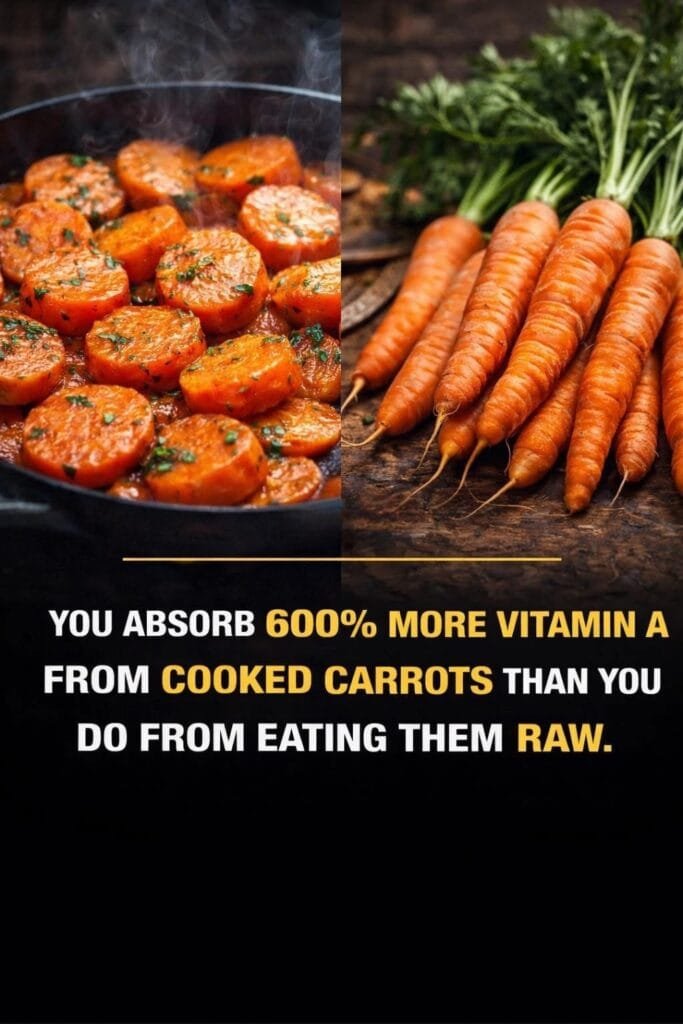
Carrots are one of the most recognized “health foods” in the world — and for good reason. They’re rich in beta-carotene, the plant compound your body converts into vitamin A, which supports vision, immune health, skin repair, and cellular growth.
But here’s what most people don’t realize:
When carrots are eaten raw, much of their beta-carotene remains trapped inside tough plant cell walls.
Your body may only absorb a small fraction of it.
The surprising truth?
Lightly cooking carrots with a small amount of healthy fat can dramatically increase the amount of vitamin A your body actually absorbs.
Let’s break down why.
🥕 What Makes Carrots So Powerful?
Carrots are especially rich in:
Beta-carotene (a precursor to vitamin A)
Antioxidants
Fiber
Potassium
Vitamin K1
Beta-carotene is a fat-soluble carotenoid. Once consumed, your body converts it into retinol (active vitamin A) — essential for:
Night vision
Immune defense
Skin repair
Hormone regulation
Reproductive health
But absorption depends heavily on how the carrot is prepared.
Why Raw Carrots Limit Nutrient Absorption
Carrots are made of rigid plant cells reinforced by cellulose, a tough fibrous structure designed to protect plant nutrients.
When you eat raw carrots:
The fibrous cell walls remain mostly intact
Digestive enzymes struggle to fully break them down
Much of the beta-carotene passes through unabsorbed
Research suggests that the body may extract as little as around 10–15% of available carotenoids from raw carrots under certain conditions.
That means you could be chewing — but not fully benefiting.
🔥 How Cooking Unlocks Beta-Carotene
When carrots are lightly cooked (steamed, roasted, or stir-fried):
1️⃣ Heat Breaks Down Cell Walls
Cooking softens cellulose structures, releasing carotenoids from within plant cells.
2️⃣ Carotenoids Become More Accessible
Beta-carotene becomes easier for digestive enzymes to extract.
3️⃣ Fat Enables Micelle Formation
Because beta-carotene is fat-soluble, it requires dietary fat to be absorbed.
When you cook carrots with a small amount of oil (like olive oil or avocado oil), fat molecules form micelles — tiny transport carriers that:
Surround fat-soluble nutrients
Help them cross the intestinal wall
Deliver them efficiently into the bloodstream
This combination of heat + fat significantly increases bioavailability.
Some research has shown carotenoid absorption can increase several-fold when vegetables are cooked and paired with fat.
🧪 Bioavailability: The Key Concept
Bioavailability refers to how much of a nutrient your body actually absorbs and uses — not just how much is present in the food.
A food can be nutrient-dense on paper but poorly absorbed in reality.
With carrots:
Raw = lower bioavailability
Lightly cooked with fat = significantly higher absorption
This doesn’t mean raw carrots are unhealthy — they still provide fiber and nutrients.
But if your goal is maximizing vitamin A intake, preparation matters.
🥘 Best Ways to Cook Carrots for Maximum Nutrition
To preserve nutrients while enhancing absorption:
✔ Light Stir-Frying
Cook sliced carrots in a small amount of olive oil for 5–7 minutes.
✔ Steaming + Drizzle of Oil
Steam until slightly tender, then add healthy fat before serving.
✔ Roasting at Moderate Heat
Roast at 350–400°F (175–200°C) with olive oil to enhance flavor and absorption.
Avoid overcooking to the point of mushiness, as excessive heat may reduce certain heat-sensitive nutrients (though beta-carotene itself is relatively stable).
🧈 Why Fat Matters So Much
Beta-carotene is fat-soluble. Without fat:
Absorption drops significantly
The body struggles to transport it
More is eliminated unused
Even a small amount of fat (as little as 3–5 grams per meal) can improve carotenoid absorption.
Healthy fat sources to pair with carrots:
Olive oil
Avocado oil
Coconut oil
Nuts or seeds
Grass-fed butter (if tolerated)
👁️ Why Vitamin A Is So Important
When beta-carotene is converted into vitamin A, it supports:
👁️ Eye Health
Prevents night blindness and supports retinal function.
🛡️ Immune Strength
Maintains mucosal barriers and supports immune cell production.
✨ Skin Repair
Promotes healthy cell turnover.
🔬 Cellular Growth
Plays a role in gene expression and tissue repair.
Vitamin A deficiency can lead to:
Dry eyes
Increased infection risk
Poor wound healing
Dry skin
Optimizing absorption matters.
Raw vs Cooked: Is One Better?
It’s not about choosing one over the other.
Raw carrots:
Provide crunch
Support gut health with fiber
Offer hydration
Cooked carrots:
Increase carotenoid absorption
May be easier to digest
Enhance nutrient availability
A balanced approach — including both — is ideal.
🥕 The Bigger Lesson: Preparation Changes Nutrition
Carrots are a powerful reminder that:
Nutrition isn’t just about what you eat —
it’s about what your body can absorb.
Other examples:
Tomatoes release more lycopene when cooked
Spinach releases more iron when lightly cooked
Garlic activates allicin when chopped and rested
Food science and traditional cooking methods often align beautifully.
🌿 Final Thoughts
Carrots are famous for beta-carotene — and rightly so.
But in their raw state, much of that nutrition remains locked behind fibrous plant defenses.
When you introduce:
Gentle heat
A small amount of healthy fat
You unlock dramatically greater bioavailability.
The takeaway?
Don’t just eat for nutrients.
Eat for absorption.
Because true nourishment happens not on your plate —
but inside your cells. 🥕