
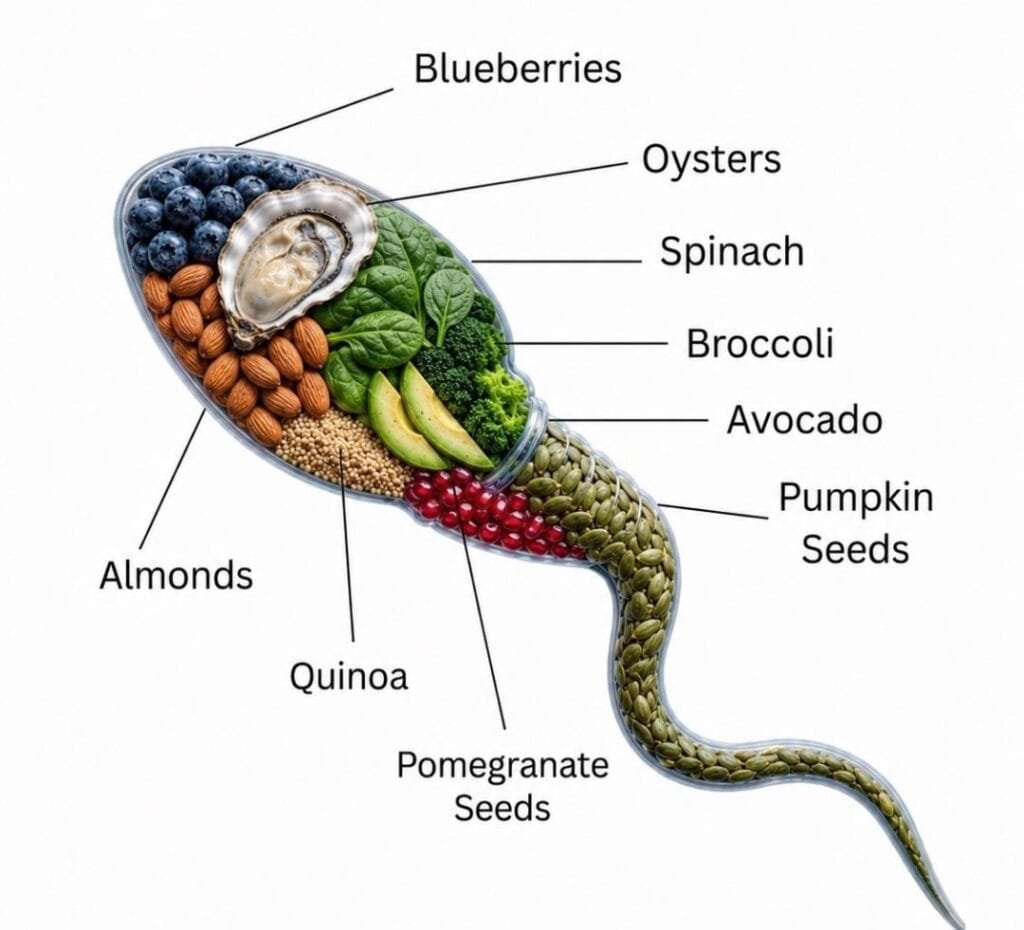
A nutrient-rich diet with antioxidants, zinc, selenium, folate, and omega-3 fatty acids can support healthy sperm production, motility, and DNA integrity. However, food alone is not a guaranteed solution for fertility issues — medical evaluation is essential if concerns persist.
🥗 Key Foods for Healthy Sperm
| Nutrient | Why It Matters | Best Food Sources |
|---|---|---|
| Zinc | Essential for testosterone and spermatogenesis | Oysters, beef, pumpkin seeds, chickpeas |
| Selenium | Protects sperm DNA, aids formation | Brazil nuts (2–3 per day), fish, eggs |
| Omega-3 fatty acids (DHA) | Improves sperm membrane flexibility and motility | Salmon, sardines, mackerel, walnuts, flaxseeds |
| Antioxidants (Vitamin C, E, Lycopene) | Reduce oxidative stress that damages sperm | Citrus fruits, strawberries, spinach, tomatoes, watermelon |
| Folate (Vitamin B9) | Supports DNA synthesis during sperm cell division | Dark leafy greens, lentils, asparagus, avocados |
| Polyphenols | Protect against free radical damage | Walnuts, berries, green tea |
🍽 Practical Dietary Tips
- Eat more nuts: Walnuts and Brazil nuts show strong clinical evidence for improving sperm motility.
- Choose fish over processed meat: Fatty fish improve sperm quality, while processed meats are linked to poorer motility.
- Load up on vegetables & fruits: Leafy greens, tomatoes, citrus, and berries provide antioxidants and folate.
- Stay hydrated: Adequate water supports semen volume and overall reproductive health.
- Limit alcohol, smoking, and processed foods: These increase oxidative stress and reduce sperm quality.
🧪 Scientific Evidence
- A randomized trial found men who ate 45g of walnuts daily for 12 weeks improved sperm motility from 35.5% to 44.6%.
- Tomatoes (lycopene) help reduce DNA damage in sperm by neutralizing oxidative stress.
- Omega-3 fatty acids from fish are incorporated directly into sperm membranes, improving their ability to swim and fertilize an egg.
⚠️ Disclaimer
This information is for general educational purposes only. While diet can positively influence sperm health, it is not a substitute for medical advice or treatment. Fertility concerns may stem from multiple factors (hormonal, genetic, lifestyle, or medical conditions). If you or someone you know is experiencing difficulties with fertility, consult a qualified healthcare professional or fertility specialist for personalized evaluation and guidance.