
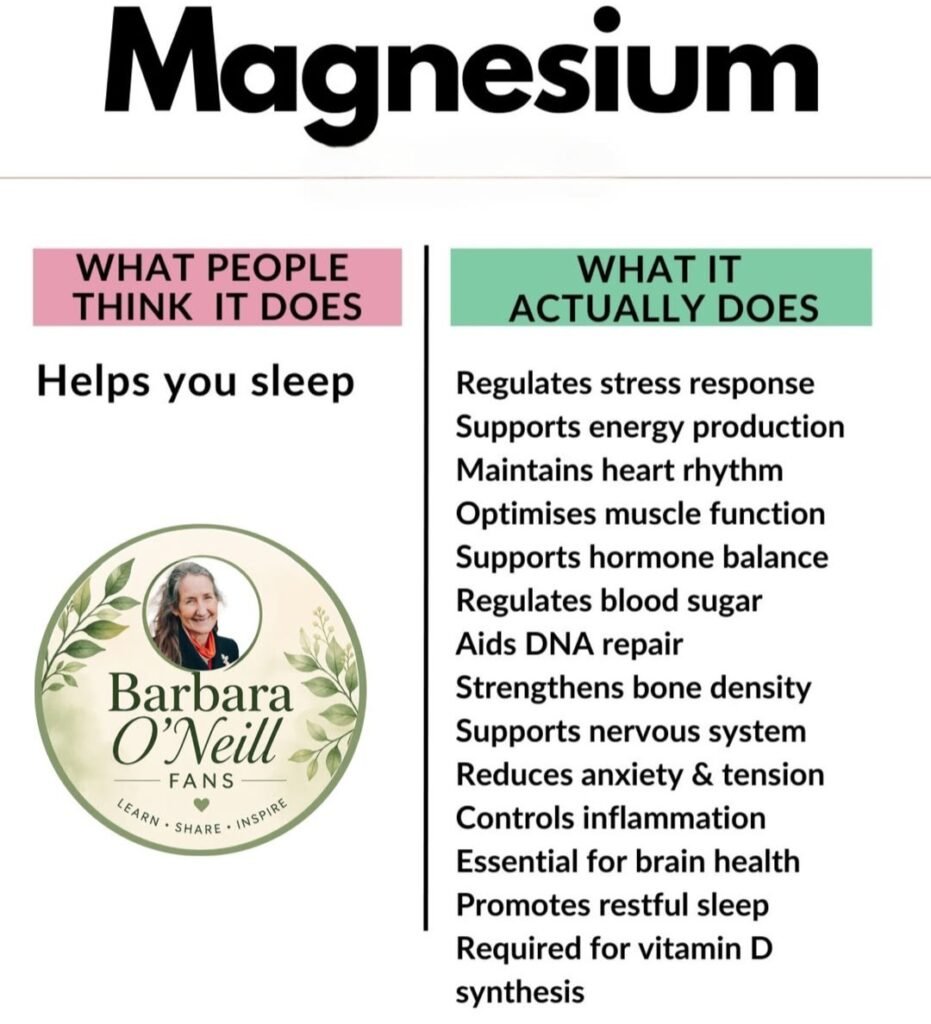
Magnesium is one of the body’s essential minerals, yet its importance is often overlooked. It plays a role in hundreds of biochemical reactions involved in energy production, muscle and nerve function, blood glucose regulation, blood pressure, protein synthesis, bone health, and DNA production.
While magnesium is available as a dietary supplement, getting enough from a varied diet is generally the best place to start. Foods such as nuts, seeds, legumes, whole grains, and leafy green vegetables can provide substantial amounts of this important mineral.
What Is Magnesium?
Magnesium is a mineral naturally found in the body and in many foods. It acts as a helper, or cofactor, for numerous enzymes that allow essential chemical reactions to take place.
Your body needs magnesium to:
– Support normal muscle and nerve function
– Help regulate blood sugar
– Contribute to normal blood pressure regulation
– Produce proteins
– Support healthy bones
– Help make DNA
– Participate in energy production
Because these processes occur throughout the body, adequate magnesium intake is important for overall health.
Magnesium and Energy
Feeling tired can have many causes, and magnesium is not a universal solution for fatigue. However, magnesium participates in the biochemical processes that help cells produce and use energy.
When magnesium intake is inadequate, the body may not function optimally. Severe deficiency can cause weakness and fatigue, among other symptoms.
This is one reason maintaining an adequate intake through a balanced diet is important.
Magnesium and Muscles
Magnesium is essential for normal muscle function. It works alongside other minerals involved in muscle contraction and relaxation.
A true magnesium deficiency can cause muscle cramps, weakness, numbness, and tingling. However, muscle cramps have many possible causes, so taking magnesium is not automatically the answer for every person experiencing them.
Magnesium and the Nervous System
Magnesium contributes to normal nerve function and participates in processes involved in communication between nerve cells.
This does not mean that magnesium supplements can treat every neurological or mental-health symptom. Instead, adequate magnesium is one component of maintaining normal physiological function.
Magnesium and Heart Health
Magnesium is involved in maintaining normal heart rhythm and blood pressure regulation.
Research suggests that magnesium supplementation can produce a modest reduction in blood pressure in some circumstances. A 2025 systematic review and meta-analysis of 38 randomized controlled trials involving 2,709 participants found average reductions of about 2.8 mmHg in systolic blood pressure and 2.1 mmHg in diastolic blood pressure compared with placebo. The researchers also noted substantial variation between studies.
This is promising, but magnesium should not be considered a replacement for prescribed blood-pressure treatment or other healthy lifestyle measures.
Magnesium and Blood Sugar
Magnesium is involved in glucose metabolism and insulin-related processes.
Population studies have associated higher magnesium intake with a lower risk of developing type 2 diabetes. However, supplementation is not a substitute for a balanced diet, physical activity, medical care, or prescribed diabetes treatment.
Recent research remains mixed. A 2026 systematic review of randomized trials in people with diabetes or prediabetes did not find a statistically significant overall improvement in insulin levels or HOMA-IR from oral magnesium supplementation, highlighting the need for larger and better-designed studies.
Magnesium and Bone Health
Magnesium contributes to healthy bones and is involved in bone formation and mineral metabolism.
Research has found associations between higher magnesium intake and greater bone mineral density. However, more research is needed to determine how much magnesium supplementation can help prevent or treat osteoporosis.
The practical takeaway is simple: magnesium-rich foods can be part of an overall bone-supportive eating pattern.
Magnesium and Migraines
Magnesium has also been studied for migraine prevention.
People who experience migraines may have lower magnesium levels, and some small clinical studies have found that magnesium supplementation can modestly reduce migraine frequency. However, the evidence is not strong enough to suggest that everyone with headaches should take magnesium.
Anyone considering magnesium specifically for migraine prevention should discuss it with a healthcare professional.
Signs of Magnesium Deficiency
Mild magnesium deficiency may not cause obvious symptoms. When deficiency becomes more significant, possible symptoms include:
– Loss of appetite
– Nausea
– Vomiting
– Fatigue
– Weakness
– Muscle cramps
– Numbness or tingling
– Abnormal heart rhythm in severe cases
Certain conditions can increase the risk of magnesium deficiency, including some gastrointestinal disorders and type 2 diabetes. Some medications can also affect magnesium absorption or loss.
Importantly, these symptoms can have many other causes. They should not automatically be interpreted as evidence of magnesium deficiency.
Best Food Sources of Magnesium
One of the easiest ways to increase magnesium intake is to include more magnesium-rich foods in your meals.
Good sources include:
– Pumpkin seeds and other seeds
– Almonds and other nuts
– Beans and other legumes
– Whole grains
– Spinach and other leafy green vegetables
– Fortified breakfast cereals
– Milk and yogurt
A varied diet can provide magnesium along with fiber, protein, vitamins, and other minerals.
How Much Magnesium Do You Need?
Recommended daily amounts vary according to age and sex.
For adults, the recommended amount is generally 310–320 mg per day for women and 400–420 mg per day for men. Requirements can differ during pregnancy, adolescence, and other life stages.
It is important to distinguish the recommended total intake from the upper limit for supplements.
For adults, the U.S. National Institutes of Health sets an upper limit of 350 mg per day from magnesium supplements and medications, not from magnesium naturally present in food.
What About Magnesium Supplements?
Magnesium supplements come in several forms, including magnesium citrate, chloride, lactate, and aspartate. Some forms are absorbed more easily than others.
However, more is not necessarily better.
High amounts of supplemental magnesium can cause diarrhea, nausea, and abdominal cramping. Extremely high amounts can cause serious problems, particularly in people with impaired kidney function.
Supplements can also interact with certain medications, including some antibiotics and osteoporosis medicines. Therefore, anyone taking medication should check with a doctor or pharmacist before starting a magnesium supplement.
The Bottom Line
Magnesium is a small mineral with a big job. It supports muscles, nerves, bones, energy metabolism, blood glucose regulation, and cardiovascular function.
The best approach is not to think of magnesium as a miracle supplement, but as an essential part of a balanced diet.
Adding magnesium-rich foods such as nuts, seeds, beans, whole grains, and leafy greens can help you meet your nutritional needs naturally. Supplements may have a role in specific situations, but they should be used thoughtfully and, when appropriate, with guidance from a healthcare professional.
Daily Thrive takeaway: Nourish your body with nutrient-rich whole foods first. Magnesium is powerful—but it works best as part of an overall healthy lifestyle.
Medical Disclaimer
This article is for educational purposes only and does not provide medical advice, diagnosis, or treatment. If you suspect magnesium deficiency, have a medical condition, take medications, or are considering magnesium supplementation, speak with a qualified healthcare professional.
Sources: U.S. National Institutes of Health, Office of Dietary Supplements; PubMed-indexed systematic reviews and meta-analyses.