
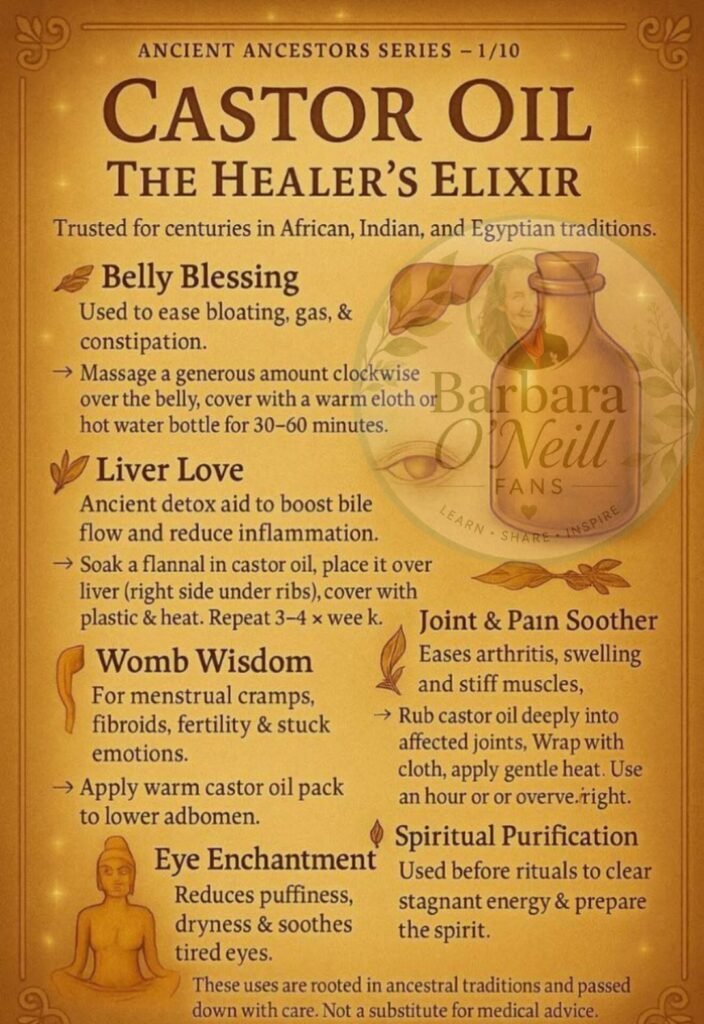
Castor Oil: Traditional Uses, Potential Benefits, and What Science Says
Castor oil has been used for centuries in traditional wellness practices. Made from the seeds of the castor bean plant (Ricinus communis), this thick, pale-yellow oil has become popular again as a natural remedy for digestive discomfort, dry skin, muscle aches and other everyday concerns.
However, many claims circulating online go beyond what scientific evidence supports. Understanding what castor oil may actually do—and what it cannot be proven to do—can help you use it more safely.
What Is Castor Oil?
Castor oil is a vegetable oil obtained from castor beans. Its main fatty acid is ricinoleic acid, which gives the oil many of its characteristic properties.
Although the castor plant contains naturally occurring toxic compounds in its seeds, properly processed castor oil is different from the raw seeds. Castor oil is used in cosmetics, pharmaceutical preparations, soaps and other products.
One medically recognized use is as a stimulant laxative for occasional constipation. It works by stimulating movement in the intestines.
1. Castor Oil and Digestion
Castor oil has traditionally been used for digestive complaints such as constipation.
When taken orally, castor oil can stimulate intestinal contractions and produce a bowel movement. However, it can also cause abdominal cramping, nausea, vomiting and diarrhea. Excessive or prolonged use may contribute to dehydration and disturbances in the body’s fluid and electrolyte balance.
Importantly, applying castor oil to the abdomen has not been proven to treat constipation or improve overall digestive health.
For recurring constipation, it is better to look for the underlying cause rather than relying on repeated home remedies.
2. Castor Oil Packs and the Liver
Castor-oil packs are commonly promoted online as a way to “detox” the liver or increase bile flow.
These claims are part of traditional and alternative wellness practices, but there is not strong scientific evidence that placing a castor-oil-soaked cloth over the liver detoxifies the organ or improves liver function.
Your liver already performs important detoxification and metabolic functions naturally. There is no proven castor-oil treatment that can replace medical care for liver disease.
If you have symptoms such as persistent abdominal pain, jaundice, unexplained weight changes or abnormal liver tests, speak with a healthcare professional rather than relying on a castor-oil pack.
3. Castor Oil for Menstrual Cramps
Warmth applied to the lower abdomen can sometimes provide comfort during menstrual cramps.
Castor-oil packs are traditionally used for this purpose, but the evidence that castor oil itself reduces menstrual pain is limited.
If someone chooses to use oil on the skin, it should be regarded as a comfort measure rather than a treatment for an underlying gynecological condition.
Claims that castor oil can dissolve fibroids, improve fertility or treat reproductive disorders are not established medical treatments.
Persistent or severe menstrual pain should be discussed with a healthcare professional.
4. Castor Oil for Muscles and Joints
Castor oil is sometimes massaged onto areas of muscle or joint discomfort.
The massage and warmth may feel soothing, but there is insufficient evidence to conclude that castor oil itself treats arthritis, joint inflammation or other musculoskeletal diseases.
For ongoing joint pain, swelling or stiffness, the underlying condition should be evaluated rather than treated solely with castor oil.
5. Castor Oil for Skin
Castor oil can act as an oily moisturizer and may help reduce water loss from the skin.
Because of this, castor oil is included in some cosmetic and moisturizing products.
However, pure castor oil is not suitable for everyone. Some people may experience irritation, redness, itching or allergic contact dermatitis after applying it to the skin.
If you have sensitive skin, try a small amount on a limited area first and stop using it if irritation develops.
6. Castor Oil and the Eyes
One claim sometimes seen online is that castor oil can reduce eye dryness, puffiness or improve eyesight.
This should be approached with particular caution.
Do not put ordinary castor oil directly into your eyes. It can cause irritation, pain, redness and blurred vision, and inappropriate products can potentially damage the eye.
Eye problems should be evaluated by an eye-care professional.
7. Castor Oil for Hair
Castor oil is frequently promoted as a natural hair-growth treatment.
While it can coat the hair and make it feel conditioned or appear shinier, there is not strong evidence that applying pure castor oil causes faster hair growth.
It can also irritate the scalp or contribute to clogged pores in some people.
If you experience significant or persistent hair loss, identifying the underlying cause is more important than relying on an oil treatment.
8. What About “Detoxing” With Castor Oil?
The word “detox” is widely used in wellness marketing, but castor oil should not be considered a general detox treatment.
There is no scientific evidence that castor-oil packs can remove toxins from the body or cleanse the liver.
Healthy liver and kidney function, adequate nutrition, physical activity and avoiding harmful substances are much more important for normal body processes.
9. Is Castor Oil Safe?
Safety depends on how it is used.
Topical application may cause:
– Skin irritation
– Redness
– Itching
– Allergic reactions
– Contact dermatitis
Oral consumption can cause:
– Abdominal cramps
– Diarrhea
– Nausea
– Vomiting
– Dehydration
Castor oil should not be taken repeatedly or used as a regular digestive “cleanse.” Medical guidance is particularly important for children, pregnant people and anyone with gastrointestinal problems or who takes medications.
Traditional Wisdom vs. Scientific Evidence
Castor oil has a long history in traditional medicine, and traditional practices can be culturally and historically interesting.
But traditional use does not automatically mean a treatment has been scientifically proven.
Some uses have reasonable practical explanations—for example, an oil can moisturize the skin, while warmth and massage can feel soothing. Other popular claims, such as liver detoxification, fertility treatment, fibroid removal or improved eyesight, lack convincing evidence.
The safest approach is to separate traditional wellness practices from proven medical treatments.
The Bottom Line
Castor oil is a versatile natural oil with a long history of use. It has a recognized role as a stimulant laxative for occasional constipation and is also commonly used in cosmetic and skin-care products.
However, many of the dramatic health claims surrounding castor-oil packs are not supported by strong scientific evidence.
If you decide to use castor oil topically, use it cautiously, avoid the eyes and stop if irritation occurs. Do not use castor oil as a substitute for professional medical treatment.
Natural does not always mean risk-free—and traditional does not always mean scientifically proven.
Important Disclaimer
This article is for educational purposes only and does not replace professional medical advice, diagnosis or treatment. If you have persistent symptoms or a diagnosed medical condition, consult a qualified healthcare professional before using castor oil as a remedy.