
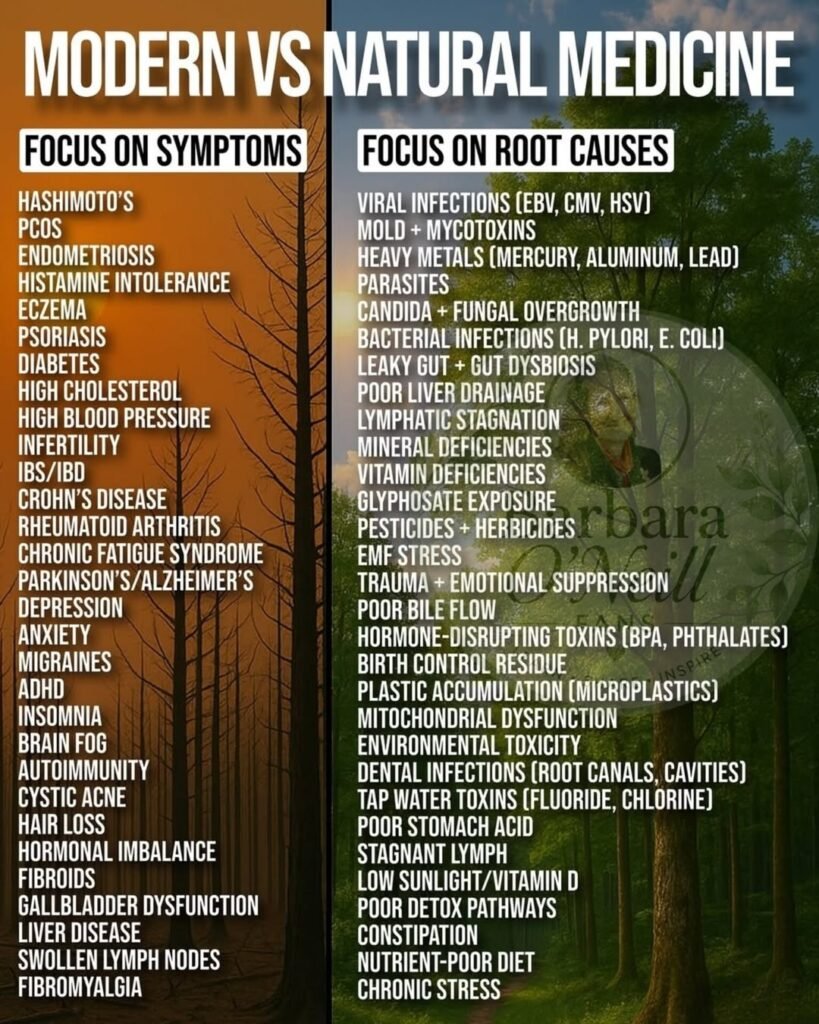
Modern Medicine vs. Natural Medicine: What Does Science Really Say?
The debate between modern medicine and natural medicine has become increasingly popular. Social media posts often present the two approaches as opposites: modern medicine is portrayed as treating symptoms, while natural medicine is described as identifying and eliminating the “root cause” of disease.
The reality is more complicated.
Modern medicine does not simply treat symptoms, and natural or complementary approaches are not automatically safer or more effective because they are “natural.” In many cases, the best approach is to combine evidence-based medical care with healthy lifestyle habits and, when appropriate, carefully selected complementary therapies.
What Is Modern Medicine?
Modern medicine—sometimes called conventional or Western medicine—is based on scientific research, clinical trials, diagnostic testing and established medical guidelines.
Doctors may use:
– Blood tests and imaging
– Prescription medications
– Surgery
– Physical therapy
– Vaccination
– Nutrition and lifestyle counseling
– Psychological therapies
– Preventive screening
Treatment may target the underlying disease, reduce symptoms, prevent complications, or accomplish all three.
For example, treating high blood pressure is not merely “covering up a symptom.” Lowering blood pressure can reduce the risk of stroke, heart disease and kidney damage.
Similarly, insulin used for type 1 diabetes replaces a hormone that the body can no longer produce adequately. It is not simply masking a symptom.
What Is Natural or Complementary Medicine?
Natural medicine can include many different practices, including:
– Herbal products
– Dietary supplements
– Nutrition-based approaches
– Meditation
– Yoga
– Massage
– Acupuncture
– Mindfulness
– Traditional medical practices
These approaches should not all be treated as one category because their evidence varies considerably.
Some complementary approaches have evidence for helping certain symptoms or improving quality of life. For example, research suggests that some mind-body practices may provide modest benefits for certain chronic pain conditions.
However, evidence for one natural product or therapy cannot automatically be applied to another.
Does “Natural” Mean Safe?
No.
One of the most important misconceptions about natural medicine is that anything natural must be harmless.
Herbs and dietary supplements can have side effects, interact with medications, or be inappropriate for certain people. The National Center for Complementary and Integrative Health specifically cautions that “natural” does not necessarily mean safe.
That is particularly important when someone has a chronic disease or takes prescription medication.
Do Doctors Only Treat Symptoms?
This is another common misconception.
Modern medicine often investigates the underlying cause of a disease.
For example:
Type 1 diabetes:
The immune system destroys insulin-producing pancreatic beta cells. Treatment replaces the missing insulin and helps prevent dangerous complications.
Hypothyroidism caused by Hashimoto’s disease:
The immune system attacks the thyroid. Treatment can replace the thyroid hormone the body is unable to produce adequately.
H. pylori infection:
When this bacterium is responsible for certain ulcers or stomach problems, appropriate testing and treatment can target the infection itself.
Bacterial infections:
When a bacterial infection is identified, antibiotics may target the organism responsible for the disease.
Therefore, the distinction between “modern medicine treats symptoms” and “natural medicine treats causes” is misleading.
What About the “Root Causes” Listed in Social Media Posts?
Many popular posts list viruses, parasites, heavy metals, mold, Candida, “leaky gut,” poor liver drainage, lymphatic stagnation, toxins, microplastics and mineral deficiencies as supposed root causes of numerous unrelated diseases.
Some of these factors can genuinely affect health in particular circumstances.
But that does not mean they are universal causes of conditions such as diabetes, Parkinson’s disease, Alzheimer’s disease, autoimmune disorders or infertility.
A medical condition can have multiple contributing factors, including genetics, immune-system activity, infections, environmental exposures, hormones, age, lifestyle and other biological processes.
The cause must therefore be evaluated according to the specific disease rather than assuming that one explanation applies to everyone.
What About “Detoxing”?
The word “detox” is frequently used in wellness marketing.
The human body already has sophisticated systems for processing and eliminating many substances, particularly through the liver and kidneys.
This does not mean environmental exposures are harmless. Certain toxins and heavy metals can cause genuine health problems, but suspected exposure should be evaluated appropriately rather than treated with an unproven detox program.
Extreme diets, fasting programs or supplements marketed as “detoxes” are not automatically beneficial and may sometimes be harmful.
Can Lifestyle Really Make a Difference?
Absolutely.
Evidence-based lifestyle habits are an important part of modern healthcare as well as preventive health.
These include:
– Eating a varied and nutritious diet
– Regular physical activity appropriate for your age and abilities
– Getting adequate sleep
– Avoiding tobacco and nicotine
– Maintaining good dental hygiene
– Managing stress
– Staying up to date with recommended vaccinations
– Attending appropriate medical checkups
These measures can contribute substantially to overall health and can complement medical treatment.
What About Supplements and Herbs?
Some supplements have been studied for specific conditions, but the evidence varies widely.
A supplement should not be assumed to work simply because it has been used traditionally for many years.
Quality, dose, formulation, interactions and the person’s individual circumstances all matter.
For example, even within complementary medicine, some approaches have shown modest benefits for certain chronic pain conditions, while evidence for other products remains limited or inconclusive.
Modern and Natural Medicine Do Not Have to Be Enemies
The most useful approach is not necessarily to choose one side.
Integrative healthcare aims to combine conventional medical care with appropriate complementary approaches. The important principle is that complementary treatments should have reasonable evidence for their intended use and should be used safely.
For example, someone receiving conventional treatment for a chronic condition may also benefit from appropriate exercise, relaxation techniques, mindfulness, nutrition counseling or another evidence-supported complementary approach.
The complementary treatment should complement—not replace—necessary medical care.
When Should You See a Doctor?
Persistent, severe or unexplained symptoms deserve proper medical evaluation.
Medical attention is particularly important when symptoms are new, worsening, or interfering with normal daily activities.
A natural remedy should not be used to delay diagnosis or replace an effective treatment for a serious condition. NCCIH similarly advises people not to use unproven complementary products or practices as a reason to postpone appropriate healthcare.
The Bottom Line
The real question is not:
“Modern medicine or natural medicine?”
A better question is:
“What treatment has the best evidence for this particular condition, and how can healthy lifestyle and complementary approaches safely support it?”
Modern medicine can treat underlying causes, prevent complications and save lives. Natural and complementary approaches may also have a useful role in certain circumstances, particularly for lifestyle, wellbeing and management of some symptoms.
The key is to separate evidence-based natural care from claims that have not been scientifically demonstrated.
“Natural” is not automatically better, and “modern” does not automatically mean treating only symptoms.
Good healthcare should be based on evidence, safety, individual needs and informed decisions.
Medical disclaimer: This article is for general educational purposes and does not replace advice, diagnosis or treatment from a qualified healthcare professional.