
15 Potential Benefits of Black Seed Oil: What Science Really Says
Black seed oil, also known as black cumin seed oil, comes from Nigella sativa, a plant traditionally used in Middle Eastern, Asian and Mediterranean cultures. It contains several bioactive compounds, including thymoquinone, which has been studied for its antioxidant and anti-inflammatory properties.
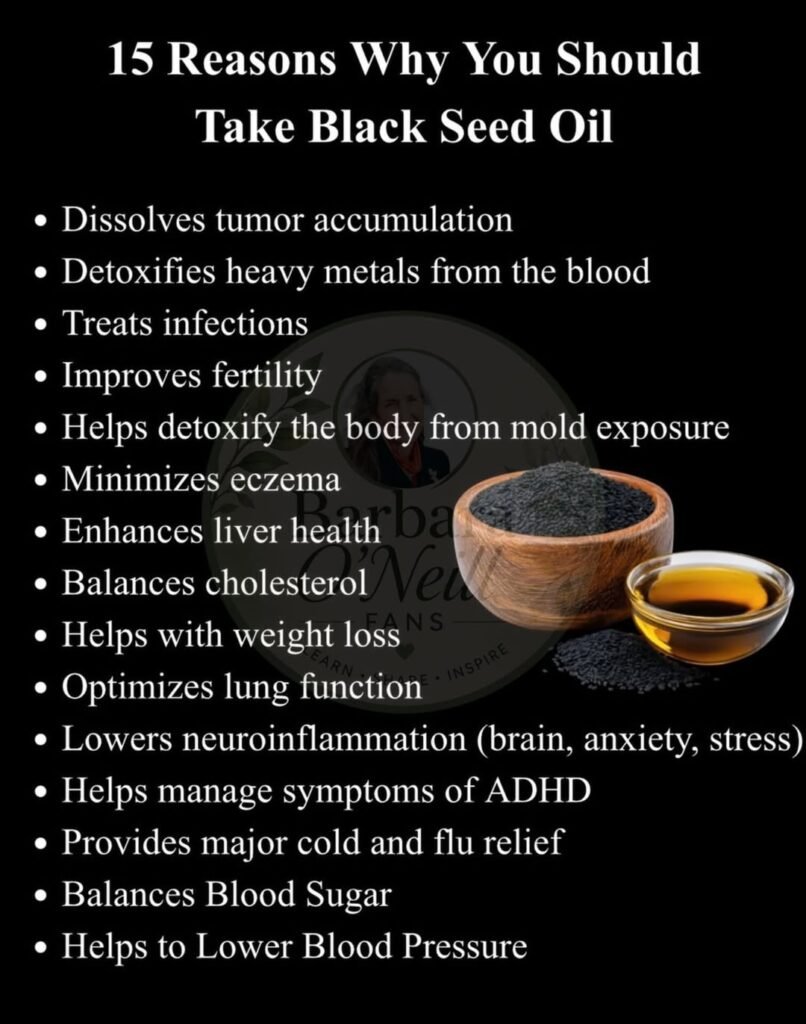
A viral list circulating online claims that black seed oil can “detox” heavy metals, dissolve tumors, treat infections, improve fertility and provide many other health benefits. While research has found promising effects in some areas, many of these claims are stronger than the available human evidence supports.
Here are 15 commonly claimed benefits, with a closer look at what research actually suggests.
1. May Support the Body’s Antioxidant Defenses
Black seed contains compounds with antioxidant activity. Laboratory and clinical research suggests that Nigella sativa may help influence oxidative-stress markers.
However, this does not mean that black seed oil can “detox” the body of all harmful substances. The body already has sophisticated systems for processing and eliminating waste.
2. May Have Anti-Inflammatory Effects
Thymoquinone and other compounds in black seed have demonstrated anti-inflammatory activity in laboratory research.
Some human studies have also reported improvements in inflammatory markers, although more high-quality research is needed to determine how clinically important these effects are.
3. May Support Immune Function
Black seed has traditionally been used for general health and immune support. Its antioxidant and immunomodulatory properties have attracted scientific interest.
Nevertheless, black seed oil should not be considered a replacement for medical treatment when someone has a bacterial, viral or other infection.
4. May Support Reproductive Health
Some preliminary research has investigated Nigella sativa in relation to reproductive health and fertility.
The evidence is still limited, however, and it is not accurate to describe black seed oil as a proven fertility treatment. Anyone experiencing fertility problems should discuss them with a qualified healthcare professional.
5. May Support Skin Health
Black seed oil has been investigated for several skin conditions because of its anti-inflammatory and antimicrobial properties.
Some research suggests potential benefits for inflammatory skin problems, but applying pure black seed oil directly to the skin can also cause allergic reactions or contact dermatitis in some people.
6. May Help With Eczema Symptoms
Because inflammation plays an important role in eczema, the anti-inflammatory properties of Nigella sativa have attracted interest.
There is not enough evidence to say that black seed oil can cure eczema. People with sensitive skin should also be cautious because topical black seed oil has been associated with allergic reactions.
7. May Support Liver Health
Researchers have investigated black seed for possible effects on liver function and metabolic health.
Some clinical studies have reported improvements in certain metabolic and liver-related measures, but more research is required before black seed oil can be considered a treatment for liver disease.
8. May Help Maintain Healthy Cholesterol Levels
This is one of the more promising areas of research.
Clinical trials and systematic reviews have reported reductions in total cholesterol and LDL cholesterol in some groups taking Nigella sativa. A 2025 meta-analysis of randomized controlled trials in people with type 2 diabetes also found reductions in total cholesterol and LDL cholesterol.
The results are not universal, so black seed oil should be viewed as a possible adjunct, not a replacement for prescribed cholesterol treatment.
9. May Support Healthy Weight Management
Some studies have reported modest reductions in body weight or BMI following Nigella sativa supplementation.
A recent meta-analysis of 31 trials found modest reductions in weight and BMI, although the researchers emphasized variability between studies and the need for further high-quality trials.
Black seed oil is not a magic weight-loss solution. A balanced diet, regular physical activity and adequate sleep remain much more important.
10. May Support Respiratory Health
Black seed has been studied in conditions such as asthma and other respiratory problems.
Some small clinical trials suggest that Nigella sativa may help improve certain asthma-related outcomes, but the evidence is not strong enough to replace prescribed respiratory medication.
11. May Help Reduce Certain Inflammatory Markers
Research has examined black seed’s potential effects on inflammatory markers such as C-reactive protein and other cytokines.
A large 2025 systematic review and meta-analysis involving 82 randomized controlled trials reported improvements in several inflammatory and cardiometabolic markers. However, the authors still described black seed as a potential adjunct therapy, rather than a standalone treatment.
12. Brain Health, Stress and Mood: Early Evidence
The anti-inflammatory and antioxidant properties of thymoquinone have led researchers to investigate possible neurological effects.
However, claims that black seed oil directly treats anxiety, stress, neuroinflammation or other brain disorders remain insufficiently established in humans. More clinical research is needed.
13. ADHD: Not Yet a Proven Treatment
The image circulating online claims that black seed oil can help manage ADHD symptoms.
At present, this should be treated as an unproven claim, not an established treatment. Black seed oil should not replace evidence-based ADHD care or prescribed medication.
14. May Support Blood Sugar Control
Blood sugar is another area where human research has produced encouraging findings.
A 2025 meta-analysis of 16 randomized controlled trials in people with type 2 diabetes found that black seed supplementation was associated with reductions in fasting blood glucose and HbA1c. A broader 2026 meta-analysis also reported improvements in fasting blood glucose and HbA1c.
These findings are promising, but people taking diabetes medication should not change their treatment based on black seed oil alone.
15. May Have a Modest Effect on Blood Pressure
Some clinical trials have found that Nigella sativa may modestly reduce blood pressure.
A recent meta-analysis of 31 trials reported average reductions of about 3.25 mmHg in systolic blood pressure and 2.75 mmHg in diastolic blood pressure. Earlier reviews, however, found inconsistent results across studies.
This means black seed oil may have potential as a complementary approach, but it should not replace blood-pressure medication prescribed by a doctor.
What About Cancer and “Tumor Dissolving”?
One of the most important claims in the viral image is that black seed oil can “dissolve tumor accumulation.”
This claim is not supported by adequate human evidence.
Laboratory and animal studies have found interesting anticancer effects associated with thymoquinone and other Nigella sativa compounds. But research conducted in cells or animals cannot establish that the oil treats cancer in humans. Memorial Sloan Kettering Cancer Center specifically notes that black cumin seed has not been shown to treat cancer in humans.
Therefore, black seed oil should never be used instead of cancer diagnosis or treatment.
Can Black Seed Oil Remove Heavy Metals or Mold Toxins?
Claims that black seed oil “detoxifies heavy metals from the blood” or removes toxins caused by mold exposure are also not established treatments in humans.
Although black seed contains antioxidant compounds and has been studied in toxicology research, this is very different from demonstrating that it can remove heavy metals or mycotoxins from the human body.
Is Black Seed Oil Safe?
Black seed is commonly consumed as a food and has been used traditionally for centuries. However, concentrated oil and supplements can have effects that ordinary culinary use may not.
Reported concerns include allergic or contact reactions, particularly with topical application. High doses have caused liver and kidney damage in animal studies, although comparable human data are lacking. Black seed may also interact with certain medications.
Anyone taking medication or managing a medical condition should speak with a healthcare professional before using concentrated black seed supplements.
The Bottom Line
Black seed oil is an interesting traditional remedy with a growing body of scientific research behind it. Studies suggest that Nigella sativa may have antioxidant and anti-inflammatory properties and may modestly improve certain cardiometabolic measures, including blood sugar, cholesterol and blood pressure.
But many viral claims go far beyond the evidence. There is currently no good human evidence that black seed oil can dissolve tumors, remove heavy metals, detoxify mold exposure, cure infections or treat ADHD.
The best way to view black seed oil is as a potential complementary supplement—not a cure-all or substitute for professional medical care.