
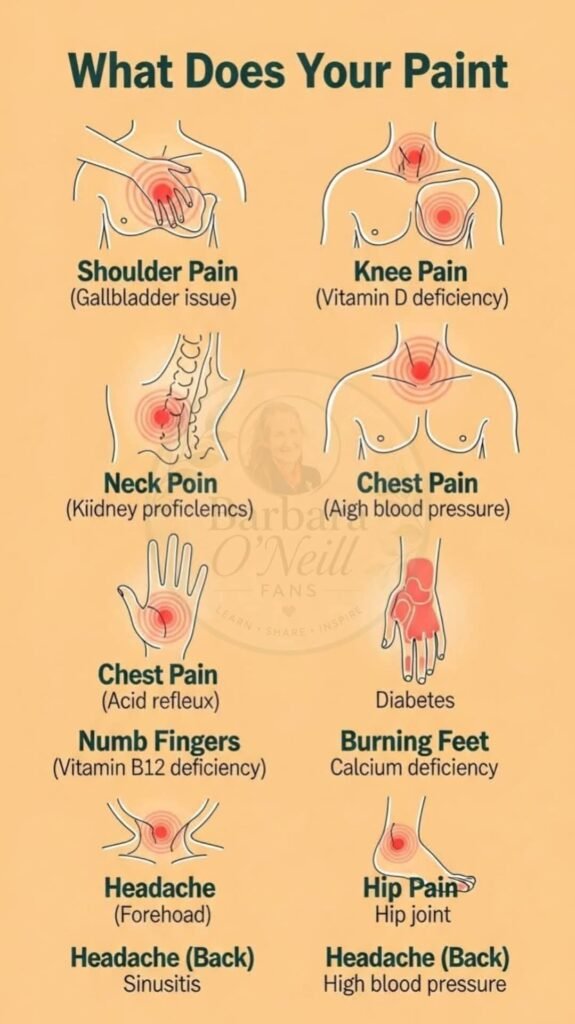
Understanding Body Pain and Its Possible Causes
Pain is the body’s way of signaling that something may be wrong. While occasional aches can result from strain or fatigue, persistent or unusual pain may point to underlying health issues or nutrient deficiencies. Recognizing these signals can help guide lifestyle changes and prompt timely medical consultation.
🦵 Common Pain Locations and Potential Causes
1. Shoulder Pain
- Possible link: Gallbladder issues
- Gallbladder dysfunction can sometimes cause referred pain in the shoulder due to nerve pathways.
2. Knee Pain
- Possible link: Vitamin D deficiency
- Low vitamin D levels weaken bones and joints, leading to discomfort or chronic knee pain.
3. Neck Pain
- Possible link: Kidney problems
- Kidney stress or infection may radiate pain to the neck and upper back.
4. Chest Pain
- Possible links: High blood pressure or acid reflux
- Hypertension can strain the heart and arteries, while acid reflux irritates the esophagus, both causing chest discomfort.
5. Numb Fingers
- Possible link: Vitamin B12 deficiency
- B12 is essential for nerve health; deficiency can cause tingling or numbness in extremities.
6. Burning Feet
- Possible link: Calcium deficiency
- Calcium supports nerve and muscle function; low levels may cause burning sensations in the feet.
7. Headaches
- Forehead pain: Often linked to sinusitis.
- Back-of-head pain: May indicate high blood pressure or tension.
8. Hip Pain
- Possible link: Hip joint problems
- Arthritis, cartilage wear, or joint inflammation are common culprits.
9. Diabetes-Related Pain
- Diabetes can cause neuropathy, leading to pain or numbness in various body parts.
⚠️ Important Notes
- These associations are general indicators, not definitive diagnoses.
- Pain can have multiple causes, and self-diagnosis may be misleading.
- Persistent or severe pain should always be evaluated by a healthcare professional.
✅ Practical Steps
- Maintain a balanced diet rich in vitamins and minerals.
- Monitor blood pressure and blood sugar regularly.
- Stay active to support joint and muscle health.
- Seek medical advice for unexplained or chronic pain.
📌 Disclaimer
This article is for educational purposes only. It is not a substitute for professional medical advice, diagnosis, or treatment. Always consult a qualified healthcare provider for concerns about your health.

Emily Carter
Food & Wellness Writer
Emily Carter is a food and wellness writer dedicated to sharing practical recipes, nutrition insights, and everyday healthy-living tips. Her goal is to make healthy choices simple, approachable, and enjoyable.