
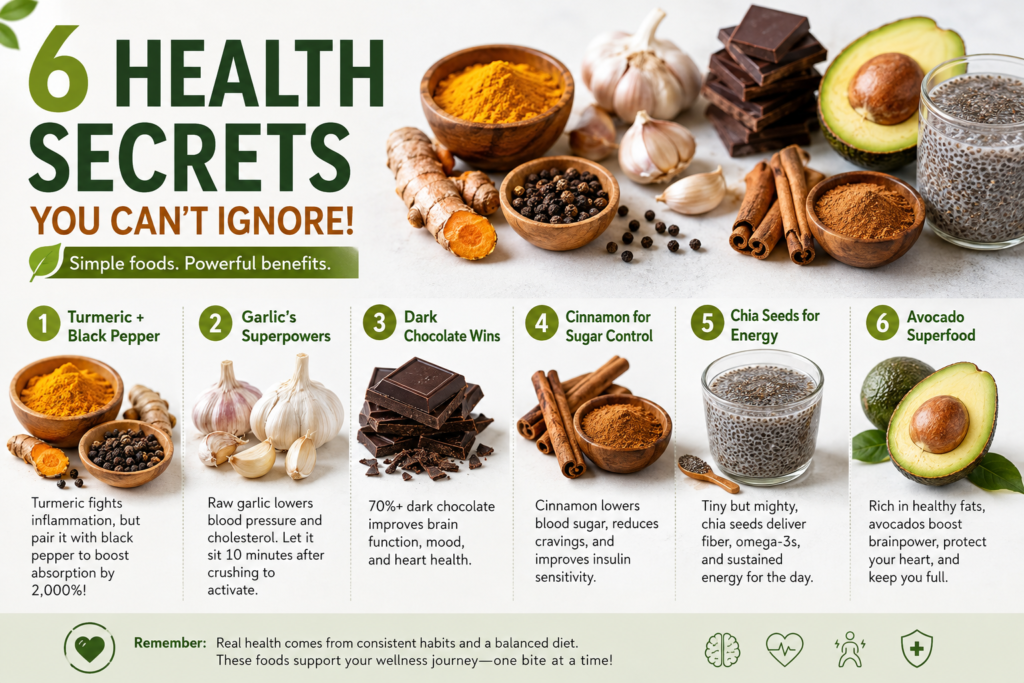
Many everyday foods contain naturally occurring compounds that may support important aspects of health. However, food should be viewed as part of an overall healthy eating pattern—not as a replacement for medical treatment.
Here are six nutritious foods and combinations worth knowing about.
1. Turmeric + Black Pepper: A Powerful Pair
Turmeric contains curcumin, a compound that has been widely studied for its antioxidant and anti-inflammatory properties. One challenge is that curcumin is poorly absorbed when consumed on its own.
Black pepper contains piperine, which can significantly increase curcumin’s bioavailability. A human study found that combining curcumin with piperine increased measured curcumin bioavailability by about 2,000% under the specific study conditions.
That doesn’t mean turmeric suddenly becomes a medicine or that everyone needs supplements. Simply using turmeric and a small amount of black pepper as part of meals can be a flavorful way to include these ingredients in your diet.
Simple idea: Add turmeric and a pinch of black pepper to soups, roasted vegetables, rice, or eggs.
«Important: Piperine can affect how some medicines are absorbed or metabolized, so concentrated turmeric/black-pepper supplements should be discussed with a healthcare professional if you take medication.»
2. Garlic: Small Ingredient, Big Potential
Garlic is more than a flavor enhancer. Research has investigated garlic’s potential effects on cardiovascular health, particularly cholesterol and blood pressure.
According to the U.S. National Center for Complementary and Integrative Health, garlic supplements may produce small reductions in total and LDL cholesterol in people with elevated cholesterol, while evidence also suggests a small blood-pressure benefit in people with hypertension.
Fresh garlic can easily be incorporated into everyday meals.
Try it in: roasted vegetables, soups, sauces, salads, beans, chicken, or whole-grain dishes.
3. Dark Chocolate: Choose Cocoa-Rich Options
Dark chocolate can contain cocoa flavanols and other compounds that have attracted considerable research interest. However, chocolate isn’t automatically a health food—many products are also high in added sugar and saturated fat.
A practical approach is to choose small portions of darker chocolate with a higher cocoa percentage, while keeping overall dietary quality in mind.
The American Heart Association’s current dietary guidance emphasizes an overall pattern rich in vegetables, fruits, whole grains, healthy protein sources, fiber, and unsaturated fats, while minimizing added sugars and highly processed foods.
4. Cinnamon: More Than Just a Spice
Cinnamon may have modest effects on blood-glucose regulation. Research summarized by NCCIH found that cinnamon supplementation was associated with reductions in fasting blood glucose and insulin resistance in some people with prediabetes or type 2 diabetes.
However, the evidence is mixed, and researchers note differences between studies in dosage, cinnamon type, participants, and duration. Cinnamon should therefore not be considered a substitute for diabetes treatment.
For everyday eating, cinnamon can add flavor without requiring additional sugar.
Try it with: oatmeal, plain yogurt, fruit, smoothies, or whole-grain breakfast dishes.
5. Chia Seeds: Tiny Seeds With Valuable Nutrients
Chia seeds are small but nutrient-dense. They provide dietary fiber, plant-based omega-3 fatty acids, protein, and minerals.
Their high fiber content can contribute to digestive health and help make meals more filling. Chia can also be an easy addition to a balanced breakfast or snack.
Easy ways to use them:
– Stir into oatmeal.
– Add to yogurt.
– Mix into a smoothie.
– Make chia pudding.
– Sprinkle over fruit or whole-grain cereal.
The key is to use chia as part of a varied diet rather than relying on a single food for a particular health outcome.
6. Avocado: A Source of Healthy Fats
Avocados are rich in monounsaturated fats and also provide fiber and several vitamins and minerals.
Replacing foods high in saturated fats with sources of unsaturated fats is consistent with heart-healthy dietary guidance from the American Heart Association.
Avocado can therefore be a useful addition to balanced meals.
Try it with: whole-grain toast, salads, beans, eggs, sandwiches, or homemade bowls.
The Bigger Picture
There is no single “superfood” capable of transforming your health on its own. The strongest approach is to build a consistent eating pattern around a variety of nutritious foods.
A heart-healthy dietary pattern emphasizes vegetables and fruits, whole grains, healthy protein sources, fiber-rich foods, and unsaturated fats, while limiting added sugars, excess sodium, and highly processed foods.
Bottom Line
Turmeric, garlic, dark chocolate, cinnamon, chia seeds, and avocado can all have a place in a balanced diet. Their potential benefits come from the nutrients and naturally occurring compounds they contain—not from miracle properties.
Eat a variety of whole and minimally processed foods, keep portions sensible, and think about your overall diet rather than any single ingredient.