
Foods That May Support Your Body When You Feel Unwell
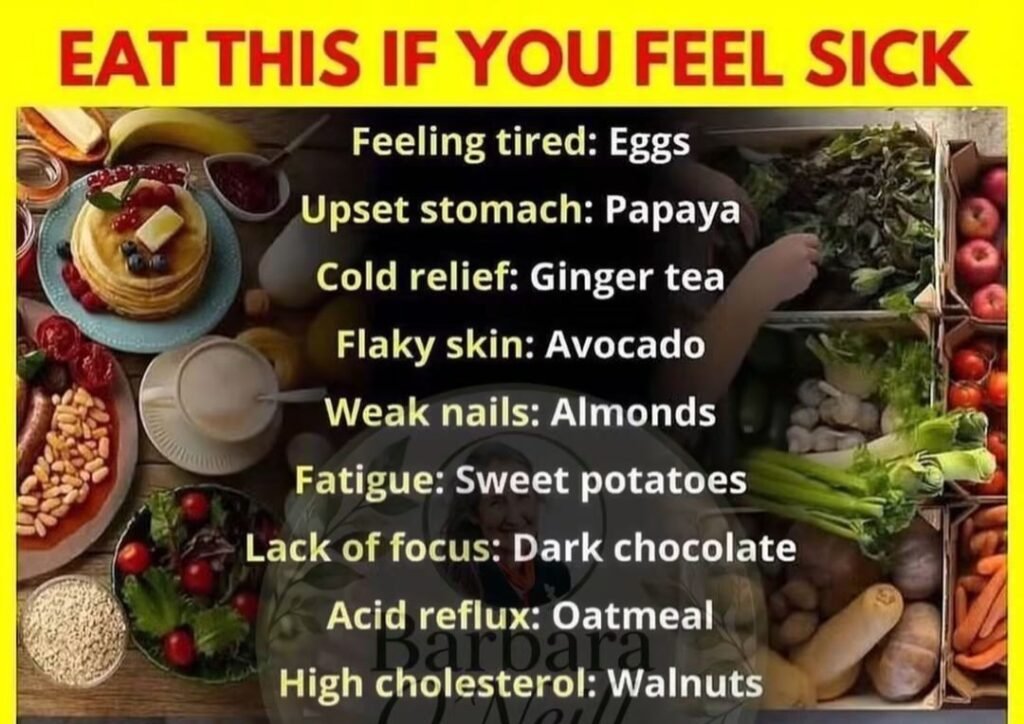
Food cannot replace medical treatment, but choosing a balanced variety of nutrient-rich foods can support your energy, digestion, immune function and overall health. The viral image lists several foods alongside common symptoms, but these pairings should be viewed as general nutrition suggestions—not as proven treatments for specific medical conditions.
Feeling tired: Eggs
Eggs provide protein and several vitamins and minerals, including vitamin B12. B12 is important for red blood-cell production and helps the body release energy from food.
However, persistent tiredness can have many causes. Iron deficiency, for example, can cause tiredness and lack of energy.
Upset stomach: Papaya
Papaya is a nutritious fruit containing fiber and vitamins. It can be included as part of a balanced diet, although eating papaya should not be considered a treatment for an unexplained or persistent stomach problem.
If stomach symptoms continue, become severe, or are accompanied by other concerning symptoms, medical advice is more appropriate than relying on a particular food.
Cold relief: Ginger tea
Ginger tea can be a comforting warm drink when you have a cold. Ginger has also been studied for nausea, with some evidence suggesting it may help with certain types of nausea. However, research does not support treating every cold symptom with ginger.
Staying hydrated and getting adequate rest are also important when you are unwell.
Dry or flaky skin: Avocado
Avocados provide unsaturated fats and a range of nutrients. Including healthy fats, fruits and vegetables in a balanced diet can contribute to overall nutritional health.
However, persistent dry or flaky skin can have many causes, so a single food should not be presented as a cure.
Weak nails: Almonds
Almonds contain protein, healthy fats and minerals. Nuts can be a useful part of a varied diet, but weak or changing nails can sometimes be associated with nutritional deficiencies or other health conditions.
If nail changes persist, it is worth discussing them with a healthcare professional.
Fatigue: Sweet potatoes
Sweet potatoes provide carbohydrates, fiber and several vitamins and minerals. Carbohydrates are an important source of energy, so including nutritious carbohydrate-rich foods can be helpful as part of regular meals.
The NHS recommends eating regular meals and healthy snacks rather than relying on large meals separated by long periods without food.
Lack of focus: Dark chocolate
Dark chocolate contains cocoa compounds and can be enjoyed as part of a balanced diet. However, there is not enough evidence to claim that eating dark chocolate is a treatment for poor concentration.
For better day-to-day concentration, adequate sleep, hydration, regular meals and a varied diet are more important foundations.
Acid reflux: Oatmeal
Oatmeal can be a nutritious, fiber-containing food and may be suitable for some people with digestive symptoms. However, foods that trigger reflux differ from person to person.
If you frequently experience heartburn or acid reflux, identifying personal triggers and discussing persistent symptoms with a healthcare professional is more appropriate than relying on oatmeal alone.
High cholesterol: Walnuts
Walnuts contain unsaturated fats and can fit well into a heart-healthy eating pattern. The American Heart Association recommends a dietary pattern that includes vegetables, fruits, whole grains, beans, nuts, seeds, unsaturated fats and lean proteins.
Importantly, walnuts are not a substitute for prescribed cholesterol treatment.
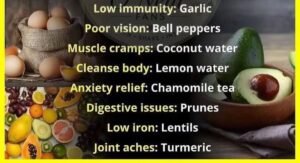
Supporting immune health: Garlic
Garlic contains various plant compounds and can add flavor and nutrients to meals. But the phrase “low immunity” is too broad to diagnose or treat with garlic alone.
A balanced diet containing a variety of fruits, vegetables, whole grains and protein sources is a better overall approach to nutritional health.
Supporting eye health: Bell peppers
Bell peppers provide vitamin C and other nutrients. Colorful vegetables can contribute to a diet that supports general health, including eye health.
However, poor vision should always be evaluated appropriately rather than treated with food alone.
Muscle cramps: Coconut water
Coconut water contains fluids and electrolytes, so it can contribute to hydration. Nevertheless, recurring muscle cramps can have many possible causes and should not automatically be attributed to dehydration or a lack of one nutrient.
“Cleansing the body”: Lemon water
Lemon water can be a refreshing way to drink more fluids and provides a small amount of vitamin C. But the body already has organs—including the liver and kidneys—that perform its natural waste-processing functions.
There is no need for a special “detox” drink to cleanse the body.
Relaxation: Chamomile tea
Chamomile tea is commonly consumed as a caffeine-free herbal drink and may be relaxing for some people. It should not, however, be presented as a treatment for anxiety.
If anxiety is persistent or interfering with everyday life, talking with a trusted adult or healthcare professional can be helpful.
Digestive issues: Prunes
Prunes are a source of fiber and can be useful for people who experience constipation. Fiber, fluids and regular physical activity are important parts of maintaining healthy bowel function.
Persistent digestive symptoms should be assessed rather than treated indefinitely with one food.
Low iron: Lentils
Lentils are an excellent plant-based source of iron and protein. Other sources include beans, fortified cereals, leafy green vegetables and dried fruit.
Plant-based iron is absorbed less efficiently than iron from meat, but consuming vitamin-C-rich foods alongside plant sources of iron can improve absorption.
If blood tests show iron-deficiency anemia, diet alone may not always be enough; medical advice is important to determine the cause and appropriate treatment.
Joint discomfort: Turmeric
Turmeric contains curcumin and is widely used as a culinary spice. Although turmeric and curcumin have been studied for various health effects, eating turmeric should not be presented as a guaranteed treatment for joint pain.
Persistent joint pain deserves appropriate medical evaluation.
The Bigger Picture
The most important message behind this graphic is not that one food can “fix” one symptom. No single food can treat every health problem.
A healthy eating pattern should include a wide variety of foods: fruits and vegetables, whole grains or other high-fiber carbohydrates, beans and pulses, eggs, fish or other protein sources, dairy or suitable alternatives, nuts and seeds, and healthy unsaturated fats.
Some symptoms listed in the graphic—particularly persistent fatigue, weakness, changes in vision or nail changes—can sometimes be associated with nutritional deficiencies. Iron deficiency and vitamin B12 or folate deficiency, for example, can cause tiredness and weakness and may require blood testing to identify.
Therefore, food should be viewed as part of a healthy lifestyle, not a replacement for diagnosis or treatment.
Bottom Line
Eggs, papaya, ginger, avocado, almonds, sweet potatoes, oatmeal, walnuts, garlic, bell peppers, lentils and other foods shown in the graphic can all have a place in a balanced diet. The key is variety rather than relying on a single “miracle food.”
If a symptom is persistent, worsening, or significantly affecting everyday life, it is better to seek appropriate medical advice instead of trying to treat the symptom through food alone.