
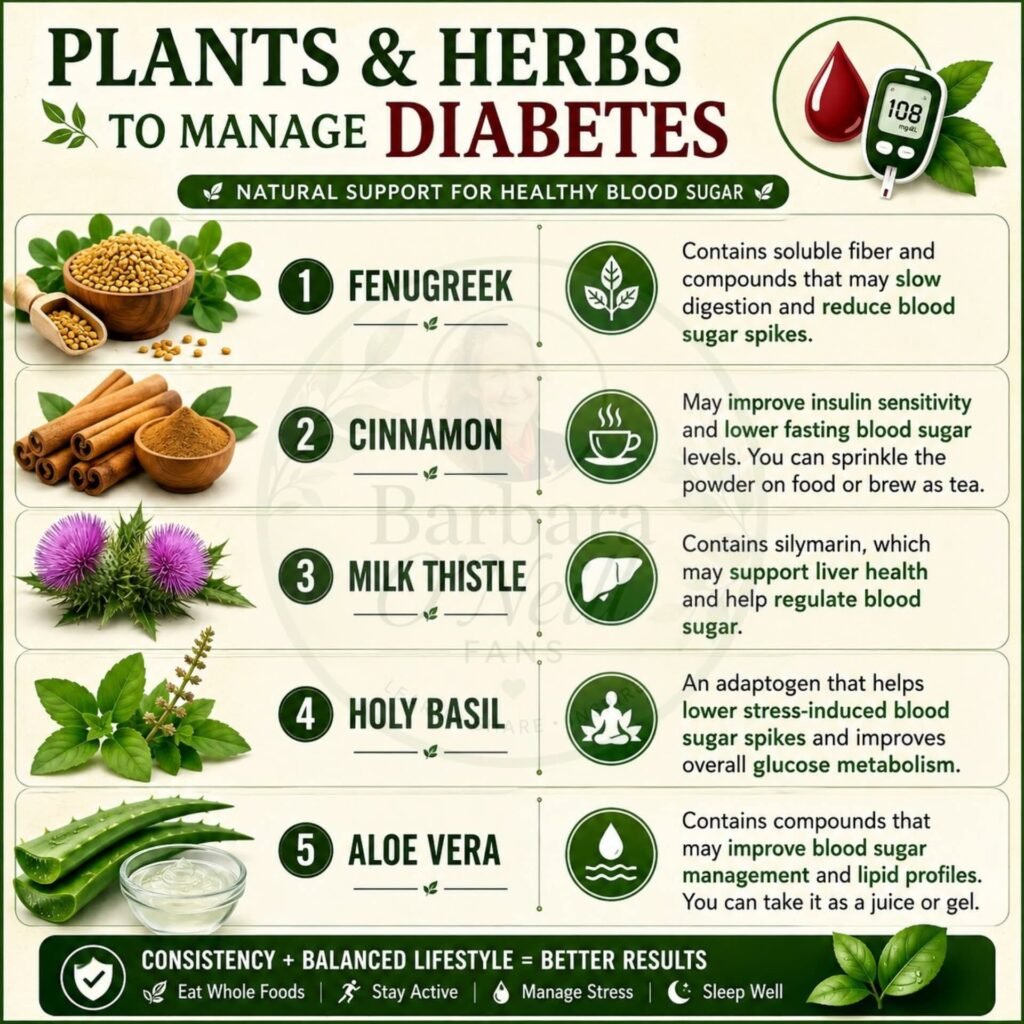
5 Plants & Herbs That May Support Healthy Blood Sugar
Managing blood sugar is an important part of maintaining overall health, especially for people living with diabetes or prediabetes. Certain herbs and plants have been studied for their potential effects on blood glucose, insulin sensitivity, and other aspects of metabolic health.
However, it’s important to understand that herbs are not a replacement for prescribed diabetes treatment. Evidence for many herbal remedies remains limited or inconsistent.
1. Fenugreek
Fenugreek (Trigonella foenum-graecum) is a traditional herb whose seeds are commonly used in cooking and herbal preparations.
Some research suggests fenugreek may help reduce blood glucose levels in people with type 2 diabetes. A systematic review found possible improvements in HbA1c, although researchers noted that the available studies varied considerably in quality.
Fenugreek contains fiber and other compounds that may influence carbohydrate digestion and glucose metabolism.
Important: Large amounts may cause digestive symptoms or an excessive drop in blood sugar, particularly when combined with diabetes medication.
2. Cinnamon
Cinnamon is one of the most widely studied spices in relation to blood sugar.
Some clinical research has found that cinnamon supplementation may reduce fasting blood glucose and measures of insulin resistance. However, results across studies are inconsistent, and there isn’t enough evidence to recommend cinnamon as a treatment for diabetes.
Using cinnamon as a normal culinary spice is generally considered safe. Large amounts of cassia cinnamon can provide significant amounts of coumarin, which may be problematic for the liver in susceptible people.
3. Milk Thistle
Milk thistle contains a compound called silymarin and has traditionally been studied for its potential effects on liver health.
Although researchers have investigated milk thistle in people with diabetes, evidence remains limited. Current evidence does not establish milk thistle as an effective treatment for controlling blood sugar.
It should therefore be viewed as an area of research rather than a proven diabetes treatment.
4. Holy Basil
Holy basil, also known as tulsi, is traditionally used in Ayurvedic medicine.
It contains several plant compounds that have been investigated for potential effects on metabolism and glucose regulation. However, evidence from human studies is not strong enough to conclude that holy basil can reliably control diabetes.
More rigorous clinical research is needed before it can be considered an established treatment.
5. Aloe Vera
Aloe vera has also been studied for possible effects on blood glucose and lipid levels.
Some preliminary research suggests aloe preparations could influence blood sugar, but evidence remains insufficient to recommend aloe vera as a treatment for diabetes. The American Diabetes Association consensus report does not recommend routine use of herbal supplements such as aloe vera to improve glycemia.
Aloe products can also have side effects and may interact with conventional diabetes medicines.
Healthy Habits Matter Most
Herbs and spices should be considered potential additions to a healthy lifestyle—not substitutes for medical care.
For better blood-sugar management, focus on:
🥗 Eating a balanced diet rich in vegetables, whole foods and fiber
🚶 Staying physically active
💧 Choosing water and other low- or zero-calorie drinks
😴 Getting adequate sleep
🧘 Managing stress
💊 Taking prescribed medications as directed
🩺 Monitoring blood glucose as recommended by a healthcare professional
A registered dietitian or diabetes-care professional can also help create an eating plan appropriate for individual needs.
Final Takeaway
Fenugreek, cinnamon, milk thistle, holy basil and aloe vera have all been studied for their potential relationship with blood sugar. The evidence is strongest for continued research rather than treating these plants as proven diabetes therapies.
In particular, current health guidance warns against products claiming to be a “natural diabetes cure” or promising to replace diabetes medication.
Disclaimer: This article is for educational purposes only and does not replace medical advice. Anyone taking diabetes medication should consult a healthcare professional before using concentrated herbal supplements, because some herbs may interact with medicines or affect blood glucose.