
🌫️ Mold Exposure: Symptoms, Risks & Prevention
📌 Introduction
Mold is a type of fungus that thrives in damp, humid environments. While small amounts are common indoors, prolonged exposure to mold spores can trigger health problems. Recognizing the signs early is important for preventing long‑term complications.
⚠️ Common Symptoms of Mold Exposure
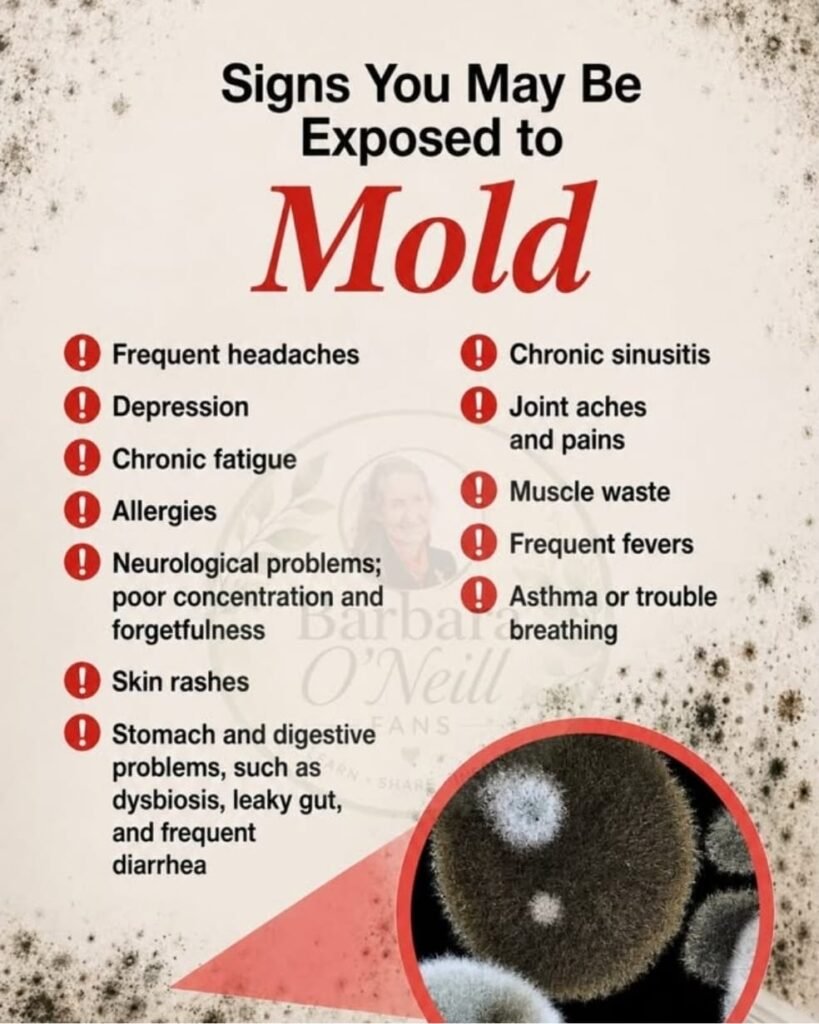
People exposed to mold may experience a wide range of symptoms, including:
- Frequent headaches
- Chronic fatigue and weakness
- Depression or mood changes
- Allergies and sinus congestion
- Skin rashes and irritation
- Digestive issues (diarrhea, bloating, leaky gut)
- Poor concentration and memory problems
- Joint aches and muscle pain
- Asthma or breathing difficulties
- Recurrent fevers
🧠 How Mold Affects the Body
- Respiratory system: Mold spores irritate the lungs, worsening asthma and allergies.
- Immune system: Continuous exposure can weaken immunity, making infections more likely.
- Neurological effects: Some molds release mycotoxins that may affect brain function, leading to poor focus or mood changes.
- Digestive system: Mold exposure has been linked to gut imbalance and chronic digestive discomfort.
🏠 Where Mold Grows
- Bathrooms and kitchens with poor ventilation
- Basements and attics with moisture leaks
- Carpets, upholstery, and damp wood
- Air conditioning units and humidifiers
✅ Prevention & Solutions
- Keep indoor humidity below 50%.
- Use dehumidifiers in damp areas.
- Fix leaks promptly.
- Clean visible mold with appropriate solutions (bleach, vinegar, or commercial cleaners).
- Replace contaminated materials if mold is widespread.
- Seek professional remediation for large infestations.
⚠️ Important Disclaimer
This article is for educational purposes only. Mold exposure symptoms can overlap with other medical conditions. Always consult a healthcare professional for diagnosis and treatment, and contact certified mold remediation experts for home inspections.
📝 Conclusion
Mold exposure can affect physical, mental, and emotional health. By recognizing symptoms early and maintaining a clean, dry environment, you can reduce risks and protect your well‑being.