
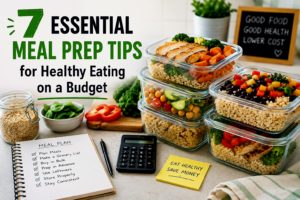
Introductio
Eating healthy often feels like an expensive and time-consuming endeavor. However, with the right strategy, you can nourish your body without breaking the bank or spending every evening in the kitchen. At Fox Recipe, we believe that good food should be accessible to everyone. In this guide, we’ll explore seven practical meal prep tips that will save you money and ensure you always have a nutritious meal ready to go.
1. Plan Your Menu Around Seasonal Produce
Buying fruits and vegetables that are in season is one of the simplest ways to cut costs. Seasonal produce is not only cheaper but also tastes better and contains more nutrients. Before heading to the store, check what’s currently in season and plan your recipes accordingly.
2. Master the Art of “Batch Cooking”
Batch cooking is the backbone of successful meal prepping. Instead of cooking a single meal, prepare large quantities of versatile ingredients like quinoa, roasted chicken, or boiled lentils. You can mix and match these components throughout the week to create salads, bowls, or wraps.
3. Invest in Quality Storage Containers
To keep your food fresh and appetizing, high-quality containers are essential. Look for BPA-free plastic or glass containers with airtight lids. Having a variety of sizes helps in organizing snacks, sauces, and full meals efficiently in your refrigerator.
4. Don’t Overlook Frozen and Canned Goods
There is a common myth that only fresh is best. In reality, frozen vegetables are often frozen at peak ripeness, preserving their nutritional value. Similarly, canned beans and tomatoes are pantry staples that are affordable, have a long shelf life, and serve as excellent bases for stews and soups.
5. Shop Your Pantry First
Before you go grocery shopping, take a quick inventory of what you already have. Many people buy ingredients they already own, leading to waste. Use your existing spices, grains, and oils as the starting point for your weekly meal plan.
6. Embrace Plant-Based Proteins
Meat is often the most expensive item on a grocery list. By incorporating plant-based proteins like chickpeas, black beans, and tofu into your rotation a few times a week, you can significantly reduce your food expenses while increasing your fiber intake.
7. Keep It Simple
One of the biggest mistakes beginners make is trying to cook overly complex recipes. Start with 30-minute meals that use minimal ingredients. As you become more comfortable with the process, you can experiment with more elaborate dishes.
Conclusion
Meal prepping is a skill that pays off in both health and savings. By dedicating just a few hours a week to planning and prepping, you take control of your diet and your finances. Stay tuned to Fox Recipe for more tips and delicious recipes to fuel your lifestyle.
Disclaimer: The information provided on Fox Recipe is for educational and informational purposes only. While we strive to provide accurate recipes and nutritional advice, we are not certified nutritionists or medical professionals. Always consult with a healthcare provider or dietitian before making significant changes to your diet, especially if you have underlying health conditions or food allergies.