
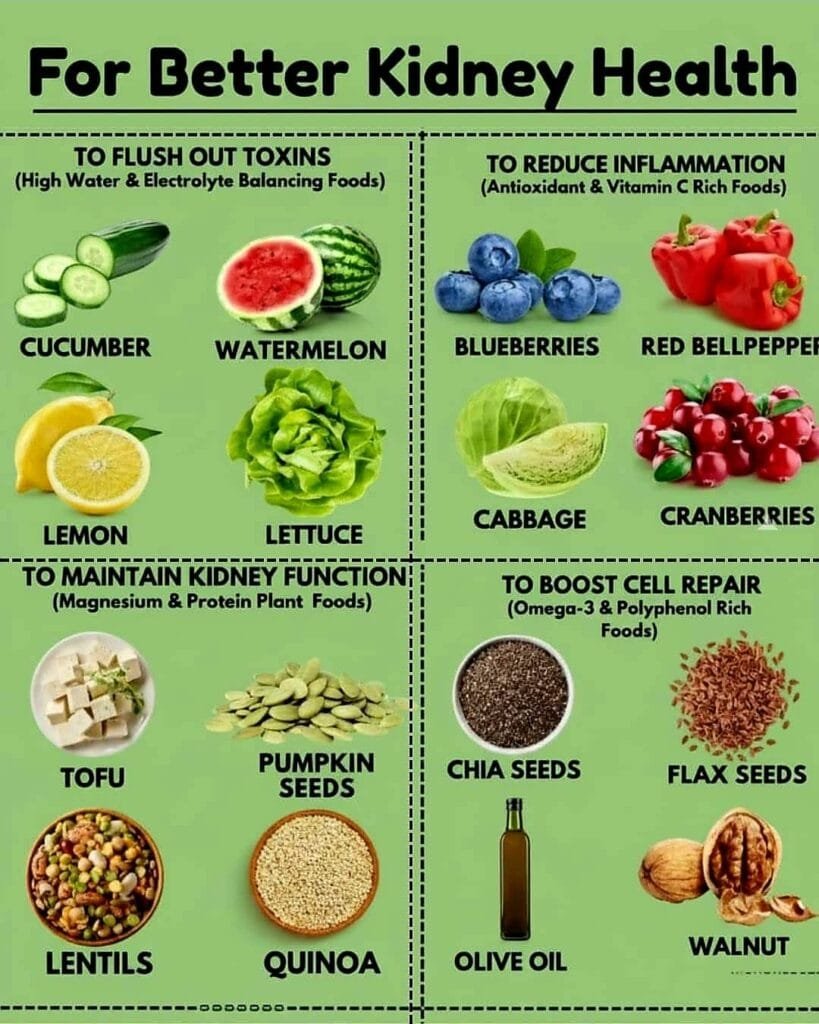
Your kidneys are vital organs responsible for filtering waste, balancing fluids, regulating blood pressure, and maintaining electrolyte levels. What you eat has a powerful impact on how well your kidneys function. A kidney-friendly diet can help prevent kidney disease, slow its progression, and support overall health.
This article highlights the best foods for kidney health, explains why they matter, and offers simple tips for daily eating.
Key Principles of a Kidney-Friendly Diet
Before exploring specific foods, it’s important to understand a few basic principles:
Control sodium (salt) intake
Eat moderate amounts of protein
Choose fresh, whole foods
Stay well hydrated
Limit processed foods
Best Foods for Kidney Health
1. Apples
Apples are rich in fiber and antioxidants while being low in potassium and phosphorus.
Benefits:
Supports digestion
Helps reduce inflammation
Supports blood sugar control
How to eat: Fresh, sliced, or baked without sugar
2. Blueberries
Blueberries are packed with antioxidants that protect kidney cells from damage.
Benefits:
Reduces inflammation
Supports heart and kidney health
Low in sodium and potassium
How to eat: Fresh, frozen, or added to oatmeal
3. Red Bell Peppers
Low in potassium but high in vitamins A and C.
Benefits:
Supports immune health
Protects kidney cells
Adds flavor without sodium
How to eat: Raw, roasted, or in salads
4. Cauliflower
A kidney-friendly vegetable rich in fiber and vitamin C.
Benefits:
Supports digestion
Helps reduce toxin buildup
Low in potassium
How to eat: Steamed, mashed, or roasted
5. Cabbage
Cabbage is low in potassium and high in antioxidants.
Benefits:
Supports detoxification
Improves digestion
Protects against inflammation
How to eat: Raw, steamed, or lightly cooked
6. Garlic
Garlic adds flavor without increasing sodium intake.
Benefits:
Supports blood pressure control
Reduces inflammation
Helps protect kidney function
How to eat: Fresh or cooked in meals
7. Egg Whites
Egg whites are a high-quality protein source with low phosphorus.
Benefits:
Supports muscle repair
Safer protein option for kidneys
How to eat: Boiled, scrambled, or omelets
8. Olive Oil
A healthy fat that supports heart and kidney health.
Benefits:
Reduces inflammation
Supports blood vessel health
Helps control cholesterol
How to use: Drizzle over salads or cooked vegetables
9. Fish (Salmon, Sardines)
Rich in omega-3 fatty acids.
Benefits:
Reduces inflammation
Supports heart and kidney health
Helps manage blood pressure
Serving tip: 2 times per week, grilled or baked
10. Onions
Low in potassium and rich in antioxidants.
Benefits:
Improves circulation
Supports immune function
Adds flavor without salt
Foods to Limit for Kidney Health
For optimal kidney function, limit:
Processed foods and fast food
Excess salt and salty snacks
Sugary drinks
Red and processed meats
Foods high in phosphorus (colas, processed cheese)
Hydration and Kidney Health
Water helps kidneys flush toxins efficiently.
Tips:
Drink consistently throughout the day
Adjust intake based on activity and climate
Avoid sugary and carbonated drinks
Lifestyle Tips to Support Kidney Health
Control blood pressure and blood sugar
Maintain a healthy weight
Exercise regularly
Avoid smoking
Limit alcohol intake
Final Thoughts
Your kidneys work hard every day, and the right foods can help them function better for longer. Choosing fresh fruits and vegetables, healthy fats, and controlled protein intake can protect your kidneys and improve your overall health.
Small dietary changes today can make a big difference in kidney health tomorrow.