
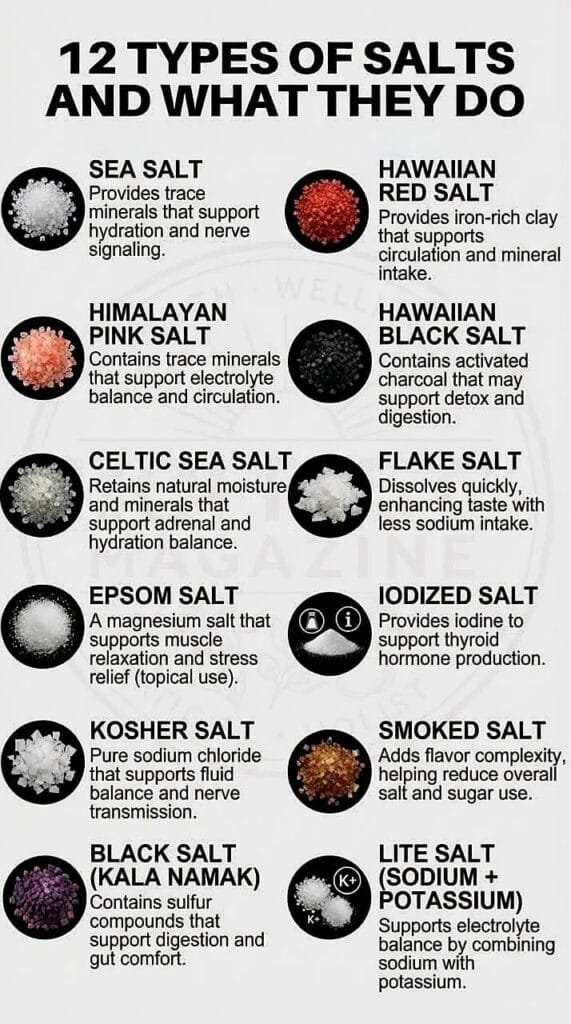
Salt is more than just a seasoning—it plays a vital role in hydration, nerve function, muscle movement, and hormone balance. While all edible salts contain sodium, different types offer unique textures, mineral traces, and culinary or wellness uses. Understanding these differences helps you choose the right salt for your health and lifestyle.
Below is a clear, practical guide to the 12 most common types of salt and what they actually do.
1. Sea Salt
What it does:
Sea salt is produced by evaporating seawater and retains small amounts of trace minerals like magnesium, calcium, and potassium.
Benefits
Supports hydration and nerve signaling
Less processed than refined salt
Enhances flavor naturally
Best use: Everyday cooking, finishing dishes
2. Himalayan Pink Salt
What it does:
This ancient salt contains trace minerals and is known for its pink color from iron content.
Benefits
Supports electrolyte balance
Helps fluid regulation
Mild, clean taste
Best use: Cooking, seasoning, salt grinders
3. Celtic Sea Salt
What it does:
Naturally moist and mineral-rich, harvested from coastal regions.
Benefits
Supports adrenal health
Helps hydration balance
Contains magnesium and calcium
Best use: Cooking, electrolyte drinks
4. Hawaiian Red Salt
What it does:
Mixed with volcanic red clay (alaea), giving it an iron-rich profile.
Benefits
Supports circulation
Contributes trace minerals
Traditional ceremonial use
Best use: Finishing salt, traditional dishes
5. Hawaiian Black Salt
What it does:
Contains activated charcoal from volcanic lava.
Benefits
May support digestion
Traditionally used for detox support
Adds earthy flavor
Best use: Garnishing, specialty dishes
6. Flake Salt
What it does:
Light, airy crystals that dissolve quickly on the tongue.
Benefits
Enhances flavor with less sodium
Improves taste perception
Best use: Finishing salt on cooked foods
7. Kosher Salt
What it does:
Pure sodium chloride with large crystals.
Benefits
Easy to control when seasoning
Supports fluid balance and nerve transmission
Best use: Cooking, seasoning meats and vegetables
8. Iodized Salt
What it does:
Fortified with iodine, an essential nutrient.
Benefits
Supports thyroid hormone production
Prevents iodine deficiency
Best use: Daily household salt, especially where seafood intake is low
9. Epsom Salt (Magnesium Sulfate)
What it does:
Not for eating—used topically.
Benefits
Supports muscle relaxation
Helps relieve stress and soreness
May improve sleep when used in baths
Best use: Baths, foot soaks
10. Smoked Salt
What it does:
Salt smoked over wood for deep flavor.
Benefits
Adds strong flavor with less salt use
Helps reduce reliance on sauces or sugars
Best use: Grilling, plant-based dishes, meats
11. Black Salt (Kala Namak)
What it does:
Contains sulfur compounds, giving it an egg-like aroma.
Benefits
Supports digestion
Traditionally used for gut comfort
Popular in Ayurvedic practices
Best use: Vegan dishes, chutneys, digestive recipes
12. Lite Salt (Sodium + Potassium)
What it does:
Combines sodium with potassium chloride.
Benefits
Supports electrolyte balance
Helps reduce sodium intake
Beneficial for blood pressure management
Best use: Those advised to limit sodium (with medical guidance)
Important Health Notes
Salt is essential, but excess sodium can raise blood pressure.
Trace minerals in natural salts are helpful but not a replacement for a balanced diet.
People with kidney disease, heart conditions, or on medication should consult a healthcare provider before switching salts.
Iodized salt remains important for thyroid health in many populations.
Which Salt Is Best?
There is no single “best” salt—the healthiest choice depends on your needs:
For thyroid health: Iodized salt
For hydration & minerals: Sea salt, Celtic salt
For digestion: Kala namak
For flavor with less sodium: Flake or smoked salt
For muscle relaxation: Epsom salt (topical)
Final Thoughts
Salt is a powerful nutritional tool when used wisely. Choosing the right type—and using it in moderation—can support hydration, digestion, nerve function, and overall wellness. Variety, quality, and balance matter more than eliminating salt entirely.