
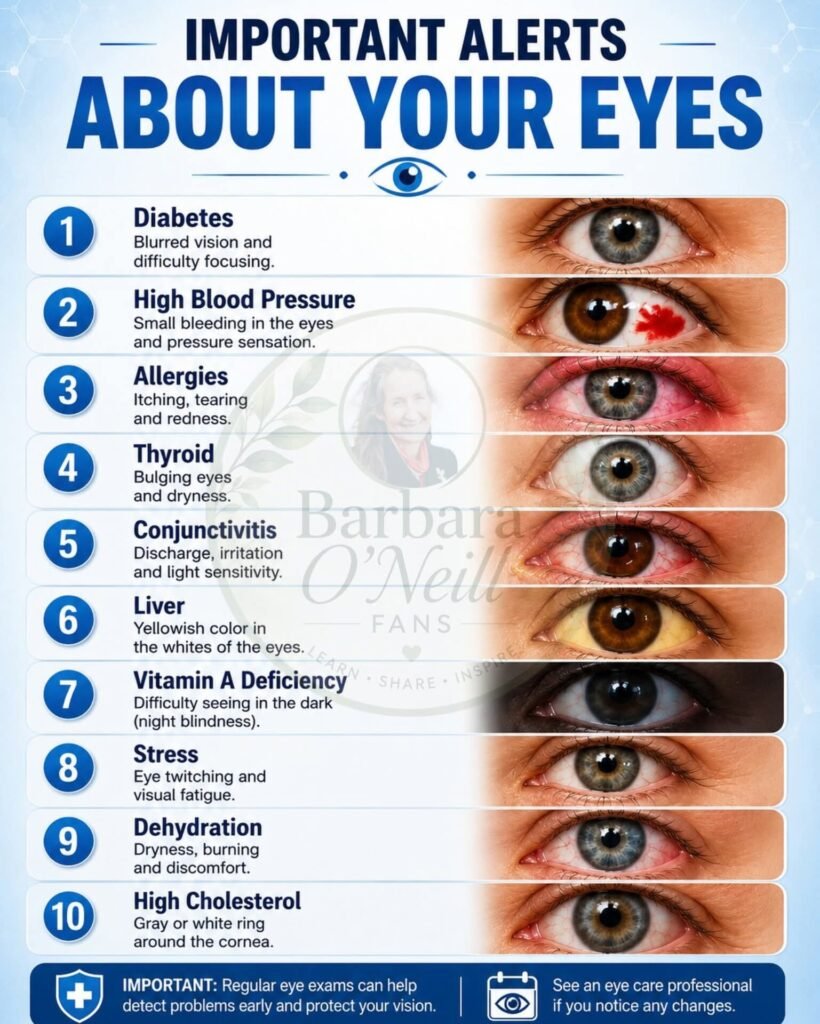
👁️ Your eyes are more than windows to the soul—they can sometimes reflect what’s happening inside your body. While many eye changes are harmless or temporary, others may signal underlying health conditions that deserve attention. Here’s a full article expanding on the 10 signs you listed, with context and a disclaimer.
👁️ 10 Eye Signs That May Reflect Your Health
1️⃣ Diabetes
High blood sugar can damage blood vessels in the retina, leading to blurred vision, difficulty focusing, or even diabetic retinopathy if untreated.
2️⃣ High Blood Pressure
Hypertension may cause tiny changes in the eye’s blood vessels, sometimes visible during an eye exam. Severe cases can lead to vision problems.
3️⃣ Allergies
Itching, tearing, and redness are common signs of allergic reactions, often triggered by pollen, dust, or pet dander.
4️⃣ Thyroid Conditions
Hyperthyroidism, especially Graves’ disease, can cause bulging eyes (exophthalmos), dryness, and irritation.
5️⃣ Conjunctivitis
Also known as “pink eye,” this infection or inflammation causes discharge, irritation, and sensitivity to light.
6️⃣ Liver Problems
Yellowing of the whites of the eyes (jaundice) may indicate liver disease or bile duct obstruction.
7️⃣ Vitamin A Deficiency
A lack of vitamin A can cause night blindness and difficulty seeing in low light.
8️⃣ Stress
Eye twitching, spasms, and visual fatigue are often linked to stress, lack of sleep, or caffeine intake.
9️⃣ Dehydration
Dryness, burning, and discomfort can occur when the body lacks fluids, reducing tear production.
🔟 High Cholesterol
A gray or white ring around the cornea (arcus senilis) may be associated with elevated cholesterol levels.
🧾 Practical Tips
– Schedule regular eye exams to catch early changes.
– Protect eyes from UV rays with sunglasses.
– Stay hydrated and maintain a balanced diet rich in vitamins.
– Manage chronic conditions like diabetes and hypertension with medical guidance.
⚠️ Disclaimer
This article is for informational purposes only. Eye changes can have many causes, and not all are serious. If you notice persistent or unusual symptoms, consult a qualified healthcare professional or eye specialist for proper diagnosis and treatment.