
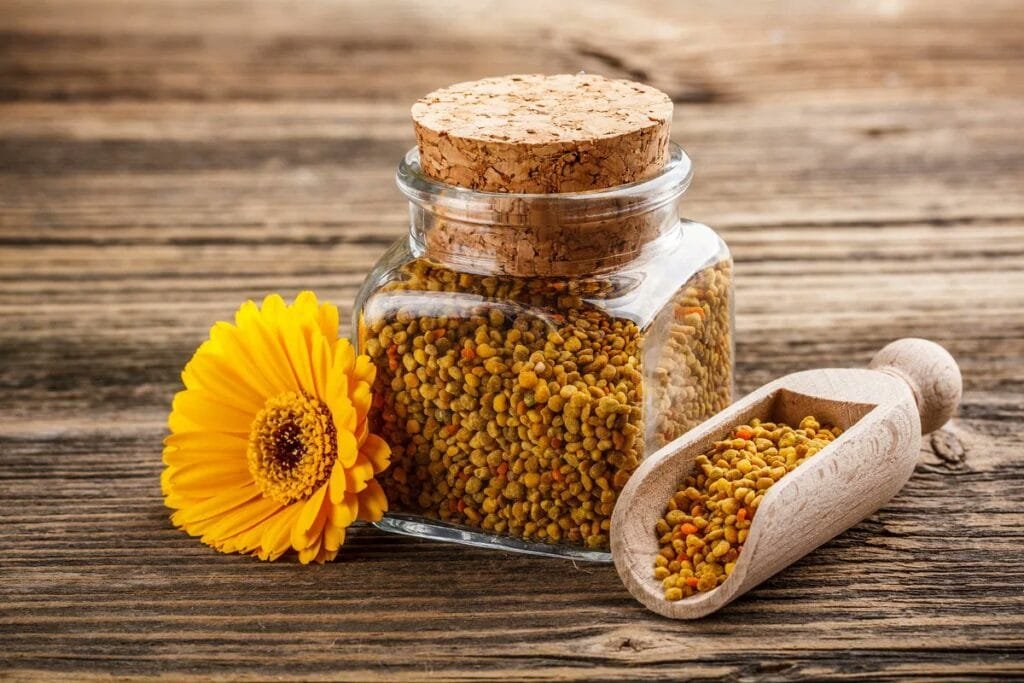
Bee pollen is a natural product collected by bees from flowers, enriched with enzymes and formed into small granules. It’s considered one of the most complete natural nutritional concentrates.
🧪 What does it contain?
• Protein (20–30%)
• All 8 essential amino acids
• Carbohydrates (30–40% – glucose & fructose)
• Healthy fats (5–10%)
• Vitamins B-complex, C, A (beta-carotene), E
• Minerals: calcium, magnesium, potassium, iron, zinc, selenium
• Flavonoids, polyphenols & natural antioxidants\
🍯 Benefits
• Stronger immunity
• More energy and endurance
• Better appetite and digestion
• Antioxidant & anti-inflammatory support
🎯 Specific support
• Anemia – improves blood count
• Liver – supports detox & regeneration
• Hormonal balance (fatigue, menopause)
• Prostate health
• Nervous system – reduces fatigue & stress
• Gut health – supports microbiome recovery
⚠️ Not recommended if you have:
• Allergy to pollen or bee products
• History of severe allergic reactions
• Asthma or strong allergies
• Autoimmune conditions (only with supervision)
• During pregnancy (doctor’s approval)
• Children under 3
📝 Tip: always start with a very small test dose.
🥄 How to use
Do not swallow dry. Soak 1 tsp in water, yogurt, plant milk, or honey (1:5) for 6–12 hours.
Dosage:
Adults: 1–2 tsp
Seniors: 1 tsp
Children (3–12): ½ tsp
Use for 20–30 days, then pause 10–15 days.
⏰ Best time: morning or with breakfast (avoid at night).
🍯 For best results: combine with honey or propolis, store in a cool dark place, and choose local raw pollen.