
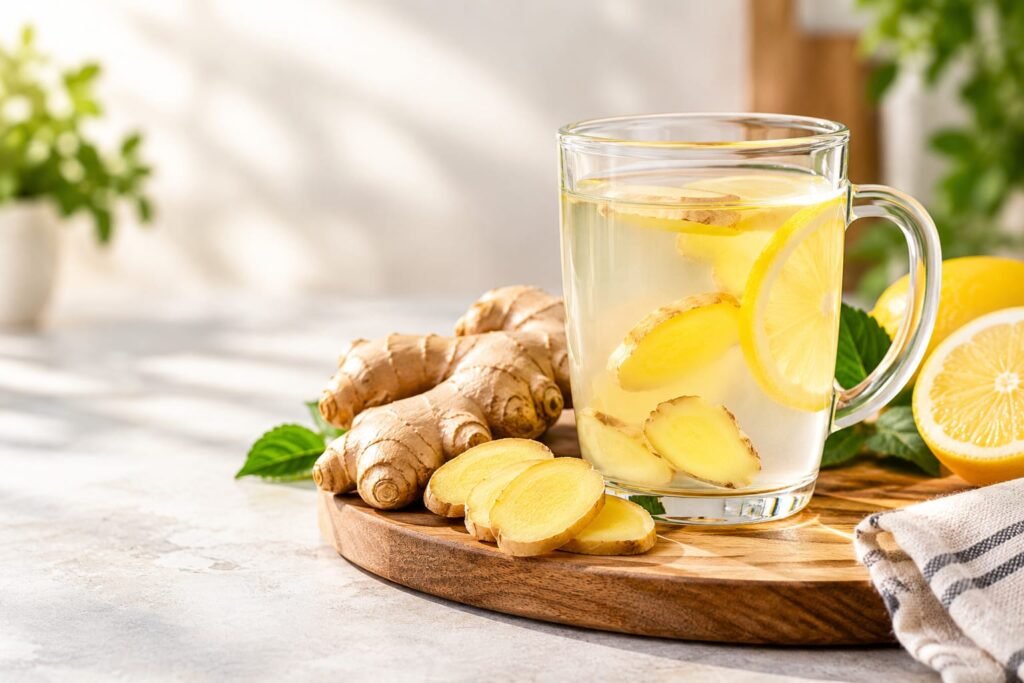
Drinking ginger-infused water can help with nausea, digestion, inflammation, and blood sugar control, but it’s not a cure-all. The main active compounds, gingerols and shogaols, provide antioxidant and anti-inflammatory effects when consumed regularly.
🌿 Key Benefits of Ginger in Water
- Nausea Relief
- Effective for morning sickness, motion sickness, and chemotherapy-related nausea.
- Studies show 1–2 grams of ginger daily can reduce symptoms.
- Digestive Support
- Speeds up gastric emptying and reduces bloating.
- Helps with indigestion and discomfort after meals.
- Anti-Inflammatory Properties
- Reduces markers of chronic inflammation (C-reactive protein, IL-6, TNF-alpha).
- May ease arthritis pain and muscle soreness.
- Blood Sugar Management
- Can modestly lower blood sugar and improve insulin sensitivity in people with diabetes.
- Antioxidant Effects
- Protects cells from oxidative stress caused by free radicals.
- May support cardiovascular health and reduce risk of chronic diseases.
- Pain Relief
- Shown to reduce menstrual cramps and muscle soreness after exercise.
- Cholesterol & Blood Pressure
- Some studies suggest ginger may lower cholesterol and blood pressure, supporting heart health.
⚠️ Risks & Precautions
- Overconsumption may cause stomach upset, heartburn, or diarrhea.
- Pregnancy: Safe in small amounts, but consult a doctor before regular use.
- Blood-thinning effect: Ginger may interact with anticoagulant medications.
- Gallbladder issues: No proven benefit for bile release; avoid if you have gallstones.
🍵 How to Make Ginger Water
- Slice 2–3 cm of fresh ginger root.
- Boil in 3–4 cups of water for 10 minutes.
- Strain and drink warm or chilled.
- Optional: Add lemon or honey for flavor.
✅ Bottom Line: Ginger water is a safe, refreshing way to support digestion, reduce inflammation, and ease nausea. It works best as a daily habit in moderation, not as a quick fix or medical substitute.