
Best & Worst Cooking Oils: What Science Really Says
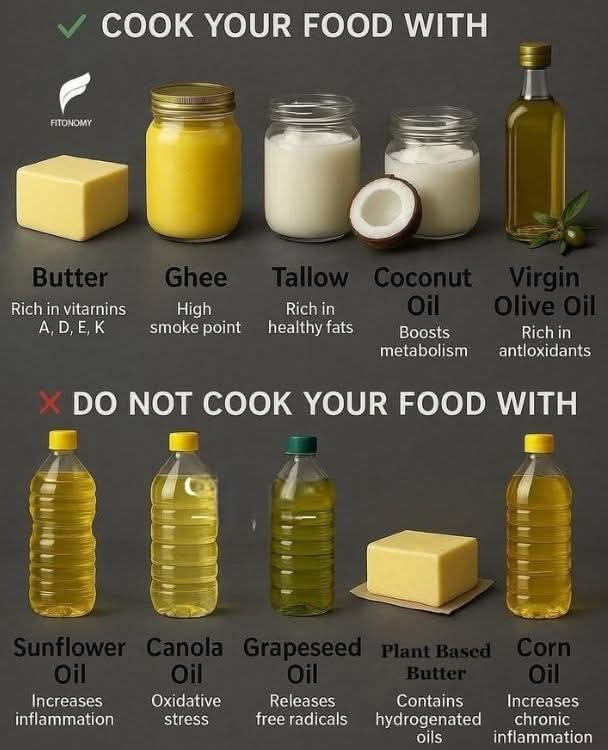
Choosing the right cooking fat matters for heart health, inflammation, and cooking safety. The image you shared highlights common claims. Below is a clear, evidence-based article explaining which fats work best, when to use them, and important nuances often missed.
✅ Good Options for Cooking
1. Butter
Why it’s used: Rich flavor; contains vitamins A, D, E, K
Best for: Low to medium heat, baking
Limitations: Lower smoke point; higher saturated fat
Tip: Don’t use for high-heat frying
2. Ghee (Clarified Butter)
Why it’s used: High smoke point, lactose-free
Best for: Sautéing, frying
Health note: Stable fat when heated; popular in traditional diets
3. Tallow (Beef Fat)
Why it’s used: Heat-stable, rich flavor
Best for: Frying, roasting
Health note: Mostly saturated & monounsaturated fats; use in moderation
4. Coconut Oil
Why it’s used: Very heat-stable
Best for: High-heat cooking
Health note: High in saturated fat — use occasionally, not daily
5. Extra Virgin Olive Oil
Why it’s excellent: Rich in polyphenols & antioxidants
Best for: Low–medium heat, sautéing, dressings
Myth alert: Quality extra virgin olive oil is safe for cooking and very healthy
❌ Oils to Limit or Avoid (Especially at High Heat)
1. Sunflower Oil
High in omega-6 fats
Can contribute to inflammation when overused
Oxidizes easily at high temperatures
2. Canola Oil
Often highly refined
Can oxidize under high heat
Better used cold, but still not ideal
3. Grapeseed Oil
High omega-6 content
Prone to oxidation
Minimal nutritional value
4. Plant-Based Margarine
May contain hydrogenated fats
Can include emulsifiers & additives
Avoid for daily use
5. Corn Oil
Highly refined
High omega-6 content
Linked to inflammatory imbalance when overused
🔥 Smoke Point Matters
When oils are heated beyond their smoke point:
Nutrients break down
Harmful compounds may form
Flavor and health benefits are lost
Heat-stable fats = safer cooking
🥗 Best Practices
Use olive oil for everyday cooking
Use ghee or tallow for high heat
Avoid frequent use of refined seed oils
Rotate fats instead of relying on just one
Choose cold-pressed & unrefined oils when possible
⚠️ Important Balance Note
Not all seed oils are “toxic,” but overconsumption, especially when overheated, can contribute to inflammation. Moderation and cooking method matter more than fear.
Bottom Line
✔ Choose natural, minimally processed fats
✔ Match oil to cooking temperature
✖ Avoid reheating refined oils repeatedly