
🧪 Understanding Your Blood Test Results
📌 Introduction
Blood tests are one of the most common tools doctors use to check overall health. They measure levels of cells, proteins, enzymes, and chemicals in your blood. While charts can give a quick overview, blood test interpretation should always be done by a qualified healthcare professional. Results depend on age, sex, medical history, and other factors.
🔍 Key Blood Test Components
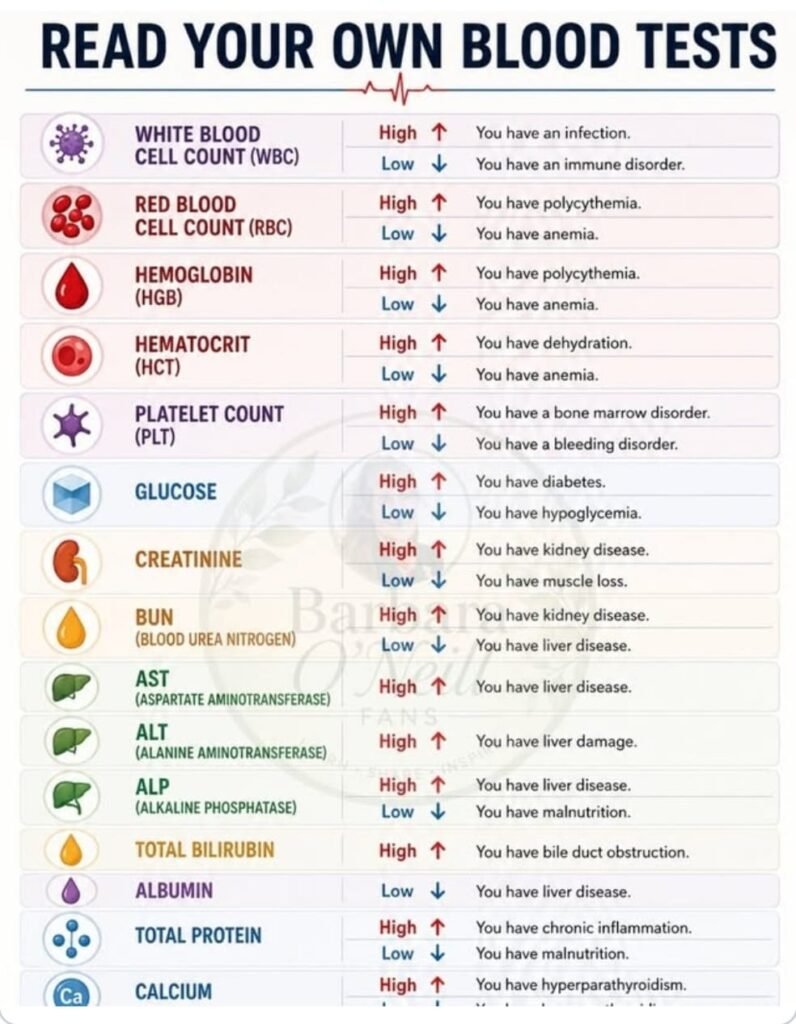
1. White Blood Cell Count (WBC)
- High: Often linked to infection or inflammation.
- Low: May suggest immune disorders or bone marrow problems.
2. Red Blood Cell Count (RBC)
- High: Can indicate polycythemia (excess RBCs).
- Low: Commonly associated with anemia.
3. Hemoglobin (HGB)
- High: Seen in polycythemia or dehydration.
- Low: Suggests anemia.
4. Hematocrit (HCT)
- High: Often due to dehydration.
- Low: Indicates anemia.
5. Platelet Count (PLT)
- High: May point to bone marrow disorders.
- Low: Can cause bleeding problems.
6. Glucose
- High: Suggests diabetes.
- Low: Hypoglycemia (low blood sugar).
7. Creatinine
- High: Possible kidney disease.
- Low: Muscle loss or malnutrition.
8. Blood Urea Nitrogen (BUN)
- High: Kidney disease or dehydration.
- Low: Liver disease or malnutrition.
9. Liver Enzymes
- AST (Aspartate Aminotransferase): High → liver disease.
- ALT (Alanine Aminotransferase): High → liver damage.
- ALP (Alkaline Phosphatase): High → liver disease; Low → malnutrition.
10. Bilirubin
- High: May indicate bile duct obstruction or liver disease.
11. Albumin
- Low: Suggests liver disease or malnutrition.
12. Total Protein
- High: Chronic inflammation.
- Low: Malnutrition.
13. Calcium
- High: Hyperparathyroidism or certain cancers.
- Low: Hypoparathyroidism or vitamin D deficiency.
✅ What These Results Mean
- Patterns matter: A single abnormal value doesn’t always mean disease. Doctors look at combinations of results.
- Lifestyle factors: Dehydration, diet, and medications can affect values.
- Follow‑up tests: Abnormal results often require repeat testing or imaging.
⚠️ Important Disclaimer
This article is for educational purposes only. Blood test results should never be self‑diagnosed. Always consult a healthcare professional for accurate interpretation and treatment.
📝 Conclusion
Blood tests provide a window into your health, but they are only part of the picture. Understanding the basics can help you ask better questions and engage in informed discussions with your doctor.