
🧾 COVID‑19 vs. “Radio Wave Sickness”: Separating Facts from Myths
📌 The Claim
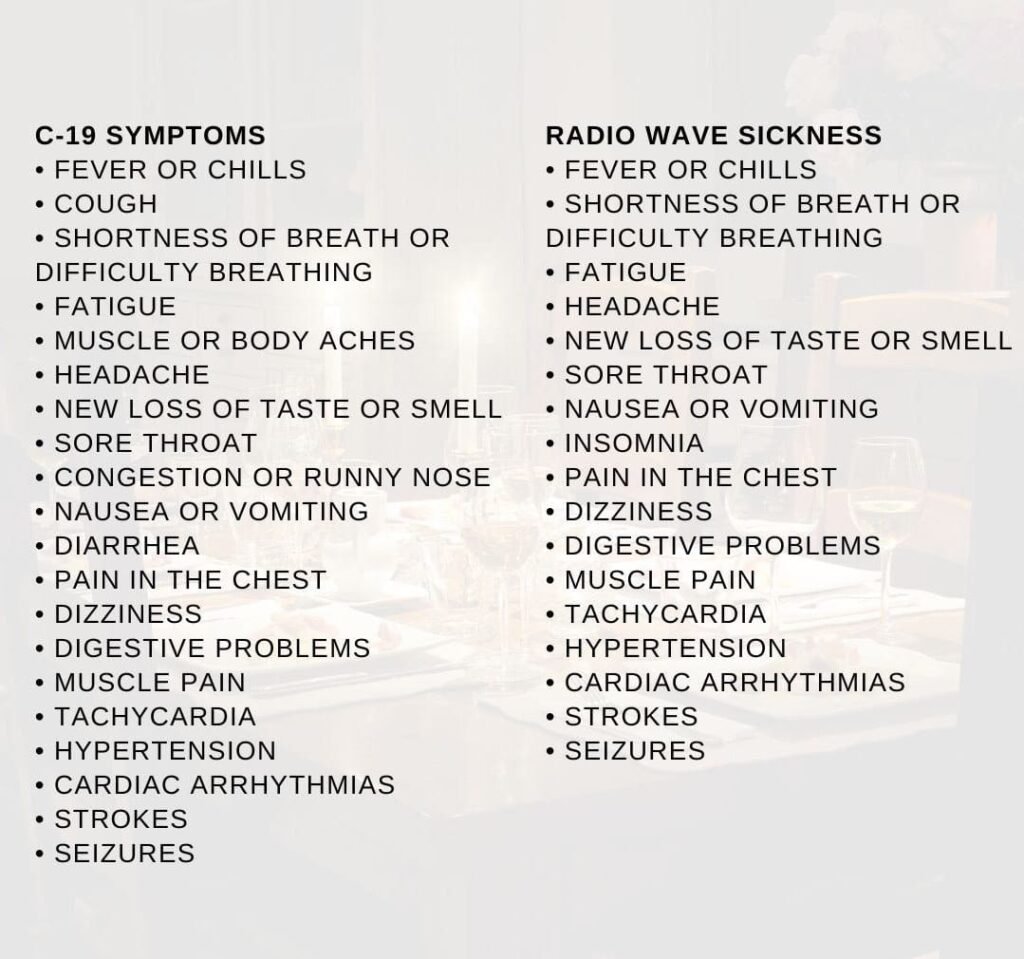
Some comparisons online suggest that COVID‑19 symptoms are nearly identical to those of so‑called radio wave sickness, implying a hidden connection.
✅ What We Know About COVID‑19
- COVID‑19 is caused by the SARS‑CoV‑2 virus, a respiratory pathogen.
- Common symptoms include:
- Fever, cough, shortness of breath
- Fatigue, muscle aches, headache
- Loss of taste or smell
- Sore throat, congestion, nausea, diarrhea
- Severe cases can lead to chest pain, arrhythmias, strokes, and seizures.
- These are well‑documented by the World Health Organization (WHO) and Centers for Disease Control (CDC).
⚠️ What’s Called “Radio Wave Sickness”
- Sometimes referred to as electromagnetic hypersensitivity (EHS).
- Reported symptoms include headaches, fatigue, dizziness, insomnia, and chest discomfort.
- Scientific studies show no consistent biological mechanism linking everyday radio waves (Wi‑Fi, cell towers) to these symptoms.
- Most experts believe symptoms may be due to stress, anxiety, or other health conditions, not direct radio wave exposure.
🔬 Why Symptoms Overlap
- Many conditions share non‑specific symptoms like fatigue, headache, or dizziness.
- Comparing lists can make them look identical, but the causes are very different.
- COVID‑19 is an infectious disease, while “radio wave sickness” is not recognized as a medical diagnosis by major health authorities.
🚨 Important Disclaimer
- COVID‑19 requires testing, medical care, and vaccination for prevention and treatment.
- “Radio wave sickness” remains unproven and should not be confused with viral illness.
- If you experience persistent fever, chest pain, or loss of taste/smell, seek medical help immediately.
🌟 Bottom Line
- COVID‑19 is a real, infectious disease with well‑established symptoms.
- “Radio wave sickness” is not scientifically validated.
- Symptom overlap does not mean the conditions are the same.
- Always rely on trusted medical sources for health information.