
Healthy Food Vitamin Chart: A Complete Guide to Essential Vitamins and Their Food Sources
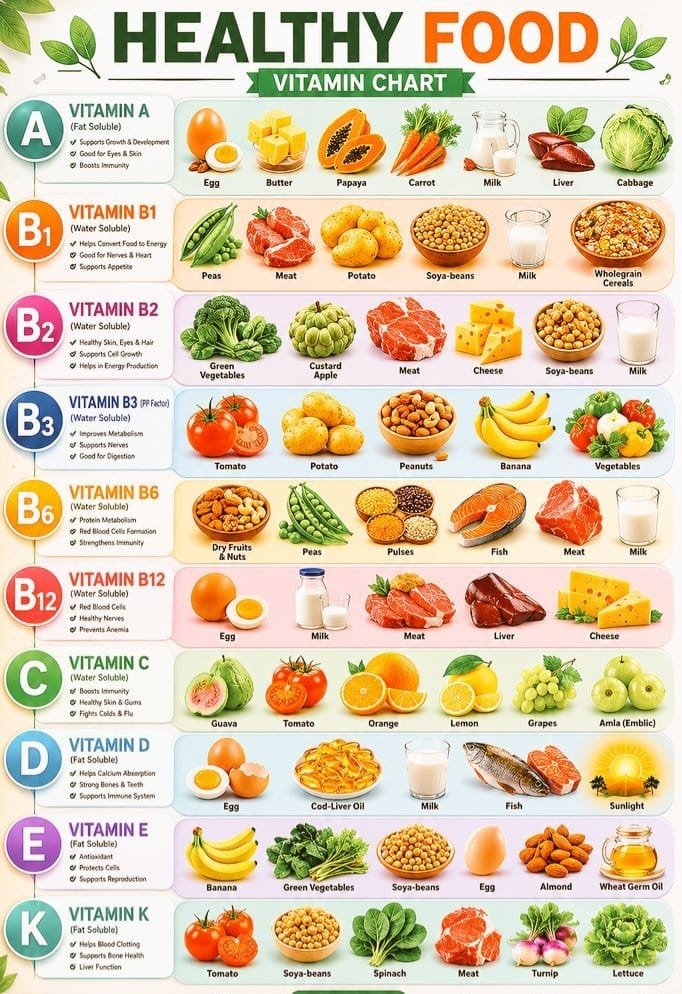
A healthy diet is the foundation of good health, and vitamins play a crucial role in keeping our bodies functioning properly. The vitamin chart above highlights some of the most important vitamins, their benefits, and the foods that naturally contain them. Understanding these nutrients can help you make smarter food choices and maintain a balanced lifestyle.
Why Are Vitamins Important?
Vitamins are essential nutrients that the body needs in small amounts to support growth, energy production, immune function, and overall well-being. Since the body cannot produce most vitamins on its own, they must be obtained through a healthy and varied diet.
Vitamin A – For Vision and Immunity
Vitamin A is a fat-soluble vitamin known for supporting eye health, skin maintenance, and immune function.
Benefits:
- Supports healthy vision
- Promotes skin health
- Strengthens the immune system
- Supports growth and development
Food Sources:
- Eggs
- Butter
- Papaya
- Carrots
- Liver
- Cabbage
Vitamin B1 (Thiamine) – Energy Booster
Vitamin B1 helps convert carbohydrates into energy and supports the nervous system.
Benefits:
- Converts food into energy
- Supports heart health
- Helps maintain a healthy nervous system
Food Sources:
- Peas
- Meat
- Potatoes
- Soybeans
- Milk
- Whole-grain cereals
Vitamin B2 (Riboflavin) – Healthy Skin and Eyes
Vitamin B2 plays a key role in energy production and maintaining healthy skin and vision.
Benefits:
- Supports healthy skin
- Maintains eye health
- Assists cell growth
- Helps red blood cell production
Food Sources:
- Green vegetables
- Custard apple
- Meat
- Cheese
- Soybeans
- Milk
Vitamin B3 (Niacin) – Metabolism Support
Vitamin B3 helps the body convert nutrients into usable energy.
Benefits:
- Supports metabolism
- Promotes digestive health
- Helps maintain healthy skin
Food Sources:
- Tomatoes
- Potatoes
- Peanuts
- Bananas
- Mixed vegetables
Vitamin B6 – Brain and Immune Health
Vitamin B6 is essential for brain development and immune system function.
Benefits:
- Supports protein metabolism
- Helps form red blood cells
- Strengthens immunity
- Supports brain health
Food Sources:
- Nuts and dried fruits
- Peas
- Pulses
- Fish
- Meat
- Milk
Vitamin B12 – Energy and Nerve Function
Vitamin B12 is important for nerve health and red blood cell formation.
Benefits:
- Supports nerve function
- Helps prevent anemia
- Aids DNA production
- Promotes energy levels
Food Sources:
- Eggs
- Milk
- Meat
- Liver
- Cheese
Vitamin C – Immunity Champion
Vitamin C is a powerful antioxidant that supports immunity and collagen production.
Benefits:
- Boosts immunity
- Supports healthy skin
- Helps wound healing
- Improves iron absorption
Food Sources:
- Guava
- Tomatoes
- Oranges
- Lemons
- Grapes
- Amla (Indian Gooseberry)
Vitamin D – Bone Strength and Sunshine Vitamin
Vitamin D helps the body absorb calcium and maintain strong bones.
Benefits:
- Supports bone health
- Strengthens teeth
- Supports immune function
- Helps muscle health
Food Sources:
- Eggs
- Cod liver oil
- Milk
- Fish
- Safe sunlight exposure
Vitamin E – Powerful Antioxidant
Vitamin E protects cells from oxidative damage and supports skin health.
Benefits:
- Acts as an antioxidant
- Supports skin health
- Helps protect cells
- Supports immune function
Food Sources:
- Bananas
- Green vegetables
- Soybeans
- Eggs
- Almonds
- Wheat germ oil
Vitamin K – Blood Clotting and Bone Health
Vitamin K is essential for proper blood clotting and bone metabolism.
Benefits:
- Supports blood clotting
- Helps maintain bone health
- Supports heart health
Food Sources:
- Tomatoes
- Soybeans
- Spinach
- Meat
- Turnips
- Lettuce
Tips for Getting Enough Vitamins
- Eat a variety of colorful fruits and vegetables.
- Include lean proteins, dairy, and whole grains in your diet.
- Spend some time outdoors for natural vitamin D.
- Avoid excessive processing of foods, which can reduce nutrient content.
- Stay hydrated and maintain a balanced diet.
Conclusion
Vitamins are vital for maintaining overall health, supporting immunity, promoting energy production, and protecting the body from disease. By including a wide range of nutrient-rich foods such as fruits, vegetables, dairy products, whole grains, fish, and lean meats, you can naturally obtain the vitamins your body needs. Following a balanced diet based on the vitamin-rich foods shown in this chart is a simple and effective way to support long-term health and wellness.
Disclaimer: This article is for educational purposes only and should not be considered medical advice. Consult a qualified healthcare professional for personalized dietary recommendations or concerns about vitamin deficiencies.