
8 Herbal Teas for Everyday Wellness
Tea has been used for generations as a comforting, simple way to support everyday wellness. From soothing a scratchy throat to helping you relax before bedtime, certain teas may provide symptom relief and hydration.
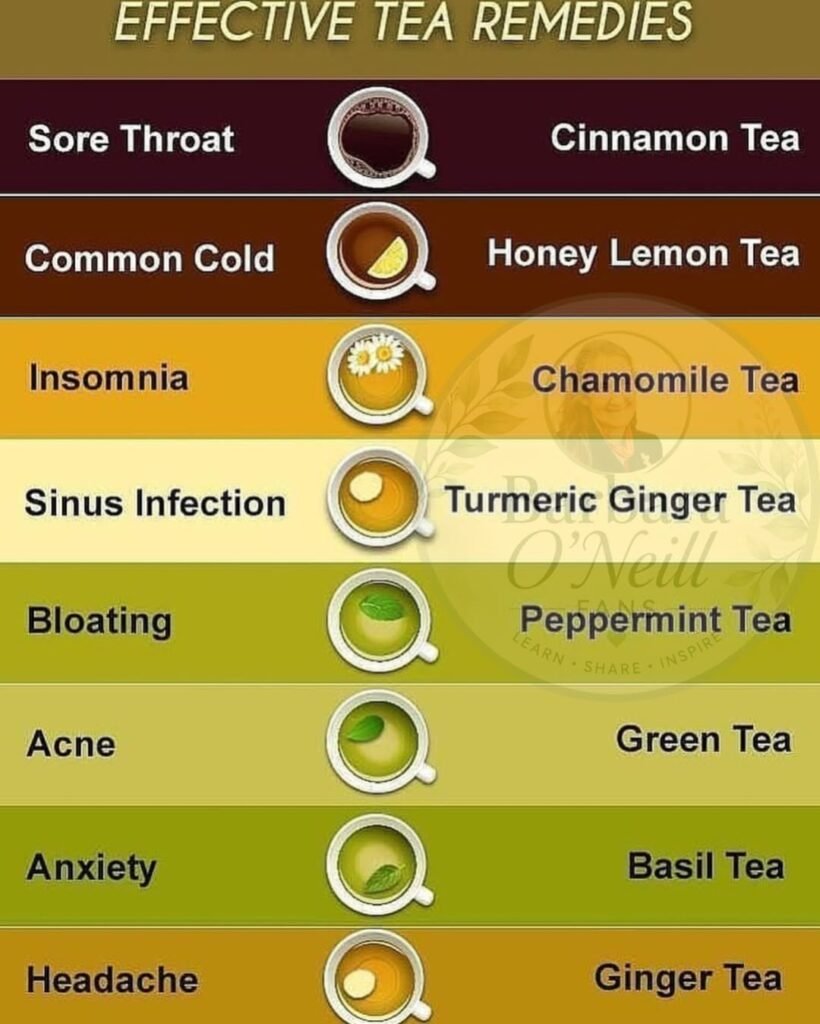
However, it’s important to remember that tea is not a replacement for medical treatment. Some conditions listed in popular tea-remedy charts—such as sinus infections or persistent acne—may require proper medical evaluation.
🍵 1. Cinnamon Tea for a Sore Throat
Warm beverages can help soothe an irritated or sore throat. Cinnamon tea can be a comforting option, especially when served warm.
Simple preparation:
1 cup of hot water
½ teaspoon ground cinnamon or a small cinnamon stick
Steep for 5–10 minutes
Add a little honey if desired
Warm tea may soothe throat discomfort, but it doesn’t treat the underlying cause of an infection. Most viral sore throats improve on their own.
🍋 2. Honey Lemon Tea for Colds
Honey and lemon in warm water or tea are popular during colds. Warm liquids can soothe the throat and help with congestion, while honey may help reduce coughing in people older than 1 year.
Try:
1 cup warm water
Juice from ½ lemon
1 teaspoon honey
Important: Honey should never be given to babies under 1 year old.
🌼 3. Chamomile Tea for Relaxation and Sleep
Chamomile tea is traditionally enjoyed in the evening because of its calming qualities.
Research into chamomile for insomnia is limited, and there isn’t enough reliable evidence to say that chamomile tea effectively treats insomnia.
Still, enjoying a warm, caffeine-free drink as part of a relaxing bedtime routine can be pleasant.
🫚 4. Turmeric & Ginger Tea for Sinus Comfort
Ginger and turmeric are commonly used in traditional wellness drinks. A warm ginger-based tea may feel soothing when you’re congested.
However, tea should not be considered a treatment for a sinus infection. Sinusitis often clears on its own, but persistent or severe symptoms may require medical assessment.
Simple recipe:
1 cup hot water
A few slices of fresh ginger
¼ teaspoon turmeric
Optional: lemon and honey
🌿 5. Peppermint Tea for Bloating
Peppermint tea is a popular after-meal drink and may feel refreshing when you’re experiencing digestive discomfort.
For occasional bloating, staying hydrated and paying attention to foods that trigger symptoms can also help.
If bloating is persistent, severe, or accompanied by other concerning symptoms, speak with a healthcare professional.
🍃 6. Green Tea for Skin Wellness
Green tea contains naturally occurring plant compounds called polyphenols. It’s a nutritious beverage choice when consumed without excessive added sugar.
However, drinking green tea should not be presented as a proven treatment for acne. Acne that is persistent or bothersome may benefit from appropriate skincare or professional advice.
🌱 7. Basil Tea for a Calming Drink
Basil tea can be enjoyed as a caffeine-free herbal beverage. Its pleasant aroma and warm flavor make it a relaxing addition to a daily routine.
Claims that basil tea specifically treats anxiety are not well established, so it’s better viewed as a comforting beverage rather than a medical treatment.
🫚 8. Ginger Tea for Headache Comfort
Ginger tea is a popular soothing drink, particularly when someone feels under the weather.
If headaches happen frequently, are unusually severe, or come with symptoms such as confusion, weakness, vision changes, fever, or vomiting, medical attention is important rather than relying on herbal tea.
🌿 How to Enjoy Herbal Teas Safely
A few simple guidelines can make tea part of a healthy routine:
Choose unsweetened or lightly sweetened teas.
Drink enough water throughout the day.
Don’t use herbal tea as a substitute for prescribed treatment.
Be cautious if you take medications, because some herbs can interact with medicines.
People with allergies should check ingredients carefully. For example, chamomile can cause allergic reactions, particularly in people allergic to related plants such as ragweed.
☕ The Bottom Line
Herbal teas can be a comforting addition to your daily routine and may help soothe certain minor symptoms, particularly through warmth and hydration. But claims that a specific tea can cure infections, acne, insomnia, anxiety, or other medical conditions should be treated cautiously.
🌱Enjoy the tea—but don’t replace appropriate medical care with it.🌱