
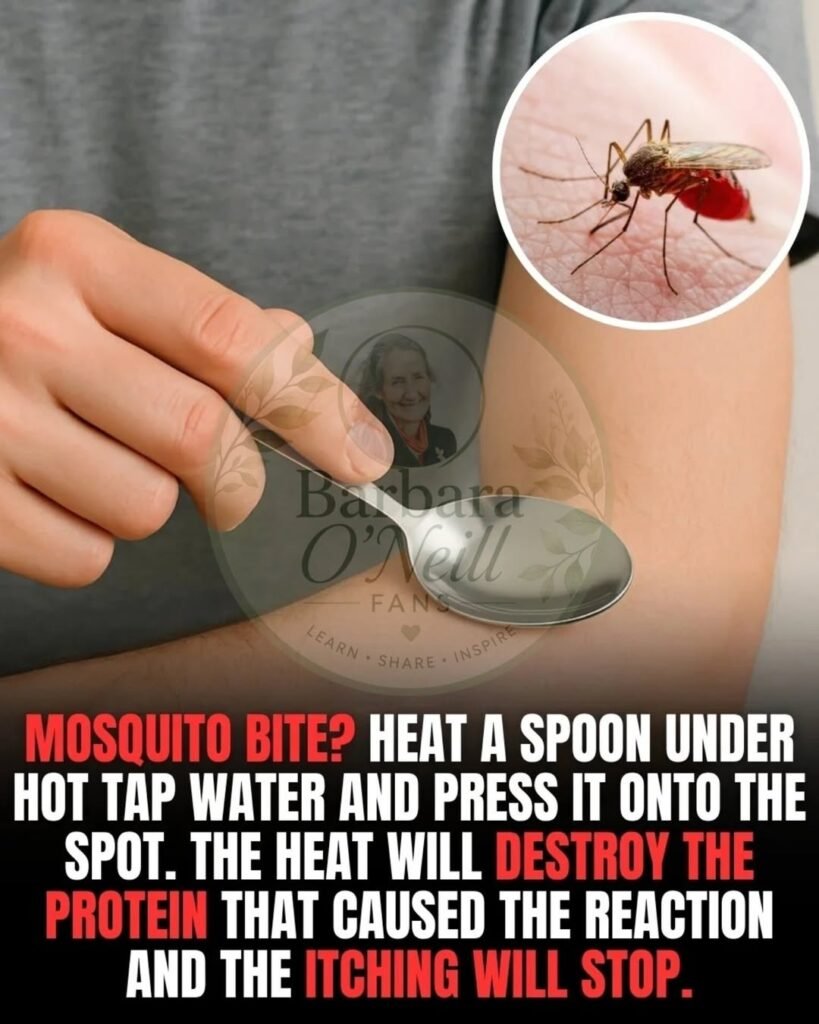
Does Heating a Spoon Really Stop Mosquito Bite Itching?
A popular home remedy claims that placing a heated spoon on a mosquito bite can stop itching by “destroying the protein” responsible for the reaction. While heat can sometimes affect the sensation of itching, this viral tip is not a proven or recommended treatment for mosquito bites.
Why Do Mosquito Bites Itch?
When a mosquito bites, it introduces saliva into the skin. Your immune system reacts to proteins in that saliva, which can cause a small area of redness, swelling and itching. The reaction varies from person to person and usually improves within a few days.
What About the Hot Spoon Trick?
The idea behind the hot-spoon method is that heat could alter proteins in the mosquito’s saliva and therefore reduce the body’s reaction.
However, putting a very hot object directly onto your skin is not a reliable way to neutralize the proteins and can cause a burn. There is also no good evidence that heating a spoon and pressing it onto a mosquito bite is superior to established treatments.
Some medical guidance does mention that warm or hot—but not scalding—water can temporarily reduce discomfort from certain insect bites. Other guidance specifically recommends cold compresses and warns that heat may make inflammation worse.
For this reason, deliberately heating a metal spoon and applying it directly to the skin is not a good idea.
Safer Ways to Relieve a Mosquito Bite
If a mosquito bite is itchy or swollen, simple measures are usually enough:
– Wash the area gently with soap and water.
– Apply a cold, clean compress or an ice pack wrapped in cloth for about 10–20 minutes.
– Avoid scratching, since scratching can damage the skin and increase the risk of infection.
– Ask a pharmacist about an appropriate antihistamine or anti-itch treatment if the itching is troublesome.
– Hydrocortisone cream or calamine lotion may also help with itching and swelling when appropriate.
When Should You Get Medical Advice?
Most mosquito bites are minor, but seek medical advice if the redness or swelling keeps getting worse, the area becomes increasingly painful or hot, or pus develops. These can be signs of infection.
Seek urgent medical help if an insect bite is followed by serious symptoms such as swelling of the face, lips, tongue or throat, wheezing, or difficulty breathing.
The Bottom Line
The viral “hot spoon” trick may sound scientific, but heating a spoon and pressing it onto a mosquito bite is not a proven way to destroy the proteins that cause itching. It can also burn the skin if the spoon is too hot.
For a safer approach, clean the bite, use a cold compress, avoid scratching, and ask a pharmacist about suitable anti-itch treatment if needed.
In short: don’t try to burn away a mosquito bite—the safer solution is to calm the skin rather than heat it aggressively.