
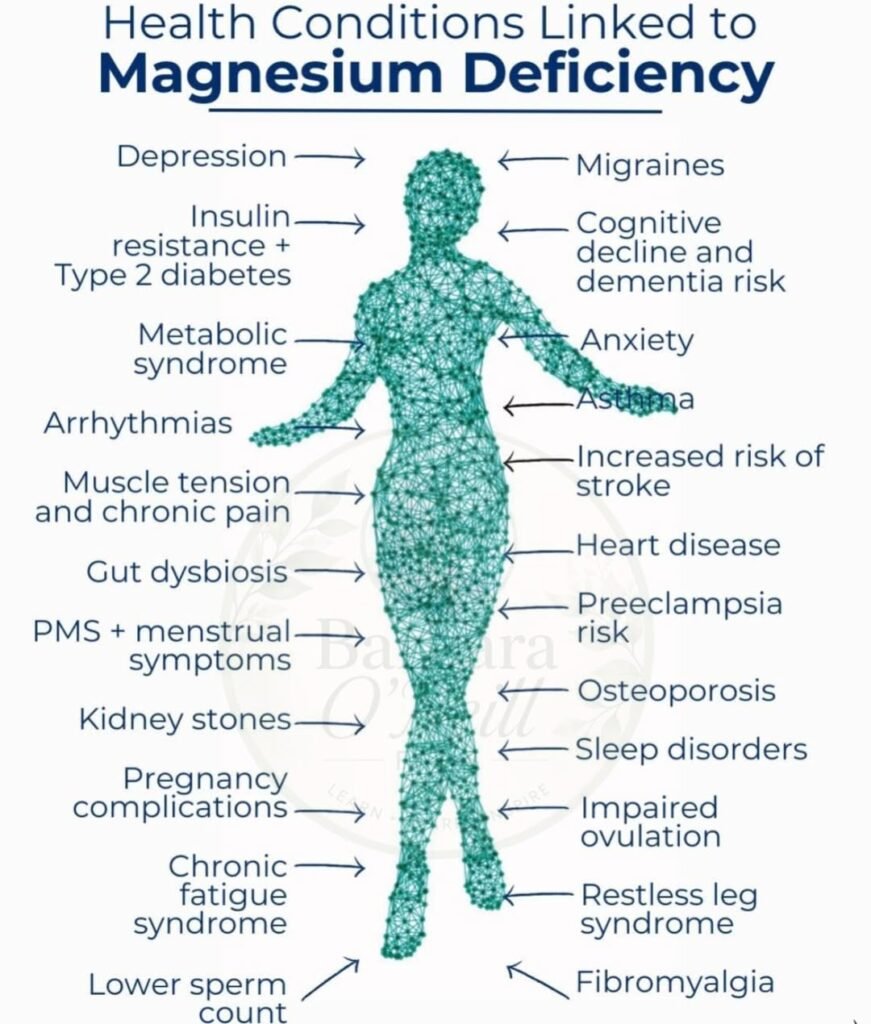
Health Conditions Linked to Low Magnesium Levels
Magnesium is an essential mineral that plays a role in hundreds of processes throughout the body. It contributes to normal nerve and muscle function, blood-sugar regulation, blood pressure control, protein production, and healthy bones and DNA.
Although magnesium deficiency is not common among otherwise healthy people, certain medical conditions, medications, poor dietary intake, and problems with absorption can increase the risk. Importantly, having one of the conditions listed below does not automatically mean that magnesium deficiency is the cause. Many of these relationships are associations that are still being studied.
What Is Magnesium Deficiency?
Magnesium deficiency, medically called hypomagnesemia when blood magnesium is low, occurs when the body does not have enough available magnesium.
The kidneys normally help conserve magnesium when dietary intake is low. For this reason, significant symptomatic deficiency from diet alone is relatively uncommon in healthy people. It becomes more likely when magnesium is lost through the digestive system or urine, or when certain illnesses or medications interfere with magnesium absorption or regulation.
Possible early symptoms include:
– Loss of appetite
– Nausea or vomiting
– Fatigue
– Weakness
More significant deficiency can cause:
– Numbness or tingling
– Muscle contractions or cramps
– Abnormal heart rhythms
– Seizures in severe cases
– Changes in calcium and potassium levels
Health Conditions Associated With Low Magnesium
1. Type 2 Diabetes and Insulin Resistance
Magnesium is involved in glucose metabolism and insulin function. Research has found that people with higher magnesium intake tend to have a lower risk of developing type 2 diabetes.
However, this does not mean magnesium deficiency directly causes diabetes. Researchers are still studying whether magnesium supplementation can meaningfully improve blood-sugar control in people who already have diabetes.
2. High Blood Pressure and Cardiovascular Disease
Magnesium contributes to normal blood-vessel and cardiovascular function. Some studies have found that people with higher magnesium intake or blood levels have lower risks of certain cardiovascular problems.
Clinical trials suggest that magnesium supplements may lower blood pressure slightly, but the effect is generally modest. Magnesium should therefore not be considered a replacement for appropriate medical treatment of hypertension.
3. Heart Rhythm Problems
Severe magnesium deficiency can interfere with normal electrical activity in the heart and may contribute to abnormal heart rhythms.
This is one reason significant hypomagnesemia is taken seriously in medical settings, particularly when accompanied by abnormalities in potassium or calcium.
4. Migraine
Some people who experience migraines have been found to have low magnesium levels. Clinical research suggests that magnesium may modestly reduce migraine frequency in some individuals.
Nevertheless, migraine treatment should be individualized, and magnesium supplementation should not be assumed to be appropriate for everyone.
5. Bone Health and Osteoporosis
Magnesium is important for normal bone formation and mineral metabolism. Studies have found associations between higher magnesium intake and greater bone mineral density.
However, more research is needed to determine exactly how magnesium supplementation affects the prevention or treatment of osteoporosis.
6. Metabolic Syndrome
Low magnesium status has been associated with several metabolic problems, including insulin resistance, abnormal blood pressure, and other components of metabolic syndrome.
Recent research continues to investigate whether magnesium deficiency is a contributing factor or simply occurs alongside other dietary and metabolic problems.
7. Depression, Anxiety and Cognitive Health
Research has reported associations between low magnesium status and several neurological or psychiatric conditions, including depression, cognitive impairment and dementia.
However, these relationships are complex. A low magnesium level should not be assumed to be the sole cause of depression, anxiety, memory problems, or dementia. More clinical research is needed to establish when magnesium supplementation provides meaningful benefit.
8. Muscle Cramps and Neuromuscular Symptoms
Muscle cramps, contractions, weakness, tingling and other neuromuscular symptoms can occur when magnesium deficiency becomes significant.
However, muscle cramps have many possible causes, so experiencing cramps alone does not establish magnesium deficiency.
9. Pregnancy and Preeclampsia
Magnesium has an important physiological role during pregnancy. Magnesium sulfate is also an established medical treatment used in specific pregnancy-related emergencies, particularly for preventing seizures in severe preeclampsia.
This should not be confused with routinely taking magnesium supplements during pregnancy. Pregnant individuals should discuss supplementation with their healthcare professional.
10. Asthma
Magnesium is involved in muscle and nerve function, and researchers have investigated its role in asthma and airway function.
Magnesium can have a role in the medical management of certain severe asthma attacks, but this does not mean that ordinary dietary magnesium or supplements can prevent or treat asthma.
11. Sleep Problems
Magnesium is involved in normal nervous-system function, and researchers are studying possible relationships between magnesium status and sleep quality.
Although some studies suggest a connection between magnesium intake and sleep, evidence is not strong enough to conclude that magnesium deficiency is responsible for most sleep disorders.
12. Restless Legs Syndrome
Restless legs syndrome has been investigated in relation to several nutritional factors, including magnesium. However, the evidence is not strong enough to say that magnesium deficiency is a general cause of restless legs syndrome.
Persistent symptoms should be evaluated because restless legs syndrome can have several different causes.
13. Kidney Stones
Magnesium participates in mineral metabolism, and researchers have investigated its relationship with kidney-stone formation.
However, kidney stones have numerous causes, including fluid intake, dietary factors, genetics and abnormalities in urinary minerals. Magnesium should not be considered a universal treatment for kidney stones.
14. Gut Health
Magnesium intake and the gut microbiome may influence one another, and recent research has explored relationships between magnesium status and intestinal health.
The infographic’s statement that magnesium deficiency causes “gut dysbiosis” is too strong. Current evidence supports an association and an area of active research rather than a simple cause-and-effect relationship.
15. Chronic Fatigue
Fatigue can occur with significant magnesium deficiency, but it is a very nonspecific symptom.
Many other conditions—including inadequate sleep, anemia, infections, nutritional deficiencies and other medical problems—can cause fatigue. Magnesium deficiency should therefore be confirmed rather than assumed based on tiredness alone.
16. Chronic Pain and Fibromyalgia
Researchers have investigated magnesium in relation to muscle function, pain and conditions such as fibromyalgia. Some studies have suggested possible relationships, but the evidence is not sufficient to conclude that magnesium deficiency causes fibromyalgia or that magnesium supplements are a universal treatment.
Who Is More Likely to Develop Magnesium Deficiency?
Certain groups have a higher risk, including people with:
– Gastrointestinal diseases such as Crohn’s disease or celiac disease
– Type 2 diabetes
– Long-term alcohol dependence
– Certain conditions affecting kidney magnesium handling
– Prolonged use of some medications
– Problems with nutrient absorption
– Persistently inadequate dietary intake
Certain medications, including some diuretics and long-term proton-pump inhibitor therapy, can also affect magnesium levels.
Best Food Sources of Magnesium
For most people, getting magnesium from a varied diet is preferable to taking supplements unnecessarily.
Good dietary sources include:
– Nuts
– Seeds
– Beans and other legumes
– Whole grains
– Green leafy vegetables such as spinach
– Fortified cereals
– Milk and yogurt
– Some other fortified foods
A varied diet containing these foods can help provide magnesium along with other nutrients that work together to support overall health.
Can Magnesium Supplements Be Harmful?
More is not always better.
Magnesium naturally present in food is generally not a concern for healthy people because the kidneys can remove excess magnesium. However, high amounts from supplements or medications can cause diarrhea, nausea and abdominal cramping. Extremely high amounts can cause serious problems, including abnormal heart rhythms.
Magnesium supplements can also interact with certain medications, including some antibiotics and medicines used for osteoporosis.
People with kidney problems should be particularly careful because the kidneys play an important role in removing excess magnesium.
How Much Magnesium Does the Body Need?
Recommended daily intake varies according to age, sex and life stage. For adults, the recommended amount is generally around 310–420 mg per day, depending on the individual.
The upper limit for magnesium from supplements and medications—not magnesium naturally found in food—is 350 mg per day for adults, unless a healthcare professional recommends otherwise.
Can a Blood Test Confirm Magnesium Deficiency?
A blood magnesium test can help identify low magnesium levels, but magnesium status can be difficult to assess because most magnesium in the body is stored outside the bloodstream.
Consequently, a normal blood magnesium result does not necessarily provide a complete picture of total magnesium stores. Healthcare professionals may consider symptoms, diet, medications, medical conditions and other laboratory results when evaluating possible deficiency.
The Bottom Line
Magnesium is essential for normal muscle and nerve function, blood-sugar regulation, cardiovascular health and healthy bones. Significant magnesium deficiency can cause fatigue, weakness, muscle problems and abnormal heart rhythms.
Research also shows associations between magnesium status and conditions such as type 2 diabetes, cardiovascular disease, migraines, osteoporosis and some neurological conditions. However, the infographic should not be interpreted as proving that magnesium deficiency causes every condition listed.
The strongest approach is to obtain magnesium primarily from a balanced diet and seek professional advice if deficiency is suspected, particularly before taking high-dose supplements.
Important: Symptoms such as persistent weakness, significant muscle spasms, fainting, or an irregular heartbeat require medical evaluation rather than self-treatment with magnesium.