
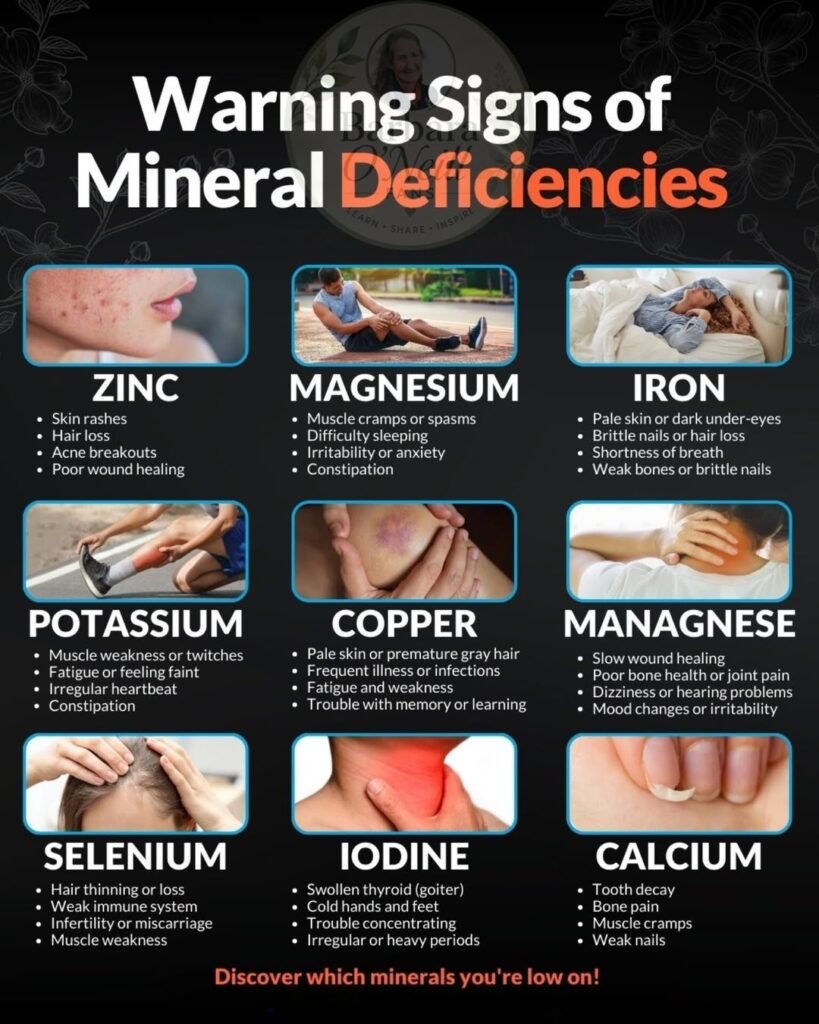
Minerals are essential nutrients that your body needs for healthy bones, muscles, nerves, blood cells, hormone production, and immune function. Important minerals include zinc, magnesium, iron, potassium, calcium, iodine, selenium, copper, and manganese.
A deficiency can develop when the body does not receive enough of a mineral, cannot absorb it properly, or loses too much of it. However, many symptoms associated with mineral deficiencies are nonspecific and can also occur because of other health conditions. A symptom alone cannot confirm a deficiency.

1. Zinc Deficiency
Zinc supports immune function, growth and development, protein production, wound healing, and the senses of taste and smell.
Possible warning signs:
– Frequent infections
– Hair loss
– Poor appetite
– Skin problems or sores
– Slow wound healing
– Reduced sense of taste or smell
– Slow growth in children
Food sources:
Meat, seafood, poultry, eggs, dairy products, beans, nuts, and whole grains can provide zinc.

2. Magnesium Deficiency
Magnesium plays an important role in muscle and nerve function, energy metabolism, blood sugar regulation, and bone health.
Possible warning signs:
– Muscle cramps or spasms
– Muscle weakness
– Fatigue
– Numbness or tingling
– Abnormal heart rhythm in more significant deficiency
Severe magnesium deficiency can become serious and requires medical attention.
Food sources:
Nuts, seeds, beans, whole grains, leafy green vegetables, and some dairy products are useful sources of magnesium.

3. Iron Deficiency
Iron is needed to make hemoglobin, the protein in red blood cells that carries oxygen throughout the body. Low iron can eventually lead to iron-deficiency anemia.
Possible warning signs:
– Unusual tiredness or weakness
– Pale skin
– Dizziness or lightheadedness
– Shortness of breath
– Headaches
– Difficulty concentrating
– Brittle nails
– Hair loss
Some people with mild iron deficiency may have few or no symptoms at first.
Food sources:
Lean meat, seafood, poultry, beans, and iron-fortified foods are among the main dietary sources.
Important: Iron supplements should not be taken simply because you feel tired. Excess iron can be harmful, so suspected deficiency should be evaluated appropriately.

4. Potassium Deficiency
Potassium is an electrolyte that helps support normal muscle, nerve, and heart function.
Low potassium can occur because of certain illnesses, medications, or significant fluid losses. Possible symptoms can include:
– Muscle weakness
– Muscle cramps
– Fatigue
– Constipation
– Abnormal heart rhythms when levels become significantly low
Potassium levels should not be corrected with supplements without appropriate medical advice, particularly because excessively high potassium can also be dangerous.

5. Copper Deficiency
Copper is involved in energy production, connective tissue formation, nervous-system function, and the formation of blood cells.
Possible signs of low copper can include:
– Fatigue or weakness
– Anemia
– Reduced immune function
– Problems involving the nervous system
– Changes in bone health
Copper deficiency is relatively uncommon and can sometimes occur because of impaired absorption or excessive zinc intake. In fact, prolonged high zinc intake can interfere with copper absorption.
Food sources:
Shellfish, nuts, seeds, whole grains, beans, and organ meats can provide copper.

6. Manganese Deficiency
Manganese is a trace mineral involved in metabolism, bone formation, and antioxidant defenses.
True manganese deficiency is uncommon. Because symptoms are not specific, problems such as joint discomfort, weakness, or changes in bone health should not automatically be attributed to low manganese.
Food sources:
Whole grains, legumes, nuts, seeds, and leafy vegetables can provide manganese.

7. Selenium Deficiency
Selenium is important for thyroid function, reproduction, DNA production, and protection of cells from oxidative damage.
Severe deficiency is uncommon in many populations, but inadequate intake can occur in certain circumstances.
Possible effects can include:
– Muscle weakness
– Problems with thyroid function
– Reduced immune function
Food sources:
Fish and seafood, meat, eggs, dairy products, cereals, nuts, and other foods can provide selenium.
8. Iodine Deficiency
Iodine is essential for producing thyroid hormones, which regulate metabolism and support normal growth and development.
Possible warning signs:
– Enlargement of the thyroid gland, known as a goiter
– Fatigue
– Sensitivity to cold
– Changes in thyroid function
Iodine requirements can be particularly important during pregnancy and childhood because thyroid hormones are involved in brain and bone development.
Food sources:
Iodized salt, seafood, dairy products, and eggs can contribute iodine.

9. Calcium Deficiency
Calcium is essential for strong bones and teeth, as well as normal muscle contraction and nerve function.
Inadequate calcium intake over time can contribute to reduced bone strength.
Possible signs or consequences may include:
– Muscle cramps or spasms
– Tingling or numbness when blood calcium becomes low
– Weak bones
– Increased risk of fractures over time
Food sources:
Milk, yogurt, cheese, calcium-fortified foods, tofu made with calcium, and some leafy vegetables can provide calcium.
Are These Symptoms Enough to Diagnose a Mineral Deficiency?
No.
For example, tiredness can be associated with iron deficiency, but it can also have many other causes. Similarly, muscle cramps do not automatically mean that someone is deficient in magnesium or potassium.
A healthcare professional may consider your symptoms, diet, medications, medical history, and—when appropriate—blood or other laboratory tests. For magnesium deficiency, for example, healthcare providers may check blood magnesium along with other electrolytes and related tests.
How Can You Reduce Your Risk of Mineral Deficiencies?
The best starting point for most people is a varied, nutrient-dense diet rather than taking multiple supplements.
Try to regularly include:
– Vegetables and leafy greens
– Fruits
– Beans and lentils
– Nuts and seeds
– Whole grains
– Eggs and dairy products
– Fish and seafood
– Lean meats or other appropriate protein sources
Most people can obtain the minerals they need from a varied diet. Some people, however, may have increased nutritional needs or problems with absorption and may require individualized medical or dietary advice.
Should You Take a Mineral Supplement?
Not necessarily.
Taking a supplement without knowing whether you actually need it can be counterproductive. Some minerals can cause harmful effects when consumed in excessive amounts. For example, excessive zinc intake over time can interfere with copper absorption, while too much iron can damage the body.
If you suspect a deficiency, talk with a qualified healthcare professional before starting high-dose mineral supplements.
Final Takeaway
Mineral deficiencies can affect many parts of the body, and symptoms may sometimes provide clues that something is wrong. However, symptoms shown in social-media graphics should be viewed as possible warning signs, not diagnoses.
A balanced diet is usually the best way to obtain essential minerals. If persistent fatigue, weakness, muscle problems, changes in hair or skin, breathing difficulties, or other unexplained symptoms occur, it is better to seek professional medical advice rather than assuming that a particular mineral is responsible.
This article is for general educational purposes and does not replace professional medical advice or laboratory testing.