
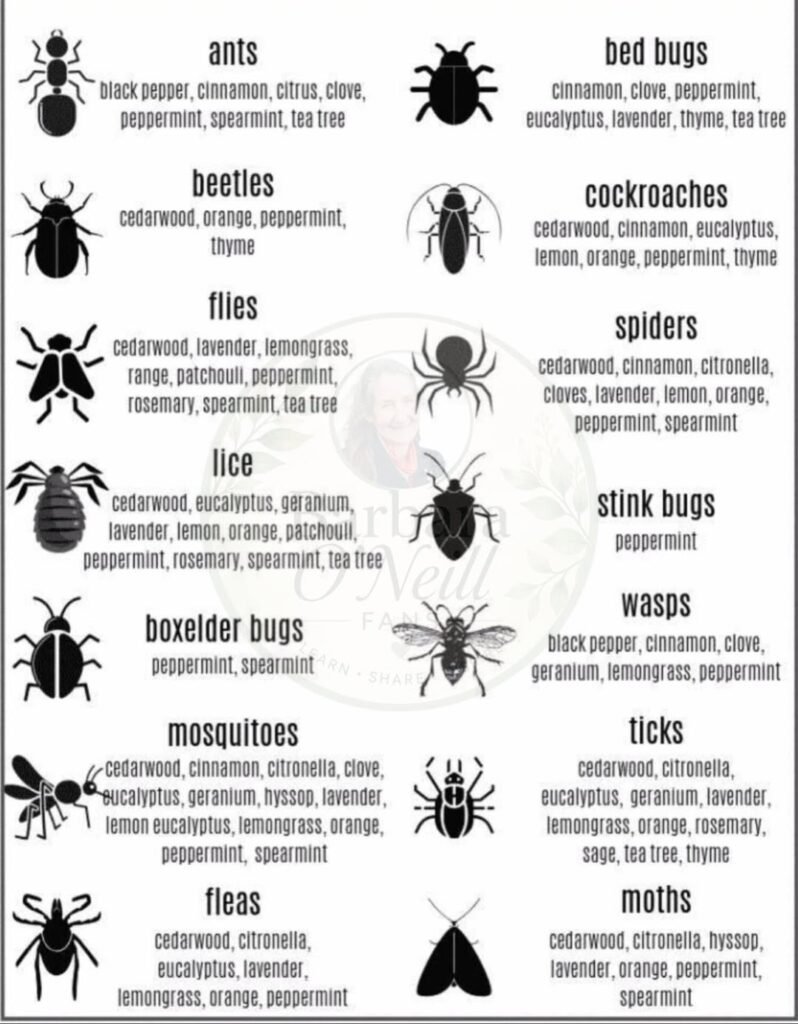
Essential oils can repel insects, but their effectiveness is shorter-lived compared to synthetic repellents like DEET. The most reliable natural options are oil of lemon eucalyptus (recognized by the CDC), clove oil, cinnamon oil, and catnip oil, which provide protection ranging from 1–4 hours depending on concentration.
🌿 How Essential Oils Repel Insects
- Mechanism: Active compounds (terpenes) interfere with insects’ nervous systems, disrupting coordination and movement.
- Dual effect: Repellency comes from both strong odors (deterring insects) and mild toxicity on contact.
- Limitation: Most essential oils evaporate quickly, offering 30–100 minutes of protection, far less than DEET’s 6+ hours.
🦟 Best Oils for Mosquitoes
- Oil of Lemon Eucalyptus (OLE): Contains PMD, providing 4–7 hours of protection, comparable to DEET. CDC-approved.
- Citronella: Effective initially but fades within 1 hour unless combined with fixatives like vanillin.
- Clove & Geraniol: Provide ~1 hour of protection at 10% lotion concentration.
- Catnip Oil: EPA-registered; at 10% concentration, offers 2–4 hours of protection, rivaling 15% DEET.
🕷️ Best Oils for Ticks
- Cedarwood Oil: Strongest evidence; effective against blacklegged ticks (Lyme disease carriers).
- Clove & Cinnamon Oils: Provide 100+ minutes of protection in lab tests.
- Thyme + Citronella Blend: Repelled 91% of ticks in one study, outperforming single oils.
🐜 Household Pests
- Ants: Peppermint and citrus oils deter them for several days.
- Spiders: Peppermint oil shows anecdotal repellency, though scientific proof is limited.
- Flies & Fleas: Cedarwood, lavender, and lemongrass oils reduce attraction but last under an hour.
⚠️ Risks & Limitations
- Short duration: Most oils evaporate quickly; frequent reapplication is necessary.
- Skin irritation: Cinnamon, clove, and peppermint oils can cause rashes if undiluted. Always dilute in carrier oils.
- Not disease-proof: While OLE and catnip oil are recognized by health authorities, essential oils should supplement, not replace, proven repellents when disease risk is high.
✅ Practical Recommendations
- For mosquito-heavy areas, use OLE-based sprays for longer protection.
- For tick-prone regions, consider cedarwood or clove oil blends alongside physical precautions (long clothing, tick checks).
- For home use, peppermint and citrus oils can deter ants and spiders, but don’t rely on them outdoors.
- Always test diluted oils on skin before full use to avoid irritation.

Emily Carter
Food & Wellness Writer
Emily Carter is a food and wellness writer dedicated to sharing practical recipes, nutrition insights, and everyday healthy-living tips. Her goal is to make healthy choices simple, approachable, and enjoyable.