
🥘 Why Cookware Material Matters
The material of your pan directly affects:
- Heat conductivity – how evenly food cooks.
- Reactivity – whether acidic foods pick up metallic flavors.
- Durability – how long the pan lasts.
- Health impact – whether chemicals or metals leach into food.
Choosing wisely ensures better cooking results, safer meals, and less hassle in maintenance.
🔎 Comparison of Common Pan Materials
| Material | Pros | Cons | Best Uses |
|---|---|---|---|
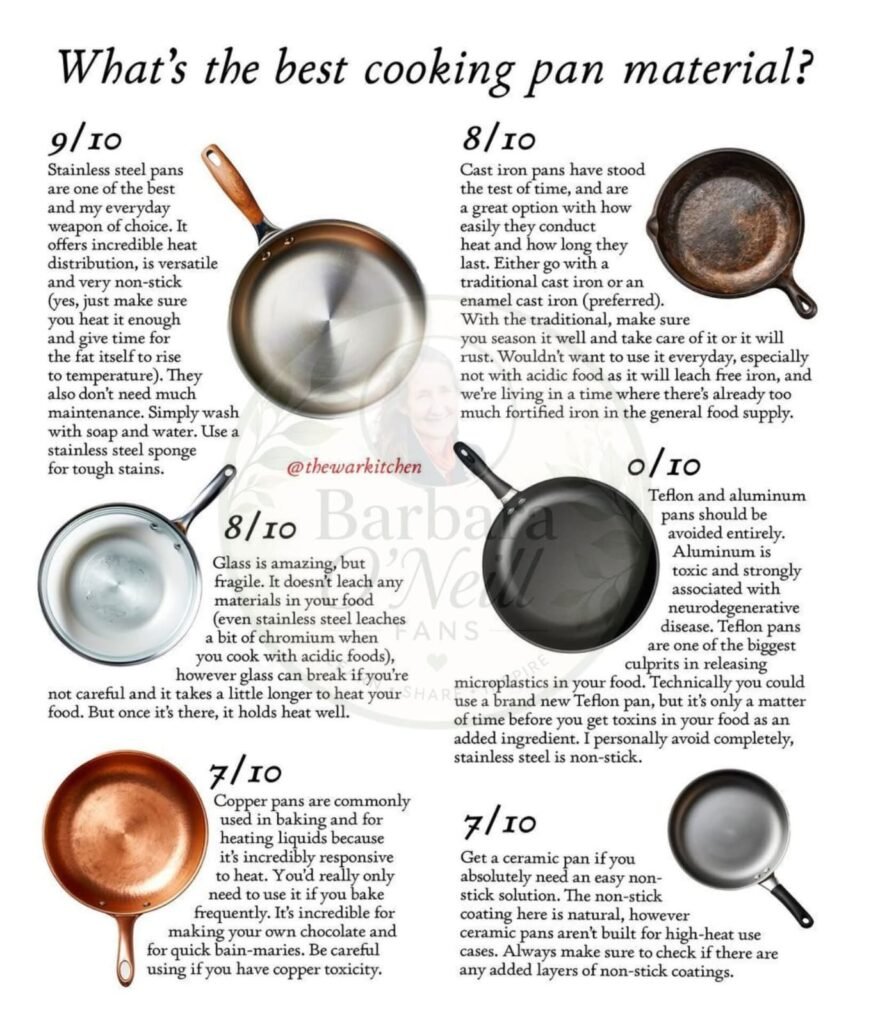
| Stainless Steel | Durable, non-reactive, dishwasher safe, versatile | Poor heat conduction unless layered with aluminum/copper; food sticks if not preheated | Everyday cooking, searing, sauces |
| Cast Iron | Excellent heat retention, naturally nonstick when seasoned, inexpensive | Heavy, rust risk, reacts with acidic foods | Steaks, frying, baking, high-heat searing |
| Enameled Cast Iron | Non-reactive, easy to clean, oven-to-stovetop versatility | Heavy, expensive | Soups, braises, slow cooking |
| Glass | Non-reactive, retains heat well | Fragile, slower to heat | Baking, oven dishes |
| Copper | Superb heat responsiveness, precise temperature control | Expensive, requires maintenance, can cause copper toxicity if unlined | Sauces, baking, delicate recipes |
| Ceramic Nonstick | Natural nonstick, PFAS-free, easy cleanup | Not for high heat, coating wears over time | Eggs, pancakes, low-oil cooking |
| Aluminum (Uncoated) | Lightweight, inexpensive, good heat conduction | Reactive, linked to health concerns, scratches easily | Only safe when anodized or layered |
| Teflon (PTFE) | Easy nonstick, low oil use | Releases toxins at high heat, microplastic shedding, short lifespan | Avoid or use sparingly at low heat |
✅ Expert Recommendations
- Best Overall Versatility: Fully clad stainless steel (3-ply or 5-ply) – balances durability, safety, and performance.
- Best for High Heat: Cast iron or carbon steel – ideal for searing and stir-frying.
- Best for Health-Conscious Cooking: Ceramic nonstick or high-grade stainless steel (18/10) – avoids PFAS/PTFE chemicals.
- Best for Precision: Copper – unmatched control for sauces and delicate recipes.
- Best Budget Choice: Hard-anodized aluminum – safe, durable, and affordable.
⚠️ Risks & Trade-Offs
- Teflon/PTFE pans: Avoid overheating (above 260°C) to prevent toxic fumes.
- Uncoated aluminum: Can leach into food, linked to neurological risks.
- Cast iron: Adds dietary iron, which may be excessive for some people.
- Copper: Only safe when lined with stainless steel or tin.
📝 Final Takeaway
For most home cooks, stainless steel and cast iron form the backbone of a safe, versatile kitchen setup. Add a ceramic nonstick pan for delicate foods, and consider copper only if you frequently make sauces or confections. Avoid Teflon and bare aluminum for long-term health and durability.