
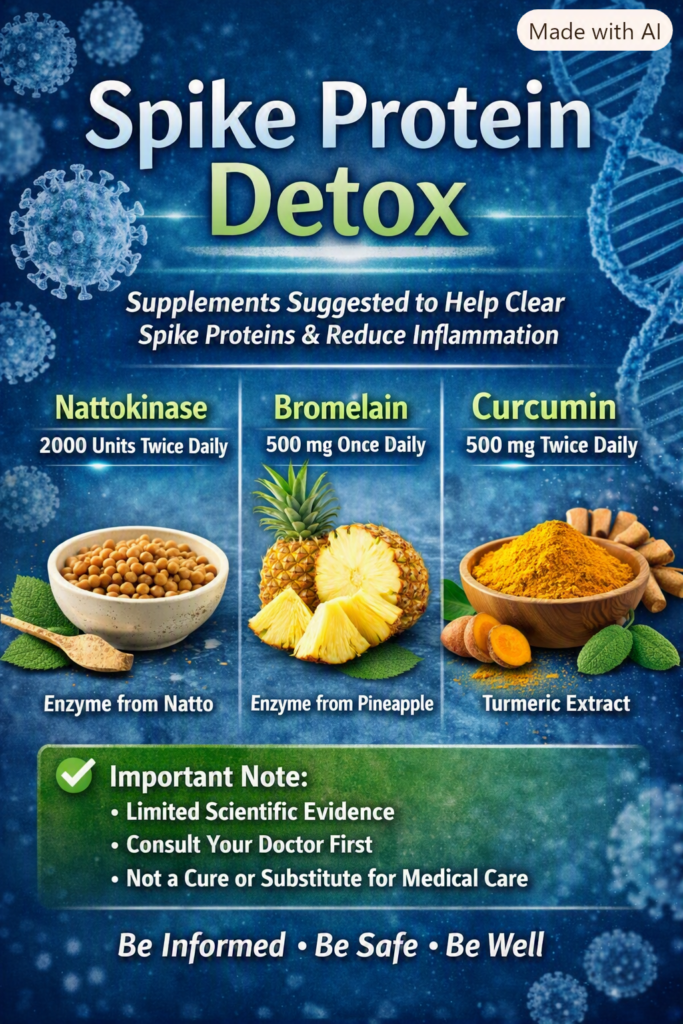
🧬 Detox from Spike Proteins: Supplements & Science
📌 Introduction
Since the COVID‑19 pandemic, many people have expressed concern about spike proteins — the structures on the virus surface that allow it to enter human cells. Some wellness advocates suggest natural supplements may help the body clear spike proteins and reduce inflammation. While these ideas are popular online, it’s important to note that scientific evidence is limited and professional medical advice should always guide health decisions.
🌿 Suggested Supplements
1. Nattokinase
- Dosage (commonly suggested): 2000 units twice daily.
- Source: An enzyme extracted from fermented soybeans (natto).
- Claimed Benefit: May help break down proteins and support circulation.
2. Bromelain
- Dosage (commonly suggested): 500 mg once daily.
- Source: Enzyme found in pineapples.
- Claimed Benefit: Anti‑inflammatory properties; may assist in protein breakdown.
3. Curcumin
- Dosage (commonly suggested): 500 mg twice daily.
- Source: Active compound in turmeric.
- Claimed Benefit: Anti‑inflammatory and antioxidant effects.
✅ What Science Says
- Nattokinase: Some studies suggest it supports cardiovascular health and may break down certain proteins, but research on spike proteins specifically is limited.
- Bromelain: Known for reducing inflammation and aiding digestion; evidence for spike protein clearance is anecdotal.
- Curcumin: Widely studied for anti‑inflammatory effects, but not proven to directly degrade spike proteins.
⚠️ Risks & Precautions
- Supplements can interact with medications (e.g., blood thinners).
- Dosages vary; always follow professional guidance.
- Not recommended as a substitute for vaccines, antiviral treatments, or medical care.
- Evidence for “detoxing spike proteins” is not conclusive.
📝 Conclusion
Nattokinase, bromelain, and curcumin are natural compounds with potential health benefits, especially for inflammation and circulation. However, their role in “detoxing spike proteins” remains unproven. They may be safe additions to a wellness routine when used responsibly, but consultation with a healthcare provider is essential.