
The Frequency of Herbs: What Do These Numbers Really Mean?
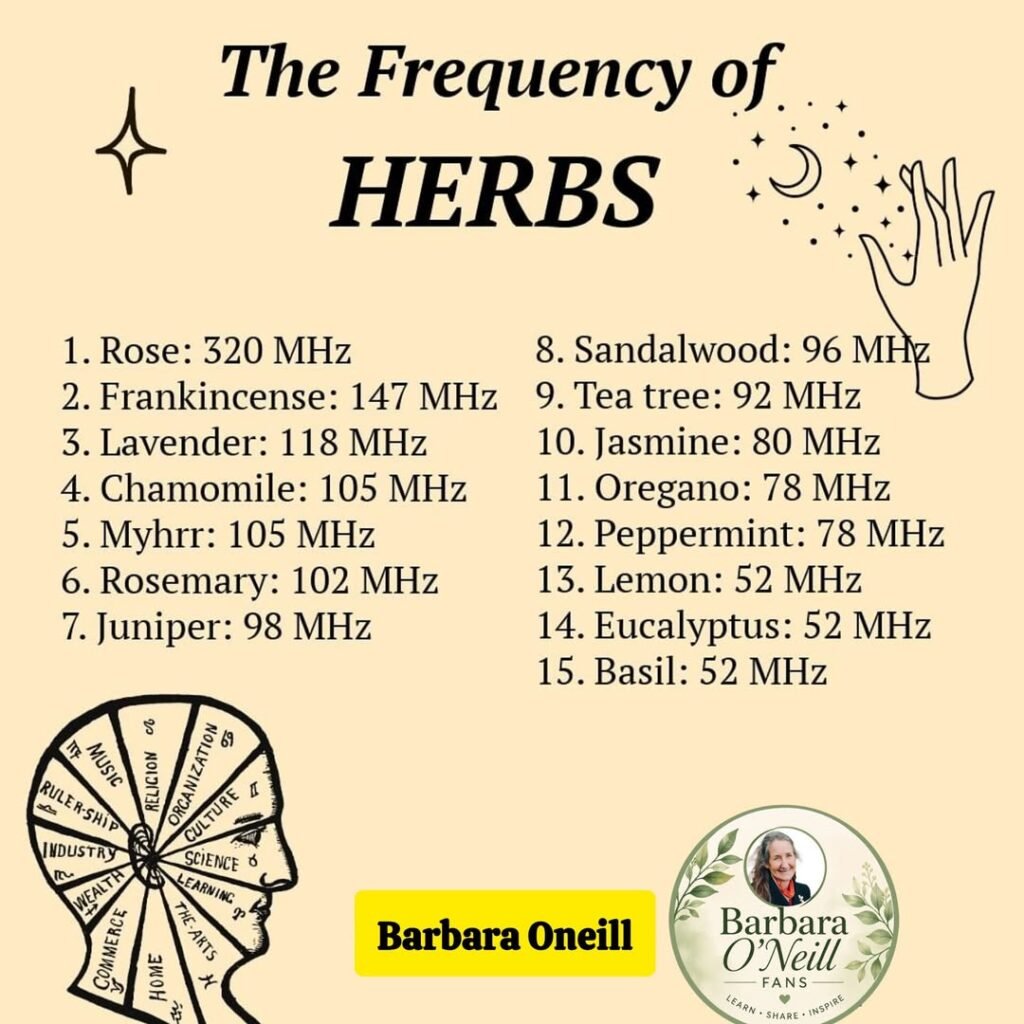
Herbs and aromatic plants have been used for centuries for their fragrances, flavors, traditional remedies, and potential health benefits. In recent years, a popular chart circulating online has assigned specific “frequencies” in megahertz (MHz) to various herbs and essential oils—from rose at 320 MHz to basil at 52 MHz.
But what do these numbers actually mean? And can the “frequency” of an herb really explain its healing power?
The Popular Herbal Frequency Chart
One widely circulated chart lists the following values:
1. Rose — 320 MHz
2. Frankincense — 147 MHz
3. Lavender — 118 MHz
4. Chamomile — 105 MHz
5. Myrrh — 105 MHz
6. Rosemary — 102 MHz
7. Juniper — 98 MHz
8. Sandalwood — 96 MHz
9. Tea Tree — 92 MHz
10. Jasmine — 80 MHz
11. Oregano — 78 MHz
12. Peppermint — 78 MHz
13. Lemon — 52 MHz
14. Eucalyptus — 52 MHz
15. Basil — 52 MHz
Similar lists have circulated for years in aromatherapy and energy-healing communities. Some versions attribute these measurements to devices associated with Bruce Tainio and “frequency” testing of essential oils.
Does a Higher Frequency Mean Better Healing?
This is where an important distinction needs to be made.
The numbers above are often presented as if a higher MHz value means that an oil has greater healing power or can raise the frequency of human cells. However, there is not sufficient scientific evidence to support the idea that an essential oil’s numerical frequency determines its ability to heal disease.
Modern medical research generally evaluates herbs and essential oils by examining their chemical components, biological effects, safety, and results in laboratory studies and human clinical trials.
Essential oils are concentrated plant extracts with complex chemical compositions. Their composition can vary depending on the plant species, growing conditions, harvesting, and method of extraction.
Therefore, the number “320 MHz” should not be interpreted as meaning that rose oil is automatically more powerful or more therapeutic than an oil listed at 52 MHz.
What Does Science Say About Aromatherapy?
Aromatherapy is considered a complementary health approach. Essential oils are commonly inhaled or applied to the skin after appropriate dilution.
According to the National Center for Complementary and Integrative Health (NCCIH), research into aromatherapy is ongoing, and evidence varies considerably depending on the oil and the health condition being studied.
Some studies suggest that certain essential oils may influence mood, relaxation, anxiety, pain, nausea, or other symptoms. However, the evidence is not strong enough to claim that essential oils can replace established medical treatments.
For example, research on lavender has suggested possible benefits for anxiety, but NCCIH notes that limitations in the available research mean that definite conclusions cannot always be reached.
1. Rose
Rose is one of the most commonly cited oils in frequency charts, where it is sometimes assigned a value of 320 MHz.
Beyond the frequency claims, rose is widely valued for its fragrance and is used in perfumes, cosmetics, and aromatherapy. Its aroma may promote a pleasant emotional experience, although the specific health effects of rose oil require further research.
2. Frankincense
Frankincense is traditionally valued for its fragrance and has a long history of use in religious and cultural practices.
Online frequency charts commonly assign frankincense a value of 147 MHz. However, this number should not be interpreted as a medically established measurement of its healing ability.
3. Lavender
Lavender is one of the better-studied essential oils.
It is commonly used in aromatherapy for relaxation, stress, and sleep. Some research suggests that certain lavender preparations may help with anxiety, although the evidence differs according to how lavender is administered.
Lavender oil may also cause skin irritation or allergic reactions in some people, so topical use requires care.
4. Chamomile
Chamomile has a long history of traditional use and is commonly associated with relaxation.
Roman chamomile is also among the essential oils used in aromatherapy. However, traditional use should not automatically be interpreted as proof that chamomile can treat a medical condition.
5. Myrrh
Myrrh is another aromatic resin with a long history of traditional and cultural use.
Some frequency charts list myrrh at approximately 105 MHz. As with the other numbers, there is insufficient evidence to conclude that this frequency itself produces a therapeutic effect.
6. Rosemary
Rosemary contains numerous naturally occurring chemical compounds and is widely used as a culinary herb and aromatic plant.
Its essential oil is also used in aromatherapy, but more high-quality human research is needed before making strong medical claims.
7. Juniper
Juniper is traditionally used in culinary and herbal practices, while juniper essential oil is used in some aromatherapy applications.
The popular frequency chart gives juniper a value of 98 MHz, but this should be regarded as part of the frequency-healing tradition rather than an established medical measurement.
8. Sandalwood
Sandalwood is particularly well known for its distinctive fragrance and its use in perfumes, cosmetics, incense, and traditional practices.
Its calming aroma is one reason it is sometimes incorporated into relaxation practices.
9. Tea Tree
Tea tree oil is widely used in personal-care and aromatherapy products.
It is important to remember that “natural” does not automatically mean harmless. Essential oils are concentrated substances and can cause irritation or allergic reactions in some people.
10. Jasmine
Jasmine is famous for its strong floral fragrance and is widely used in perfumes and aromatherapy.
Its use is often associated with relaxation and emotional well-being, although scientific evidence for specific medical benefits remains limited.
11. Oregano
Oregano is an important culinary herb and contains compounds that have been studied for their biological activity.
Laboratory findings, however, should not automatically be interpreted as proof that oregano oil can treat infections or diseases in humans.
12. Peppermint
Peppermint is one of the more extensively studied plants on this list.
Research has examined peppermint oil for digestive symptoms, nausea, and certain types of pain. NCCIH notes that some evidence supports particular uses, while evidence for other conditions remains insufficient.
Peppermint oil can also cause irritation or other side effects, particularly when improperly used.
13. Lemon
Lemon essential oil is commonly used for its fresh citrus aroma.
Aromatherapy research has examined lemon and lavender in relation to mood and stress. Some studies have found effects on mood, but this does not mean that lemon oil can treat disease.
14. Eucalyptus
Eucalyptus is commonly associated with its strong, refreshing aroma and is used in a variety of aromatic products.
Its essential oil is highly concentrated and should be handled carefully. Essential oils should not be treated as harmless simply because they come from plants.
15. Basil
Basil is best known as a culinary herb but is also used in traditional herbal practices and aromatherapy.
The popular chart assigns basil a frequency of 52 MHz. Again, there is no established medical rule stating that this number determines its therapeutic strength.
The Important Difference Between Traditional Beliefs and Scientific Evidence
There is nothing wrong with enjoying the aromas of herbs or using aromatherapy as a complementary wellness practice when it is used safely.
The problem arises when a frequency chart is presented as scientific proof that a particular herb can cure cancer, eliminate toxins, repair DNA, raise cellular energy, or treat serious diseases.
Current evidence does not support such broad claims.
Scientific research instead looks at the chemical composition of essential oils, how they interact with biological systems, clinical outcomes, dosage, side effects, and possible interactions with medicines.
How Can Essential Oils Be Used Safely?
Essential oils are highly concentrated. Common aromatherapy practices include inhalation and applying appropriately diluted oils to the skin.
A few basic precautions are important:
– Do not assume that “natural” means completely safe.
– Avoid applying concentrated essential oils directly to the skin unless the product is specifically intended for that use.
– Stop using an oil if it causes irritation or an allergic reaction.
– Be especially cautious with children, pregnancy, breastfeeding, allergies, asthma, or other medical conditions.
– If you take medication, ask a qualified healthcare professional about possible interactions.
– Do not use essential oils as a replacement for prescribed medical treatment.
NCCIH notes that essential oils can cause effects such as skin irritation or allergic reactions, and some oils may have additional safety considerations.
Final Thoughts
The idea that herbs have unique frequencies is fascinating and has become popular within aromatherapy and energy-healing communities. The commonly shared chart lists rose at 320 MHz, frankincense at 147 MHz, lavender at 118 MHz, and several other plants at lower values.
However, these numbers should be viewed as claims from a particular frequency-measurement tradition, not as established medical evidence.
What science does clearly recognize is that plants contain complex chemical compounds that can interact with the human body, and some essential oils have been studied for specific purposes. Aromatherapy may provide complementary benefits for some people, but more rigorous research is needed for many of its claimed effects.
The best approach is to appreciate the traditional wisdom surrounding herbs while also separating interesting wellness claims from scientifically demonstrated medical effects.
Nature can be fascinating—and science helps us understand it more accurately.