
Everyday Foods and Plants With Potential Health Benefits
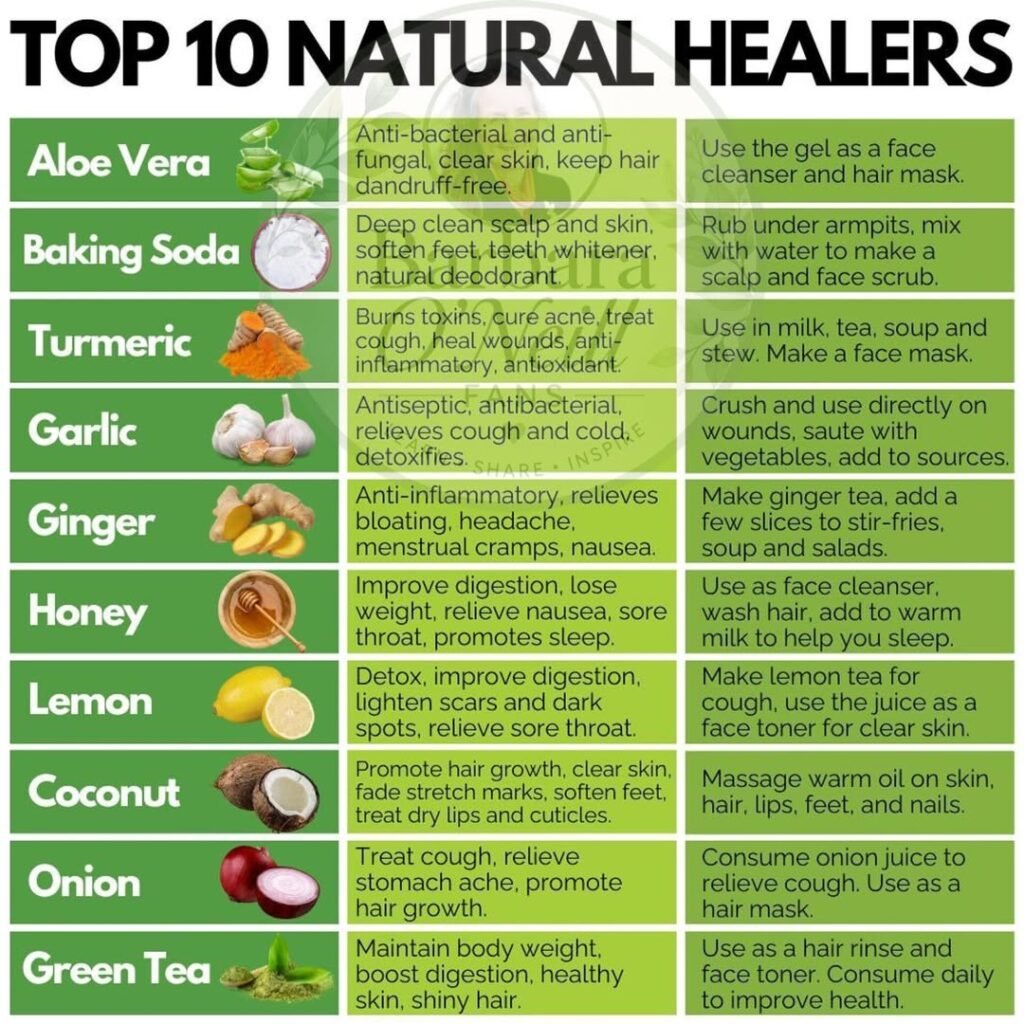
For generations, people have turned to everyday foods, herbs, and plants as part of traditional wellness practices. Ingredients such as aloe vera, ginger, garlic, turmeric, honey, lemon, and green tea are widely used in cooking and home remedies.
While these natural ingredients can be nutritious and useful in everyday life, they should not be considered cures for diseases. Scientific evidence varies considerably from one ingredient to another, and some natural products can interact with medicines or cause side effects.
Here are 10 popular natural ingredients and what we know about them.
1. Aloe Vera
Aloe vera is best known for its gel, which is commonly applied to the skin. Research suggests that topical aloe gel may help soothe certain skin conditions and may support the healing of minor burns. Some studies have also investigated its potential role in acne and other skin problems.
Common uses:
Aloe gel can be used in skincare products and applied topically to the skin.
Important note:
Aloe products are not all the same. Aloe latex and some whole-leaf preparations can cause digestive problems and may be unsafe when consumed.
2. Baking Soda
Baking soda, or sodium bicarbonate, is a common household ingredient with many practical uses. It is often used in cooking, cleaning, and personal-care routines.
Some people use diluted baking soda in homemade skincare or deodorizing preparations, but it can irritate the skin, particularly when used frequently or in concentrated forms.
Common uses:
Baking soda is primarily useful as a cooking ingredient and household product rather than as a proven medical treatment.
3. Turmeric
Turmeric contains curcumin, a compound that has attracted considerable scientific interest because of its biological activity. Traditionally, turmeric has been used in food and traditional medicine for centuries.
Research into turmeric and curcumin has produced promising findings in some areas, including joint-related symptoms, but researchers say that more high-quality evidence is needed before firm conclusions can be made.
Common uses:
Add turmeric to soups, rice, vegetables, curries, milk-based drinks, or other recipes.
Safety:
High-dose supplements are different from the amounts normally used in food. Some highly bioavailable curcumin products have been associated with liver injury.
4. Garlic
Garlic is both a popular culinary ingredient and a traditional remedy. It contains sulfur-containing compounds that have been studied for their potential effects on cardiovascular health and other areas.
Research on garlic for preventing or treating common colds remains inconclusive, while some evidence suggests that certain garlic preparations may modestly affect blood pressure.
Common uses:
Add fresh garlic to vegetables, soups, sauces, salads, marinades, and cooked dishes.
Safety:
Garlic can cause digestive discomfort and may interact with blood-thinning medicines.
5. Ginger
Ginger is one of the most widely used culinary spices and has a long history in traditional medicine. Modern research has particularly examined ginger for nausea, vomiting, menstrual cramps, and some joint symptoms.
Studies suggest that ginger supplements may help with nausea associated with pregnancy and may reduce the severity of menstrual cramps. Evidence for several other uses is less certain.
Common uses:
Make ginger tea, add fresh ginger to stir-fries and soups, or use it in marinades and other recipes.
Safety:
Large amounts may cause heartburn, abdominal discomfort, diarrhea, or irritation of the mouth and throat.
6. Honey
Honey has long been used as a food and traditional remedy, particularly for soothing an irritated throat. Research provides some support for honey as a nighttime cough remedy in children, although it is not a treatment for the underlying cause of an infection.
Common uses:
Add honey to oatmeal, yogurt, tea, or other foods, or use it as a natural sweetener.
Important:
Honey should never be given to babies under 1 year old because of the risk of infant botulism.
7. Lemon
Lemons are an excellent source of vitamin C and can be an easy way to add flavor to water, salads, vegetables, fish, and other foods.
Although lemon water is sometimes promoted as a “detox” drink, the body already has sophisticated systems, including the liver and kidneys, that process and eliminate waste. Lemon water can still be a refreshing way to increase fluid intake.
Common uses:
Use fresh lemon juice in water, tea, salad dressings, marinades, and recipes.
8. Coconut
Coconut provides fats, carbohydrates, fiber, and several minerals depending on the form consumed. Coconut oil is also widely used in cooking and personal-care products.
Common uses:
Coconut can be incorporated into meals, smoothies, baked goods, and other recipes. Coconut oil is also used in some hair and skin-care routines.
As with other oils, portion size matters because coconut oil is high in saturated fat.
9. Onion
Onions are rich in plant compounds and are an important ingredient in cuisines around the world. They can add flavor while contributing nutrients and beneficial plant compounds to the diet.
Onions are sometimes used traditionally in home remedies for coughs and other minor complaints, but evidence for many of these uses is limited.
Common uses:
Add onions to soups, salads, sauces, stir-fries, omelets, and cooked vegetables.
For general health, eating onions as part of a varied diet is a more evidence-based approach than relying on onion preparations as a treatment.
10. Green Tea
Green tea contains naturally occurring compounds called catechins and also contains caffeine. It has been extensively studied for its potential effects on several aspects of health.
Research has examined green tea and green tea extracts in areas including cardiovascular health and body weight, but results depend on the form and amount consumed.
Common uses:
Enjoy green tea as a beverage, either hot or chilled.
It is worth distinguishing ordinary green tea from concentrated green tea extracts, because supplements can provide much higher amounts of certain compounds.
How to Use Natural Ingredients Wisely
Natural does not automatically mean risk-free. The safest approach is to think of herbs, spices, fruits, and other plant foods primarily as part of a balanced diet rather than replacements for medical treatment.
A few simple principles can help:
– Choose whole foods and culinary amounts whenever possible.
– Avoid assuming that a natural ingredient can cure a medical condition.
– Be cautious with concentrated herbal supplements.
– Check for possible interactions if you take medication.
– Stop using a product if it causes an unusual reaction.
– Speak with a qualified healthcare professional before using supplements for a health condition.
The National Center for Complementary and Integrative Health emphasizes that evidence varies widely among herbal products and that some can interact with medicines.
Final Thoughts
Aloe vera, turmeric, garlic, ginger, honey, lemon, coconut, onion, green tea, and even familiar kitchen ingredients such as baking soda have earned a place in traditional wellness practices. However, their benefits should be understood realistically.
Many of these ingredients can be valuable additions to a nutritious lifestyle, but they are not substitutes for professional medical care. The strongest approach is to combine a balanced diet, healthy daily habits, and evidence-based healthcare.
This article is for general educational purposes and does not provide medical advice. If you have a medical condition or take medication, consult a qualified healthcare professional before using herbal supplements or concentrated natural products.